
Mansehra Rock Edicts – Last Words Of Emperor Ashoka
Ellen Lloyd - AncientPages.com - Emperor Ashoka (304 B.C -232 B.C.) is long gone but this great historical figure left behind an everlasting legacy and he is remembered for his energy, determination, and promotion of Buddhism. Considered one of India's greatest emperors, Ashoka ruled almost all of the Indian subcontinent from 268 to 232 B.C.
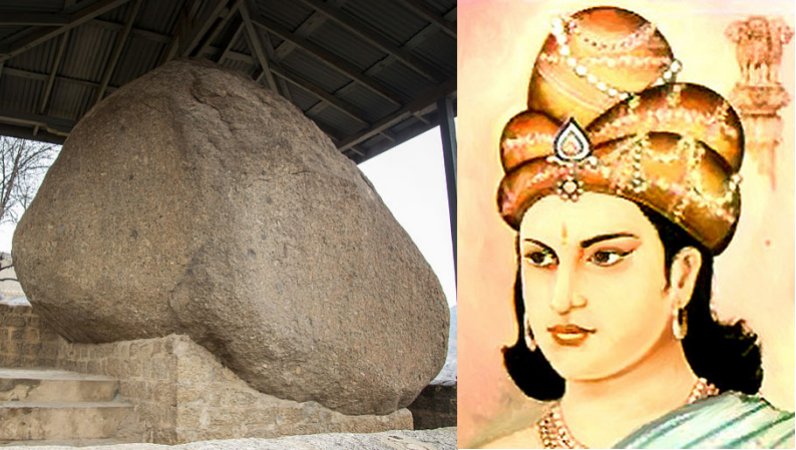
Left: The giant rock of Ashoka. Credit: Faysal Elahi, CC BY-SA 4.0 - Right: Artistic impression of Emperor Ashoka. Credit: Pinterest
“From the Volga to Japan his name is still honored. More living men cherish this memory today than have ever heard the names of Constantine or Charlemagne,” H.G. Wells writes in the Outline of History. 1
The early part of his reign was undoubtedly bloodthirsty, but after witnessing the mass deaths of the Kalinga War, Emperor Ashoka changed as a person and converted to Buddhism.
Emperor Ashoka won the Kalinga War, a battle fought between him and the Mauryan army led by King of Raja Anantha, but the price was high. The war took a tremendous toll of life and property. More than 100,000 soldiers were killed, and 150,000 civilians were deported.
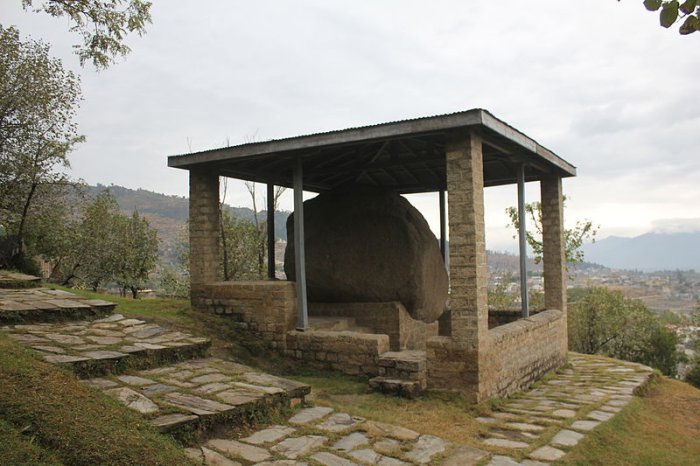
One of the major rock edicts with an inscription made by Emperor Ashoka. Credit: Muhammad Zahir, CC BY-SA 3.0
Legend tells that one day after the war had finished, Emperor Ashoka came to the city and he was shocked to see the complete destruction and dead corpses. The horrible scenes of death led to his conversion to Buddhism and he became a more peaceful emperor.
Emperor Ashoka’s last words were preserved for future generations. The Mansehra rock edicts, cut into the surface of three large boulders can be found on a small rocky mountain outside the city of Mansehra in Khyber Pakhtunkhwa province of Pakistan. The edicts date back to the 3rd century B.C. and it is widely believed the text is written in the ancient Indic script of Gandhara culture, Kharosthi.
In the fourth rock edict and three others, scientists found evidence that Emperor Ashoka “wished to remind his subjects of certain religious shows at which he had exhibited to them in effigy the gods whose abodes they would be able to reach by the zealous practice of dhamma.” 2
On the thirteenth edict, Emperor Ashoka expressed his feelings after witnessing the destruction of Kalinga.
According to the translated text, Ashoka felt great remorse for what had happened.
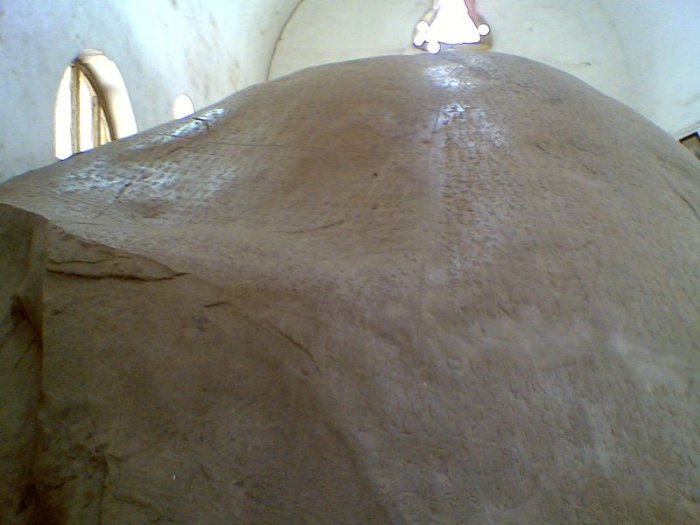
Major Rock Edict contains inscriptions by Ashoka. Credit: Jadia Gaurang, CC BY-SA 3.0
“Directly after the Kalingas had been annexed began His Sacred Majesty’s zealous protection of the Law of Piety, his love of that Law, and his inculcation of that Law. Thence arises the remorse of His Sacred Majesty for having conquered the Kalingas, because the conquest of a country previously unconquered involves the slaughter, death, and carrying away captive of the people. That is a matter of profound sorrow and regret to His Sacred Majesty.” 3
The Mansehra rock edicts are of great historical importance, but due to environmental degradation, the ancient script is fading away and it’s almost impossible to read the message today. Pakistan has tried to cover the rocks with canopies to shelter the boulders from weather conditions. Hopefully, this important historical site can be saved, and the last words of Emperor Ashoka will still be accessible to future generations.
The site has been submitted for inclusion in the UNESCO World Heritage Sites and is currently on the tentative list.
Written by Ellen Lloyd – AncientPages.com
Copyright © AncientPages.com All rights reserved. This material may not be published, broadcast, rewritten or redistributed in whole or part without the express written permission of AncientPages.com
Expand for references- G. Wells – The Outline of History
- Hultzsch, E. "New Readings in Asoka's Rock-Edicts." Journal of the Royal Asiatic Society of Great Britain and Ireland, 1913, 653-55
- Vincent Smith - Asoka: The Buddhist Emperor of India
More From Ancient Pages
-
 These Curious Burials Could Challenge Historians’ Ideas About Anglo-Saxon Gender
-
 Biblical Cherubim – Sweet Angels Or Dangerous Creatures With A Hidden Agenda?
-
 Legend Of The Loretto Chapel Staircase – Unusual Helix-Shaped Spiral Construction
-
 Climate Played A Crucial Role In Human Migration From Africa – New Study
-
 Has The Legendary Viking Stronghold Jomsborg Finally Been Found?
-
 New Study Shows How The Ancient World Adapted To Climate Change
-
 Ancient Tradition And True Meaning Of Candy Canes
-
 Gigantic Viking Age Burial Ground With Artifacts And 50-Meter-Long Shipwreck Unearthed In Tvååker, Halland, Sweden
-
 Strange Cave Drawings Of Unknown Beings And Animals In Japan Puzzle Historians
-
 Hidden 2,000-Year-Old Roman Road Uncovered In Worcestershire Could Be Of ‘Global Importance’
-
 Fomorians In Irish Myths And Legends: Race Of Demonic Giants Who Inhabited Ireland And Scotland
-
 Unique 2,800-Year-Old Ivory Object Unearthed At Hattusa
-
 Amazing Discovery: Great Pyramid Of Giza And Its Chambers Concentrate Electromagnetic Energy
-
 Statue Heads Of Dionysus And Aphrodite Discovered In The Ancient City Of Aizanoi
-
 Radiocarbon Dating Sheds Light On Historical Events In The Ancient City Of Gezer
-
 Meidum ‘Collapsed’ Pyramid Of Great Builder Pharaoh Snefru
-
 First AI-Based Method For Dating Archaeological Remains Developed By Researchers
-
 Unusual Ancient Skull Found In Chan Hol Underwater Cave Reveals Early American Settlers Were Morphologically Different
-
 Ancient Egyptian Capital Tell El-Amarna Mapped Through Satellite Imagery System
-
 Rudra – Mighty Hindu God Of Death, Destruction, Hunting Who Heals Mortal Diseases

