
Ancient Great City Of Napata In The Kingdom Of Kush
A. Sutherland - AncientPages.com - Napata was an ancient great city located on the west bank of the Nile in Nubia, the region of the valley of the Nile that is currently shared by Egypt and Sudan 300 km north of Khartoum. The nearby hill of Barkal (Jebel Barkal) was taken to mark the southern border of the New Kingdom.
Tuthmosis III founded Napata in the 15th century BC after his conquest of Nubia, and there is an inscription from the reign of this pharaoh, which says that he, Tuthmosis III, was the first king who began to build there.
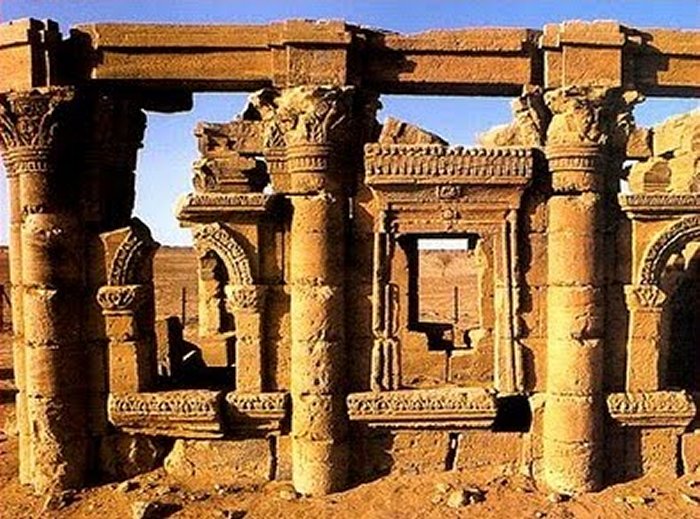
City ruins of Napata. About 300 years later, Napata became the capital of an independent Nubian kingdom, the Kingdom of Kush.
A table mountain, Jebel Barkal, stands seventy meters high directly behind Napata, and it was regarded as a holy mountain, the seat of the god Amon and under it, there are still ruins of several ancient temples.
Since the time of dynasties, the Egyptians had been interested in Nubia, a very rich region in gold. Soon, they could control trade and become an imperialist power in Nubia. Over time the habits and Egyptian religion spread by Nubia.
In 1075 BC, the Amon high priest in Thebes, the capital of ancient Egypt, became powerful enough to limit the power of Pharaoh over Upper Egypt.
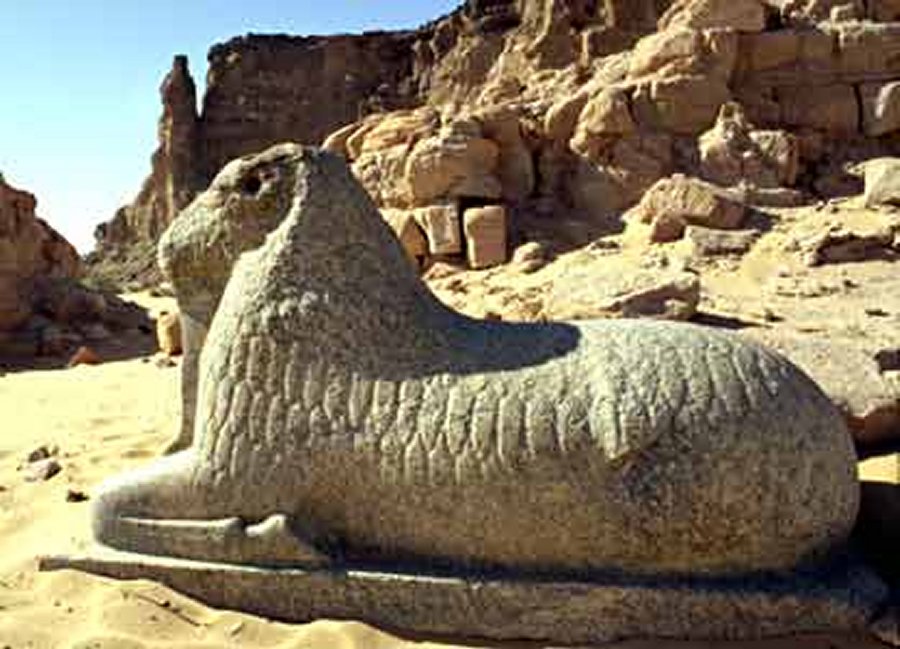
Ram at the entrance to the Temple of Amun, at Jebel Barkal, Sudan
This was the beginning of the Third Intermediate Period (1075 BC-664 BC). The fragmentation of power in Egypt allowed the Nubians to recover autonomy.
About 300 years later, Napata became the capital of an independent Nubian kingdom, the Kingdom of Kush.
In 750 BC, Napata was a flourishing city, while Egypt was still suffering political instability. Napata was part of the homeland of the Karmah culture, an indigenous Nilotic culture, long misidentified as an Egyptian outpost.
The culture flourished in the rich agricultural region that surrounds the site. Gold from the eastern desert, cattle pastoralism, and trade along the Nile were other sources of this culture's wealth.
Napata became a capital of a significant part of the ancient world, and the Egyptian custom of royal burial under pyramids was introduced into Kush. The people of Napata, at the time, were culturally Egyptianized.
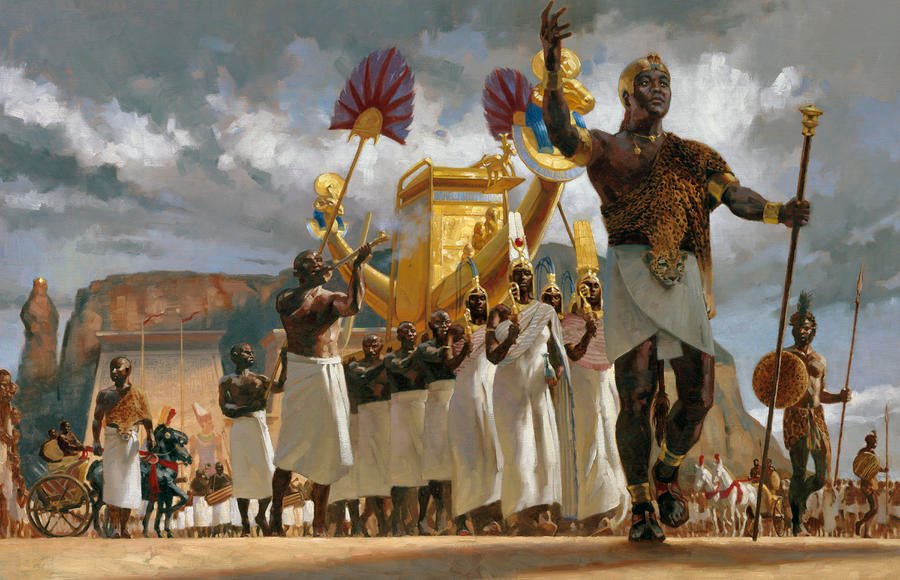
King Taharqa who reigned 690–664 BC, built several Egyptian-style temples at Napata, and the city was so powerful that one day, it decided about the future of Egypt.
Napata remained the center of the Kingdom of Kush for another two generations, from the 650s to 590 BC. Its economy was essentially based on gold, with the 26th dynasty Egypt, an important ally.
Napatan architecture, paintings, writing script, and other artistic and cultural forms were Egyptian. Egyptian burial customs were practiced, including the resurrection of pyramid buildings.
The Napatan dynasty and their successors built the Nile Valley's first pyramids since the Middle Kingdom. Also, several Egyptian gods were worshipped. The most important god was Amun, a Theban deity, his temple was the most important at Napata, located at the foot of Jebel Barkal.
King Taharqa, who reigned 690–664 BC, built several Egyptian-style temples at Napata, and the city was so powerful that one day, it decided about the future of Egypt.
After the Persian conquest of Egypt, Napata lost its economic influence. The Napatan region itself began to experience crisis leading to fewer cattle and agriculture.
A Persian raid had seriously affected Napata in 591 BC and finally, Napata was losing its role of economic capital to Meroë, which eventually became the capital of the kingdom of Kush, leading to the abandonment of Napata.
In 23 BC, the Roman prefect of Egypt invaded the kingdom after an initial attack by the queen of Meröe, destroying Napata to the ground.
Today only the ruins are left.
Written by – A. Sutherland AncientPages.com Staff Writer
Copyright © AncientPages.com All rights reserved. This material may not be published, broadcast, rewritten or redistributed in whole or part without the express written permission of AncientPages.com
More From Ancient Pages
-
 How Ancient Cultures Explained Comets And Meteors
-
 Most Of Medieval English Heroic Or Chivalric Stories Have Been Lost
-
 Mystery Of Feodor Kuzmich – Did Tsar Alexander I Fake His Death?
-
 Secret Underground Chambers Of Caynton Caves And The Knights Templar Connection
-
 Cities Of Bashan Were Built By Ancient Giants – Archaeological Evidence Exists But Is Ignored
-
 On This Day In History: Edict Of Longjumeau Was Signed And Ended Second War of Religion – On Mar 23, 1568
-
 Ancient Pottery Reveal How Peru’s First Great Empire Wari Functioned
-
 European-Made Sealed Bottles Of Cherries Dated To 18th Century Found At Washington’s Mount Vernon
-
 1,900-Year-Old Child’s Nightgown Found In Judean Cave Of Letters
-
 3,300-Year-Old Mycenaean-Like Seal And Dagger Discovered In Turkey
-
 Legendary Mount Penglai Where The Eight Immortals Reside
-
 Tomb Of Christopher Columbus Finally Found But There Is One Problem With His Body
-
 Deformed Skulls And Clues Found In Ancient Cemetery In Hungary
-
 Major Discovery Of 15,000-Year-Old Artifacts Could Re-Write History Of Peru
-
 King Tutankhamun’s Large Golden Coffin Was Moved For Restoration
-
 Ancient Religious Ceremony May Shed Light On The Mysterious Qumran Site
-
 Manuscripts And Art Support Evidence That Syphilis Was In Europe Long Before Explorers Could Have Brought It Home
-
 Dionysus – Greek God Of Wine, Music, Ritual Madness And Ecstasy Was Born Twice
-
 Giant 4,500-Year-Old Axe Grinding Site Discovered In Scotland
-
 ‘The Battle Of The Tooth Worm’ – Strange Ivory Carving

