AncientPages.com - When fisherman Ned Maddrell from the Isle of Man died on December 27, 1974, many thought the ancient Celtic language vanished with him. Ned Maddrell was the last surviving native speaker of Manx.
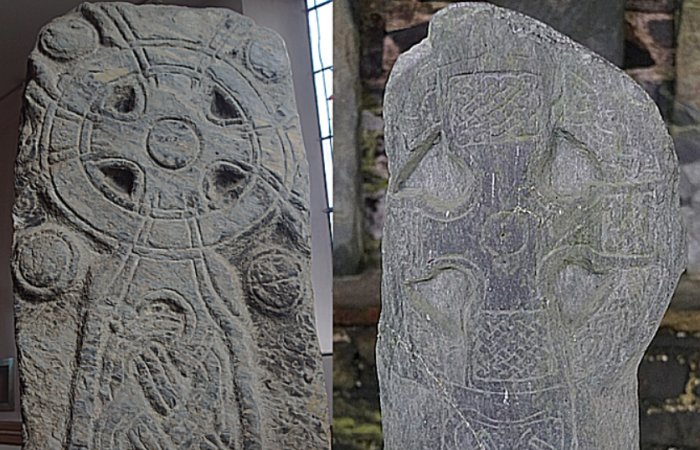
Left: Manx Cross 85, Onchan's Church, Isle of Man. Image credit: Otter - CC BY-SA 4.0; Right: Manx Cross 114, Kirk Maughold, Isle of Man. Image credit: Otter - CC BY-SA 4.0
Condemned as a dead language, Manx was erased from history, or so it would seem. This ancient Goidelic Celtic language has been revived, and today there is even a Manx language primary school where all subjects are taught in the language.
The language Manx is closely related to Irish and Scottish Gaelic. It also bears traces of Old Norse, due to the number of times Vikings set foot on the island.
Settlers from those areas brought the language of Manx to the Isle of Man during the 5th century AD. Manx began to emerge as a distinct language in the 13th-14th century, after the collapse of the Norse kingdom of Mann and the Isles and before the long period of English control.

This is a preview of our premium article, available only to Ancient Pages members.
Become a member to read more - Click here
If you are already a member and have logged in to your account, you can access the article here

See also:
Hidden For A Millennium: Ancient Forbidden Book Found In Monastery Library By Devoted Book Seeker
History Of Jarlshof – Thousands Of Years Of History With Traces Of Picts, Vikings And Scots
Celts: Facts And History About The Powerful And Intriguing People Of Central And Northern Europe