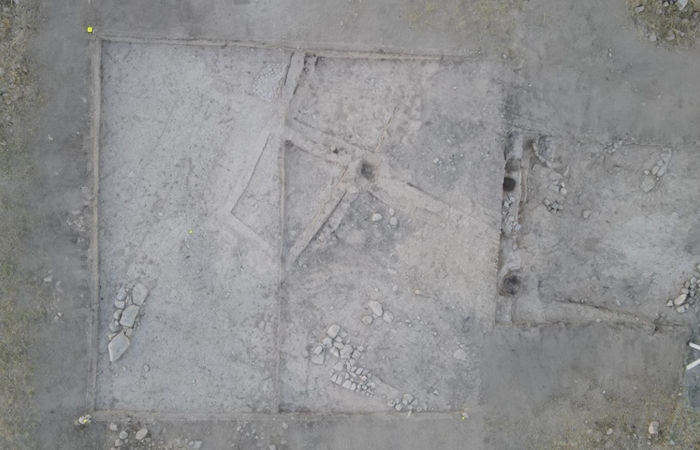
Conny Waters - AncientPages.com - A new UV-light method reveals hidden mineral deposits that may have helped protect 37,000-year-old drawings.
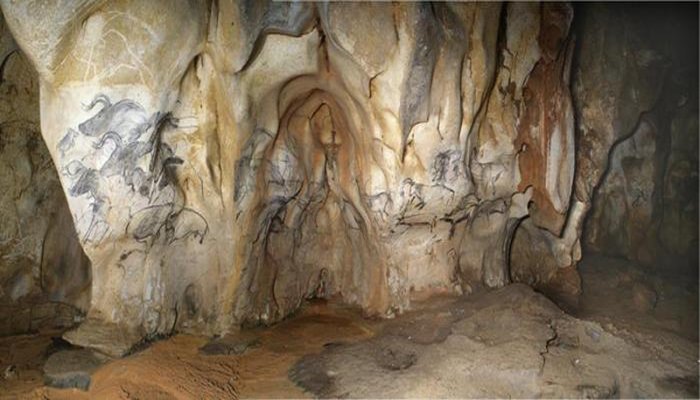
From left to right: the Horses Panel, the Alcove of the Lions, and the Reindeer Panel—three ancient compositions found in Chauvet Cave. Image credit: Carole Fritz, CNR
Chauvet Cave in southeastern France contains some of the oldest known artwork.
Due to its historical significance and fragility, the cave’s location is kept secret and secured behind a steel door. Researchers reporting in ACS Omega have now developed a technique to safely study these artworks and the natural varnish that has preserved them for centuries.
Approximately 37,000 years ago, Paleolithic people created detailed depictions of local fauna in what is now Chauvet Cave. These drawings were sealed by a rockfall and remained undiscovered until the 1990s. Decades later, researchers continue to study these artworks, including how the cave’s geology has helped preserve them. To examine the cave walls without causing damage, researchers have used UV fluorescence spectroscopy, which detects mineral deposits invisible to the naked eye.
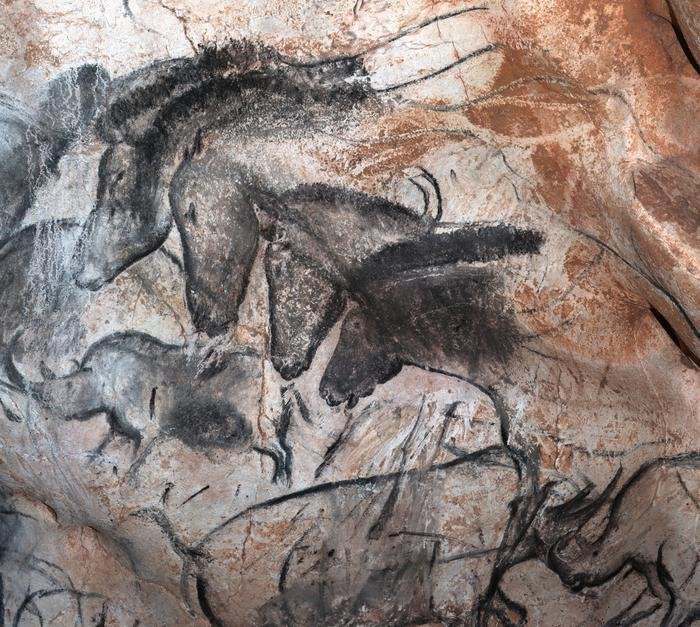
New analysis reveals that these cave drawings are partially covered by calcite mineral, which has kept them safe for tens of thousands of years. Image credit: Adapted from ACS Omega 2026, DOI: 10.1021/acsomega.6c05061
Philippe Walter and colleagues applied this technique to noninvasively study the mineral deposits atop the charcoal drawings and the methods used to create the art.
Because prehistoric footprints near the artwork are fragile, researchers positioned a portable spectrometer on a protective walkway approximately 8 feet (2.5 meters) from the cave wall. They directed a UV light beam onto the wall, and the spectrometer analyzed the resulting fluorescence from mineral deposits and pigments.
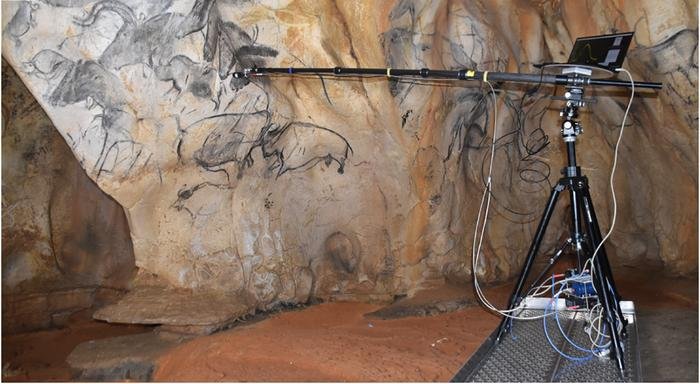
Because prehistoric soil and footprints were present immediately in front of the cave walls, researchers had to set up their analysis instruments nearly 8 feet away. Image credit: Adapted from ACS Omega 2026, DOI: 10.1021/acsomega.6c05061
“Our methodology is much like forensic investigation: We examine every piece of evidence to decode the techniques of prehistoric artists and understand how the paintings have been preserved over time,” says Walter.
See also: More Archaeology News
The researchers’ analysis revealed that mineral-rich water flowed over the wall’s limestone surface, leaving thin layers of calcite. This calcite glowed blue under blacklight, revealing a natural coating that covered parts of the artwork. Some areas also showed an orange glow, which might come from hot charcoal or burning materials, like a lit torch, rubbed against the wall to make the drawings.
These results show the careful connection between humans and the natural environment that helped preserve these artworks for tens of thousands of years. Walter and his team expect that this method can also be used in areas like forensic science and checking biofilms on the International Space Station — a project already in progress.
Written by Conny Waters - AncientPages.com Staff Writer