
Traces Of The Ancient Lost Aquery Civilization In The Amazon Found by LiDAR
Conny Waters - AncientPages.com - Recent airborne laser scanning research shows that a multicultural civilization in southwestern Amazonia, active from 600 BCE to 850 CE, supported millions of people. Covering approximately 183,000 square kilometers (71,000 square miles), the Aquiry civilization constructed major political and ritual centers.
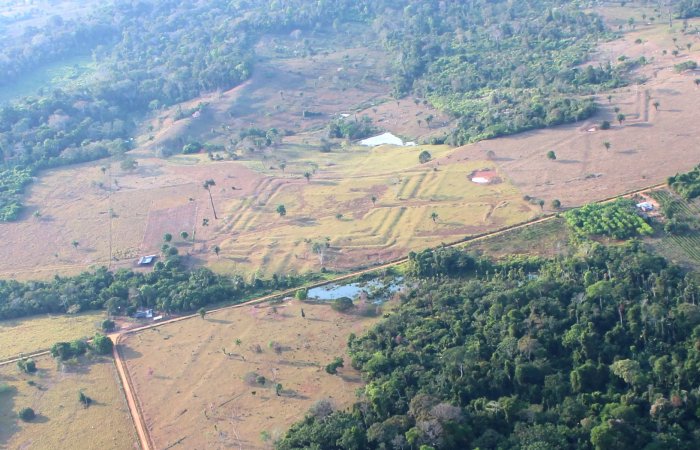
Tequinho archaeological site in Acre, Brazil. Credit: University of Helsinki
Researchers surveyed a representative section and identified over 400 well-preserved monumental ceremonial sites, as well as several later settlements.
Extrapolating these results, researchers estimate there were over 20,000 ancient earthwork ceremonial centers across the civilization's territory. The largest known site spans 50 hectares (124 acres).
Comprehensive surveys and radiocarbon dating indicate that the Aquiry territory, representing less than 3% of Greater Amazonia, supported 1.25 to 3 million people at the start of the first millennium. This challenges previous population estimates for the wider Amazon region, which ranged from 1 million to 10 million. The total population may have reached tens of millions.
"Our findings overturn our understanding of the Amazon region's past," says the emeritus professor at the University of Helsinki who led the study published in Nature.
Plants Transformed By Human Hands
The Aquiry transformed the Amazonian landscape by burning bamboo forests to create fields for crops such as maize, squash, and manioc. They built ceremonial centers and connected them with wide roads.
They also cultivated plants and cared for important tree species.
"The research shows that the human impact on the Amazon's environment has been far greater than previously believed," Pärssinen notes.
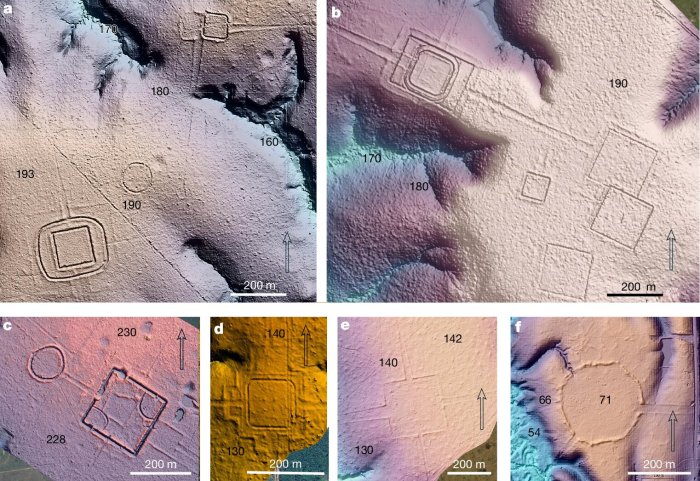
Diverse earthwork types with their topographical contexts. Credit: Nature (2026). DOI: 10.1038/s41586-026-10835-7
Several protein-rich trees in the area, such as the Brazil nut tree, peach palm, and other fruit trees, show signs of long-term management by people. The peach palm is also valued for its edible palm heart.
The Aquiry encouraged the growth of trees important to their culture, often replacing other tree species.
"This has direct implications for our understanding of the region's biocultural history. The civilization also affected ancient Amazonia's carbon production and carbon balance, which should be better accounted for in future climate models," Pärssinen adds.
Laser-Based Mapping Detects Signs Of Human Landscape Change
The research used airborne laser scanning (LiDAR) to map landforms beneath vegetation. The survey identified thousands of traces of the ancient civilization in previously unstudied areas of the rainforest. The laser scanning covered approximately 4,500 square kilometers (1,700 square miles), with over half dedicated to systematic assessment of the civilization's earthworks.
"We flew straight transects approximately 450 kilometers (280 miles) long, mapping a 1 kilometer (0.6 mile) wide strip every 10 kilometers (6 miles). This approach enabled us to cover the largest possible continuous area," says Professor Juha Hyyppä of the Finnish Geospatial Research Institute (National Land Survey of Finland), who oversaw the study's technical execution.
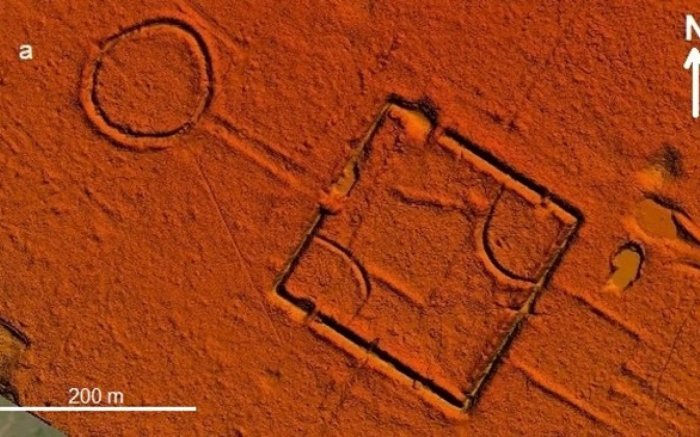
Fazenda Atlântican archeological site in Acre Brazil (Image: M. Pärssinen & F. de Novaes.)
The survey identified large geometric shapes and straight roads among the detected features.
"Their varying dimensions, shapes, construction methods and locations reflect the distinct geographical and cultural characteristics of the region," notes Risto Kalliola, emeritus professor at the University of Turku.
According to native oral traditions, these centers were established to strengthen relationships among communities and with significant other beings. They also served as venues for gatherings, political decision-making, and displays of chiefly generosity. Ceremonies featured ritual dance, music, feasting, athletic contests, and ball games.
A Civilization Without Stone Ruins
Little is known about the Aquiry civilization. Its territory was about the size of modern-day Syria. The region's lack of stone means no stone ruins remain, but the monumental geometric earthworks, known as Amazonian geoglyphs, reveal the civilization's scale.
See also: More Archaeology News
The name Aquiry is derived from the term Indigenous peoples used for the Acre River. According to a professor of Indigenous studies at the University of Helsinki, "This was not a single realm but a network of many different communities."
It is not known what languages were spoken across these communities, nor what they called themselves.
Nor is it known what caused the civilization's apparently rapid collapse around 850 CE. Around the same time, the Classic Maya civilization in Central America also collapsed relatively abruptly.
The study was published in Nature
Written by Conny Waters - AncientPages.com Staff Writer
More From Ancient Pages
-
 New Discoveries In Underwater Excavations Of Sunken Cities Of Canopus and Heracleion
-
 Weapons Left By Barbarian Tribes Discovered In Polish Forest
-
 New Study Shows How The Ancient World Adapted To Climate Change
-
 Challenging Prehistoric Gender Roles – Women Were Hunters Too – Not Just Men
-
 Archaeologists Excavate Two Roman Bath Hidden In A Dark Passage Below The Streets Of Bath
-
 Gate of Zeus Temple Is A New Discovery In Western Turkey
-
 Ancient City Of Isaura And Zengibar Castle Used By The Hittites, Persians, And Romans
-
 Excavations Of 2,500-Year-Old Water Cistern In Croatian Village Lumbarda – Completed
-
 Oldest Recently Discovered Fossil of Bird ‘Archaeopteryx’ That Lived 150 Million Years Ago
-
 Oldest Human Genome From The Iberian Peninsula Helps Reconstructing Human History
-
 Ancient Mothers Cared For Kids Better Than Previously Thought
-
 Rare Viking Age Treasure Found By Woman Cleaning The House
-
 Long-Lost Page From Archimedes Palimpsest, One Of The World’s Most Famous Ancient Manuscripts, Re-Discovered
-
 India: Plastic Surgery And Genetic Science – Found In Ancient Vedas – Were Practiced Thousands Of Years Ago
-
 New Light On Appearance Of Scythians In Northern Black Sea Region
-
 Mysterious Footprints In Tanzania Made By Early Humans Not Bears
-
 New Discovery: Fragments Of Pyramid Dated To 13th Dynasty Discovered In Dahshur Necropolis
-
 2,000-Year-Old Antikythera Mechanism May Not Be What We Previously Thought
-
 Sarcophagus Of Pharaoh Ramesses II Found In Abydos, Egypt
-
 Archery Technology Emerged In The Americas 5,000 Years Ago – Much Earlier Than Previously Thought

