
Paracelsus: Physician, Alchemist, Philosopher Well Ahead Of His Time
A. Sutherland - AncientPages.com - Paracelsus (1493 - 1541) - was a Swiss-German botanist, philosopher, astrologer, alchemist, and one of the most influential medical scientists in early modern Europe.
His real name was Philippus Aureolus Theophrastus Paracelsus Bombastus von Hohenheim but he was celebrated as "Paracelsus."
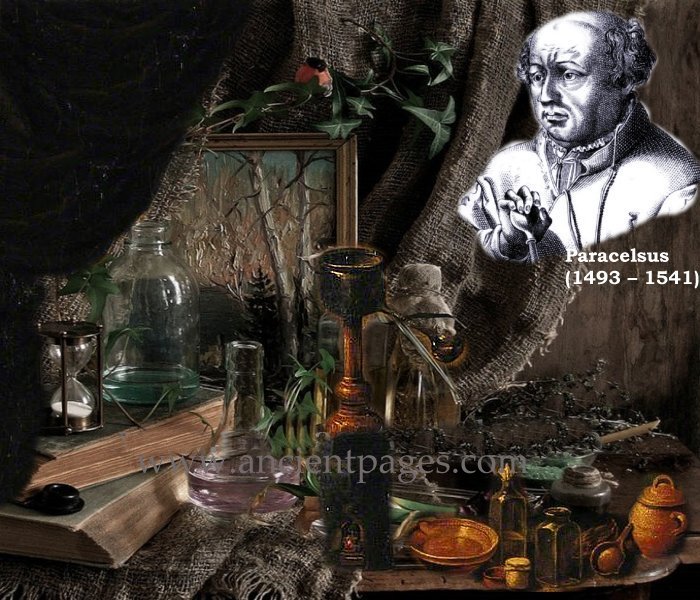
His career differed radically from many of his colleagues.
At sixteen years of age, Paracelsus was already well acquainted with alchemical knowledge. After spending some time at the University of Basle, he led a wandering life, traveled throughout Europe, even visiting Arabia, Egypt, Russia, Finland, and the Arctic region, dispensing powerful wisdom centuries ahead of his time.
"Poison is in everything, and nothing is without poison. The dosage makes it either a poison or a remedy. Paracelsus
Working in the mines of Sigismund Fugger, he acquired valuable knowledge of metals and ores; he also studied diseases of his fellow-workers. Paracelsus had many talents and was gifted by nature. He believed that Nature was the best healer and that the best results could be achieved by natural methods.

Driven by invincible life energy and despite his unhealthy way of life, Paracelsus wrote over ten thousand pages devoted to surgery, alchemy, astrology, and theology.
Due to constant conflicts with his employers and even colleagues, he had not so often any permanent job.
"They drove me out of Lithuania, and Prussia, and Poland…The Dutch did not like me either, nor the schools… but thank God, the patients liked me!”
He was a visionary who considered chemistry the key to the whole universe where God was the divine alchemist who created the world.
This highly controversial scientist had a great knowledge of alchemy, surgery, and medicine and was strongly against superstitions and misconceptions and all authorities.
Paracelsus was a symbol-figure who stood for heroism, but he was also considered a charlatan. Traditionally working doctors accidentally killed dozens of his patients, according to Paracelsus, through their old-fashioned and dangerous treatment of the so-called blood-letting, a practice that Paracelsus firmly opposed.
The art of healing comes from nature, not from the physician. Therefore the physician must start from nature, with an open mind. Paracelsus
In one of his most polemical writings, a book from 1531 with the intriguing title "Paragranum" (Beyond The Seed) Paracelsus states that all physicians who follow Claudius Galenus (AD 129 – 199/217) teachings should be burned at the stake, exposed to cholera infection, drowned in mud or tormented by mosquitoes.
He made claims to manufacture potable gold granting prolonged youth and his claims may have been symbolic for the esoteric doctrine of a Universal Medicine based upon Light - the creative agent, the vibrations of which constitute the movement and life of all things. He deeply believed that medicine is supported by four pillars - philosophy, astronomy, alchemy, and ethics.
Paracelsus was one of the first physicians who gave special importance to using chemicals, minerals in medical treatment as well as opiates as anesthetics in surgery. Paracelsus's works greatly influenced the early Rosicrucians and some of his impressive ideas are startling even today.
Written by – A. Sutherland AncientPages.com Staff Writer
Copyright © AncientPages.com All rights reserved. This material may not be published, broadcast, rewritten or redistributed in whole or part without the express written permission of AncientPages.com
Expand for referencesMore From Ancient Pages
-
 ‘The Domesday Book’ Of William I The Conqueror: Detailed Register Of ‘Who Owned What’ In England
-
 Three Fun Paradoxes Created By Ancient Greek Philosophers To Puzzle Over
-
 Unknown Rock Inscriptions And Earliest Monumental Hieroglyphs In Egypt Shed New Light On Ancient Writing
-
 Why Did Christian Viking King Harald Bluetooth Carry A Hammer Of Thor Amulet?
-
 Roman Treasure Hoard Found In Thetford Forest, East Anglia – Was Pagan Until 5th Century
-
 ‘Ali Baba Cave’ Treasures: Burial Boxes Inscribed With Jesus’ Name May Help Reconstruct Jesus’ Life And Death
-
 4,000-Year-Old Babylonian Tablets Finally Deciphered, Revealing Dangerous Future Predictions
-
 Ancient Secrets Of The Masters Of Mu – Keepers Of Sacred Knowledge – Part 2
-
 Taweret – Powerful Egyptian Hippopotamus ‘Household Goddess’ Guarded Childbirth, House, Sleep And Dispelled Evil Forces
-
 Secret Dwelling Place Of Reptilian And Dragon-Like Creatures In Europe
-
 Unique Headstones Of Kela Mazin Cemetery In Kurdistan Are Probably 3,000 Years Old Or Much More
-
 Strange And Unexplained Events In Transylvania – One Of The Most Mysterious Places In Europe
-
 Ancient City Of Metropolis: Ruins With Traces Of The Hittites, Hellenistic, Roman, Byzantine And Ottoman Empires
-
 Australia’s First Marine Aboriginal Archaeological Site Questioned
-
 On This Day In History: American General Benedict Arnold Commits Treason – On Sep 21, 1780
-
 Tangaroa – Polynesian God Of Ocean And Fish In Constant Struggle With His Brother
-
 Huge Statue Of Pharaoh Ramesses II Unearthed In The Ancient City Of Hermopolis
-
 Ancient Flying Canoes And Magic In The Pacific – Arrival Of Strange People – Part 1
-
 Late Neolithic Italians Mastered Complex Metal Technologies – New Study
-
 Enigmatic Bronze Age Fulacht Fiadh: ‘Kitchens’ Of The Legendary Irish Warriors

