AncientPages.com - In May 2020, as part of a legally permitted expansion of an iron ore mine, Rio Tinto destroyed an ancient rockshelter at Juukan Gorge in Puutu Kunti Kurrama Country in the Pilbara region of Western Australia.
Working with the Traditional Owners, we had excavated the shelter – known as Juukan 2 – in 2014, six years before its destruction. We found evidence Aboriginal people first used Juukan 2 around 47,000 years ago, likely throughout the last ice age, through to just a few decades before the cave was destroyed.
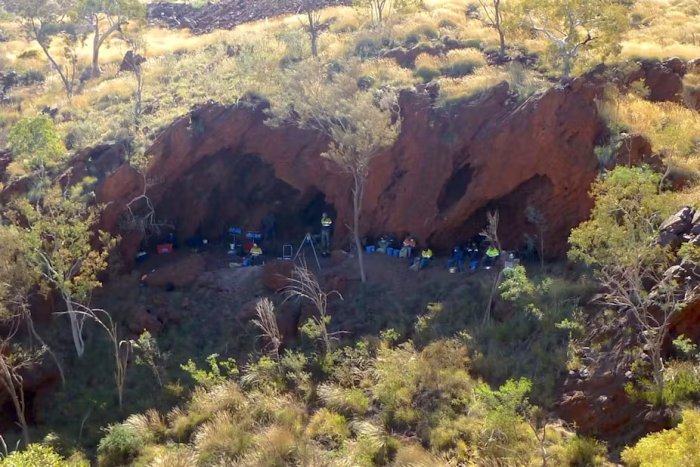
The excavation team at Juukan Gorge in 2014. Courtesy of Scarp Archaeology and PKKP Aboriginal Corporation
The site held thousands of significant objects including an ancient plait of human hair, tools and other artefacts, and animal remains. The results of the excavation led to last-minute efforts to stop the destruction of the site, but they were unsuccessful.
The full results of the excavation are published for the first time in Quaternary Science Reviews.
Where is Juukan and what happened there?
Juukan is a gorge system with a series of caves in Puutu Kunti Kurrama Country, approximately 60 km north west of Tom Price, in the Pilbara region of Western Australia.
The Juukan 2 rockshelter is one of the caves that make up this system. It was once part of a deep gorge featuring fresh water holes, large camping areas surrounded by massive ironstone mountains and a large river that flowed at some times of the year and was dry at others.
Today the area is part of a Rio Tinto iron ore mine. As widely reported in May 2020, the Juukan 2 rockshelter was destroyed during mine expansion activities. While Rio Tinto held ministerial consent to destroy the heritage site, the action was against the wishes of the Traditional Owners.
The destruction led to widespread global condemnation and shone a spotlight on Western Australia’s substandard heritage protection legislation.
What is so significant about Juukan?
Juukan Gorge is named after a Puutu Kunti Kurrama ancestor. It is extremely significant both for cultural and scientific reasons.
For the Puutu Kunti Kurrama, Juukan is a deeply spiritual place that contains deep-time evidence of their presence and association with the landscape in their Traditional Country.
In terms of the scientific significance of Juukan 2, the site is one of the oldest known locations of Aboriginal settlement of Australia. While there are some sites that have been found to be older, such as Madjedbebe in Kakadu in the Northern Territory and off the Western Australian coast, there are only a few places as old as Juukan in inland Australia.
Juukan is about 500 kilometres from the coast today. Up until approximately 10,000 years ago, when sea levels rose, it was almost 1,000 kilometres inland.
This means people living around Juukan were adept at living in the desert. This is also shown by the fact they were able to continue to use the cave even during the last ice age (from around 28,000 to 18,000 years ago). Archaeologists have found very little direct evidence from this period at any other sites.
Often just a handful of artefacts is regarded as enough evidence to show people used an archaeological site. However, at Juukan 2 we found thousands of artefacts, including many that featured resin from spinifex grass, which was likely used as a kind of glue to hold together the pieces of composite tools.
Juukan 2 also held amazing evidence of animals over the ages. We found broken bones from animals that had died naturally, and also bones associated with people cooking and eating kangaroos, emus, and even echidnas at the site.
Among this material was a plait of human hair dated to around 3,000 years old. The hair was DNA tested and the results told us it was likely related to the Traditional Owners who were part of the excavation team.
The material we found was extremely well preserved. We even found a bone point made from a kangaroo’s shinbone around 30,000 years old with ochre on its end. We don’t know what this was used for, but the ochre may indicate a ritual function.
What now?
After the blast in 2020, we began to re-excavate the site. Over the past two years we have removed about 150 cubic metres of rubble that was once the roof and back wall of the cave. Beneath the debris we found traces of organic material, and then remnants of the cave floor.
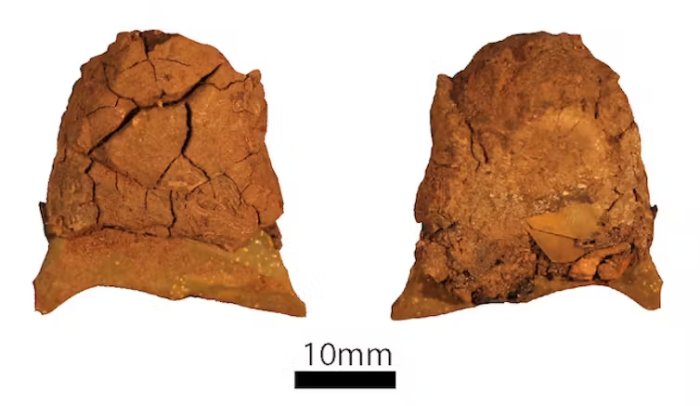
A shaped piece of stone that would likely have been glued to a handle with spinifex resin, excavated in 2014. Scarp Archaeology
Excavations have now reached the original floor level throughout most of the site, and we are carefully digging and finding more incredible materials. This includes more plaited hair, shell beads we think were brought from the coast, and fragments from the jaw of a Tasmanian devil, an animal which has been extinct on mainland Australia for over 3,000 years.
The publication of these results from 2014 is just the next chapter in the archaeology of Juukan 2, a place special to the Traditional Owners, but also of immense significance to science and our understanding of cultural heritage of Australia.
Provided by The Conversation
This article is republished from The Conversation under a Creative Commons license. Read the original article.