
Mysterious ‘Temple Of The Crossed Hands’ Of Kotosh – One Of The Oldest Structures In Peru
A. Sutherland - AncientPages.com - Temple of the Crossed Hands (Templo de Las Manos Cruzadas) in Kotosh, Peru, is considered one of the oldest temples in Peru and America and dates back 4000 years.

Terracotta "Crossed arms" from Kotosh, 1800 BC. Image credit:
Kotosh represents a primary pre-Columbian ceremonial site located in the north-central highlands of Peru.
The first evidence of massive stone constructions from about 2000 BC suggests that complicated building work began centuries before anywhere else on the American continent.
The culture of Kotosh Waira-Jirca (1800-1300 BC) was concentrated in the Huánuco River basin, only 6km from Huánuco along the La Unión road.
More or less permanent settlement at the Kotosh ancient site predates the Chavín era by more than a thousand years, then it continued throughout the Inca occupation, right up to the Conquest.
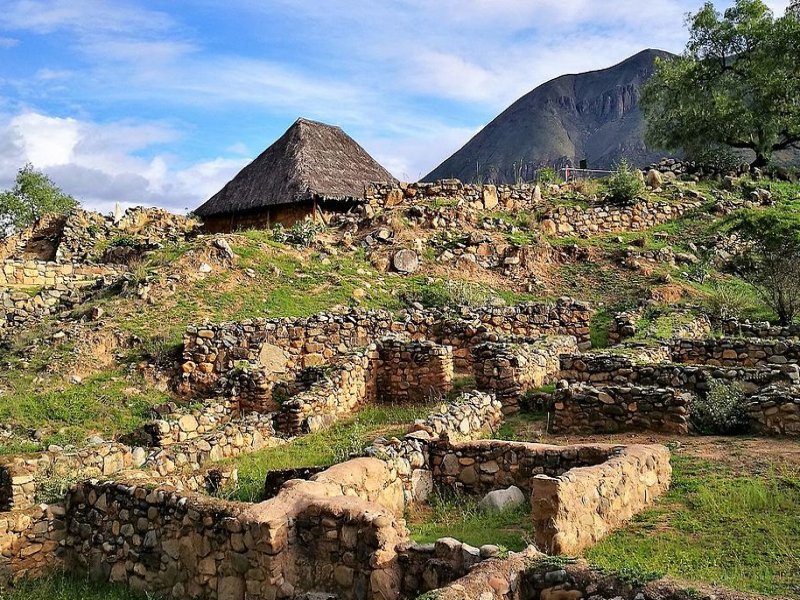
White Temple of Kotosh with the building of the Temple of the Hands. Image credit: - CC BY-SA 4.0
The Temple of the Crossed Hands, an ancient structure dating back over four millennia, is currently in a state of disrepair and lacks proper maintenance. Japanese archaeologists conducted excavations at the site between 1958 and 1962.
A significant discovery occurred in 1960 when archaeologist Seichi Izumi unearthed the first pair of crossed hands. Subsequently, in 1963, a second pair was found, lending support to the hypothesis of another temple's existence beneath the crossed hands.
These initial findings led to the discovery of numerous intriguing structures and some of the oldest known American sculptures.
The excavation yielded valuable insights for researchers, allowing them to better understand the technical and artistic sophistication of the ancient civilization responsible for these artifacts.
The Temple of the Crossed Hands and its associated findings have contributed significantly to our knowledge of early American cultures and their architectural and artistic achievements.
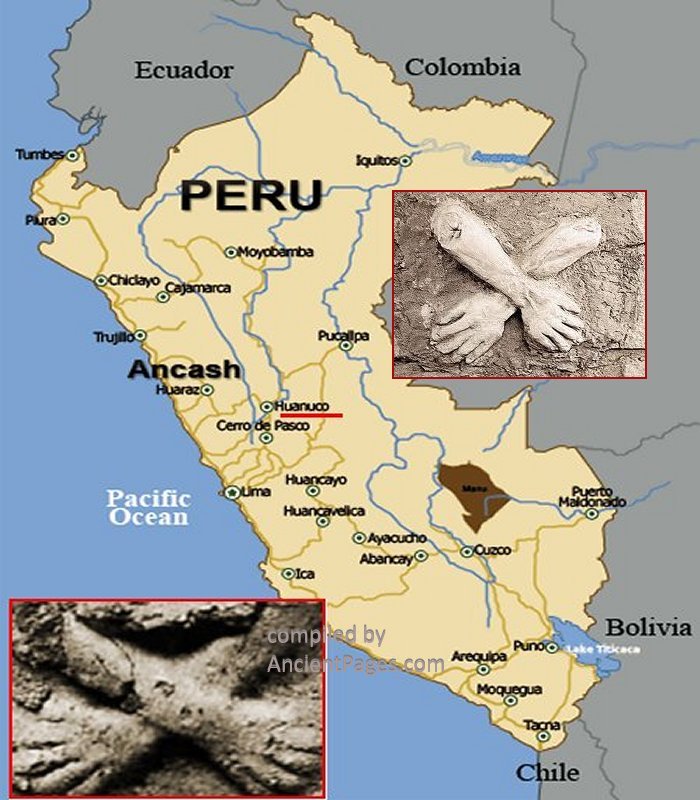
The most unique feature of the Kotosh complex is the crossed-hands symbol carved prominently in stone on the temple walls. Compiled by AncientPages.com
The archaeological site features several notable structures. The ruins include the White Temple and the Temple of the Hands. Within a square area, visitors can observe a huanca, a ritual object now recognized as a commemorative stone. The White Temple derived its name from its exterior, which was coated with white clay, giving it a distinctive white appearance.
Another significant structure is the Temple of the Crossed Hands. This building is square, measuring approximately 9.3 to 9.5 meters on each side. A key feature of this temple is its central fire pit, which is equipped with a ventilation duct. This design element, with its potential to serve important functional and possibly ceremonial purposes, is a fascinating aspect of the temple that indeed piques the readers' curiosity.
These architectural remains provide valuable insights into the religious and cultural practices of the civilization that constructed them.
Achaeologists discovered skeletal remains of camelids and guinea pigs inside the temple's niches, so it is believed that these niches were used for offerings. Ashes were found in the central fire pit, most probably used to burn the offerings.
Interestingly, other Kotosh objects also included bone stones, which is significant because identical pieces have been found in Caral.
Three cultural phases that preceded the Chavin culture (c. 900 – 200 BC) have been identified at the Kotosh site. However, some Kotosh elements have characteristics associated with the Chavin culture. One of them is a tradition of decoration by using black paint on red ceramics. Kotosh's people produced black polished incised pottery resembling classical Chavin pottery.
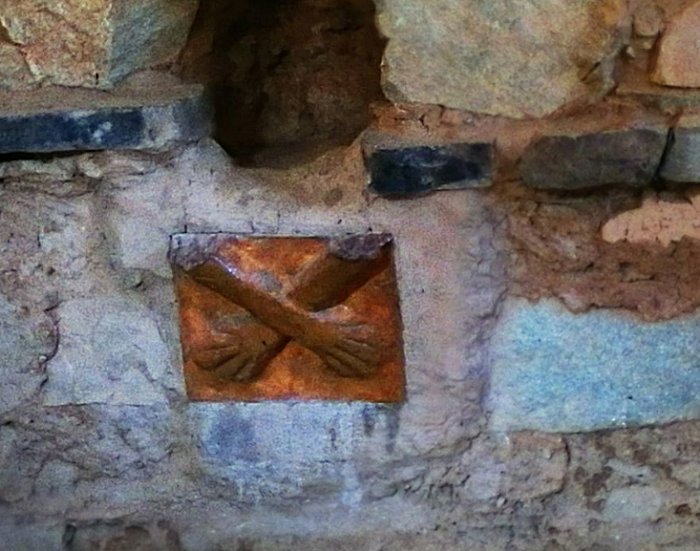
The Crossed Hands in the Temple of said name. Image credit: - CC BY-SA 4.0
This temple has a single entrance with a niche on each side facing inward. Below each slot, modeled in mud plaster, is a pair of crossed human forearms, some larger than the others, suggesting a male/female duality. The find may indicate the representation of the beginning of man and woman, symbolizing dualism.
Around the temple's interior is a low stone bench; a firepit is in the center of the floor.
The unique feature of the Kotosh complex is the crossed-hands symbol carved prominently in stone on the temple walls and related to a very early culture about which archaeologists, unfortunately, know not much.
The 'crossed human forearms' symbol also decorates Peru's Nuevo Sol coin. The crossed-arm design is believed to be the earliest example of "duality," a central theme represented in Andean Ideology through the time of the Incas.
One set of arms has the left hand crossed over the right, while the other pair on the opposite wall has the right hand over the left. One pair of arms may represent the feminine because of their smaller size, while the second pair represents the masculine.
Currently, the Temple of the Crossed Hands contains two replicas made of fiberglass.
Archeological excavations at the site of Kotosh revealed other even older structures in recent years. However, this particular complex still remains one of Peru's most important archaeological sites.
Written by – A. Sutherland AncientPages.com Staff Writer
Updated on August 21, 2024
Copyright © AncientPages.com All rights reserved. This material may not be published, broadcast, rewritten or redistributed in whole or part without the express written permission of AncientPages.com
Expand for referencesReferences:
Kipfer Barbara Ann, Encyclopedic Dictionary of Archaeology
Marco Gamarra Galindo, The thousand-year-old Kotosh culture (La milenaria cultura Kotosh)
More From Ancient Pages
-
 Is The World’s Oldest Zero Hidden In The Bakhshali Manuscript?
-
 John Dee’s Magical Mirror Used To Contact Spirits Can Be Traced To The Aztecs
-
 1.5-Million-Year-Old Footprints Of Two Different Species Of Human Ancestors Found At The Same Spot
-
 Divine Shulgi Of Ur: Influential, Long-Ruling King, Conqueror And Native Akkadian Speaker In Five Languages
-
 Baffling Cathar Mystery – Was It A Double Ancient Reincarnation Case?
-
 Face Of Man From The Lost Medieval Village Of Dzwonowo Reconstructed Using 3D Printing Technology
-
 Artificial Intelligence Recreates Pompeii’s Ruined Ancient Masterpieces
-
 Unusual Power Of Seidr: Norse Shamans Used Magic To Alter Destiny And See The Future
-
 Underwater City: Unveiling The Secrets At The Bottom Of Fuxian Lake
-
 On This Day In History: Battle of Castillon Ended ‘Hundred Years’ War – On July 17, 1453
-
 Hunter-Gatherers Used Open Habitats Millennia Before Stonehenge Monuments Were Built
-
 What Can Medieval Skeletons Tell Us About Modern Day Pandemics
-
 How Did Norman Conquest Of 1066 Affect Everyday People’s Eating Habits?
-
 Shipboard Cannon Found On The Swedish West Coast May Be Europe’s Oldest!
-
 North America’s New Snake Species Deepen Our Understanding Of Reptile Social Behavior And Development
-
 Shining Ones, Archimedes Death Ray And Mystery Of Vitrified Forts In Scotland
-
 First People To Inhabit Malta Arrived 700 Years Earlier Than Previously Thought
-
 Parachute May Have Been Invented By Ancient Chinese – Not Leonardo Da Vinci
-
 Lost Ancient Extraterrestrial Knowledge And The Ignorance Of Modern Man
-
 Mystery Of Ancient Metal Clamps – Advanced Lost Technology Modern Science Still Cannot Explain

