
Trolls – Fascinating Mythical Creatures Of Scandinavia
A. Sutherland - AncientPages.com - The troll is a fascinating mythological creature, well-known in Scandinavian countries. They were 'nature beings' because encounters with them usually took place in nature. For centuries, however, trolls were found only in the landscape of Scandinavia.
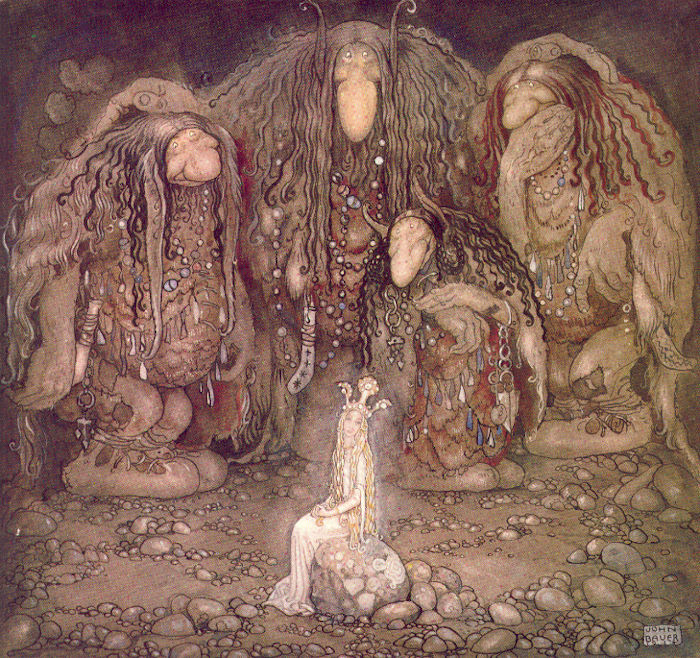
The troll is a fascinating mythological creature featured in the popular Swedish folklore and fairy tales Among Gnomes and Trolls (Swedish: Bland tomtar och troll). Credit: John Bauer
However, a troll is also known in other parts of the world.
'Around 1200, an anonymous poet, possibly from the Orkneys, compiled a poem with a series of proverbial sentiments. One stanza includes the following couplet, which rhymes in the original:
All exaggerations seem short; not much is worse than trolls…' 1
Many still believe in the existence of trolls that have the power to invoke negative feelings in us, like those of the Orkneys' poet, who composed his poem a long time ago.
Another example can be a late Icelandic saga bordering on a fairy tale. It tells of Núdús, the king of Serkland (the Baghdad caliphate).
'He is larger and stronger than every other man and beyond each in every way in that part of the world. He has with himself all kinds of peoples, Africans, and trolls, and berserkers and giants and dwarfs, and other people powerful in magic.
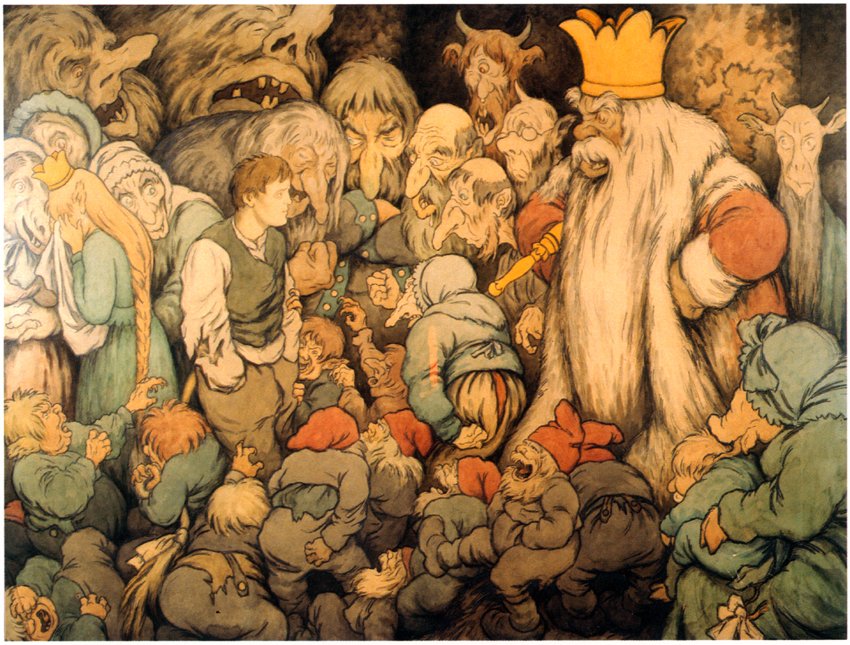
Like many other creatures in folklore of Scandinavia, trolls were said to live in underground complexes, accessible from underneath large boulders in the forests or in the mountains. Credits: Theodor S. Kittelsen
No human person can stand up to him and his army..' 1
Who was this remarkable individual?
Trolls In A Pre-Industrial Society
Tradition around these intriguing creatures is ancient, and so is a common belief in them.
The authors of the most famous images of trolls are in Norway, Theodor Kittelsen and Erik Werenskiold, and in Sweden – John Bauer. Theodor Severin Kittelsen (1857-1914), a great Norwegian artist, is known as the "father" of all trolls. His inspiration came from folktales about wild and stupid trolls, but trolls were not ugly or stupid.
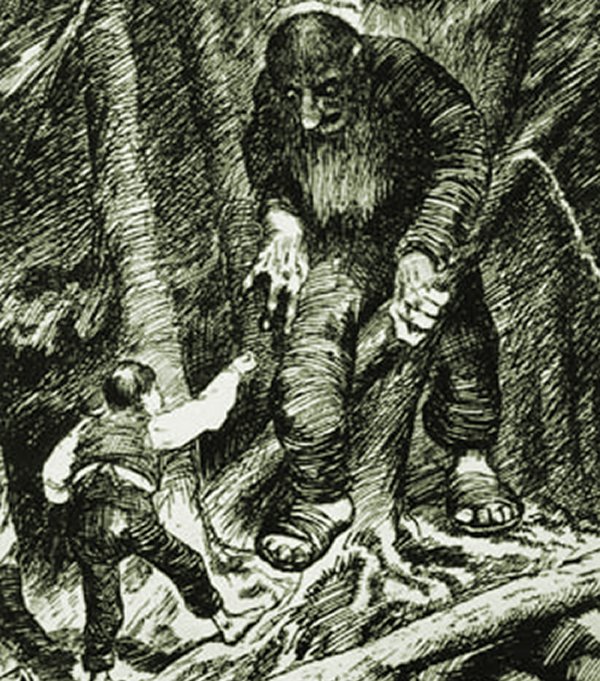
Askeladden and a troll, by Theodor Kittelsen. Public Domain
On the contrary, they were cunning and witchcraft-knowledgeable. Kittelsen's imagination gave the trolls their peculiar appearance. A troll was reputed to be anti-Christian when this religion became a stronghold in Sweden in the 1300s.
According to tradition, the 'smell of Christians' and the sound of church bells could greatly disgust trolls. Their home environment was pre-industrial, where people lived by farming and fishing.
Often Hairy, Huge But Sometimes Looking Like Ordinary Humans
These curious beings were usually hairy, huge, and not intelligent or beautiful. Their varying shapes and sizes made them different from each other in both appearance and character.
They could be described as good neighbors doing small favors to each other or dangerous creatures with a voracious appetite for thieving and causing trouble.
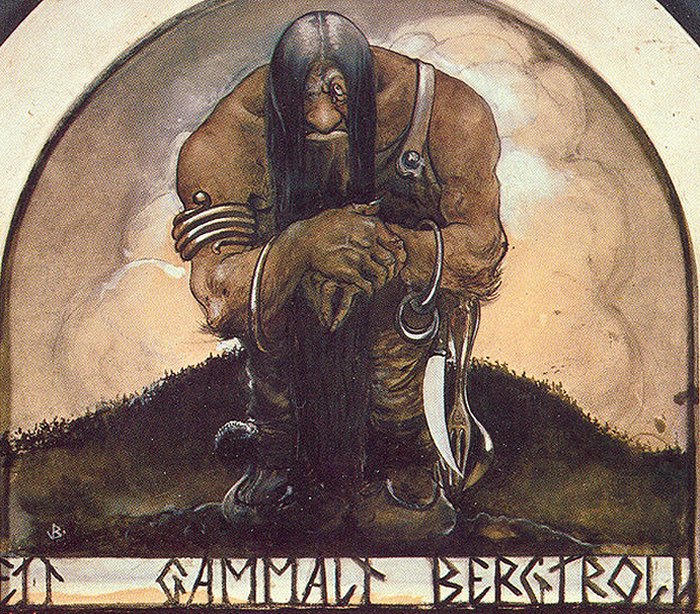
The trolls could attract people into their world, into the mountains, or down into the underworld, and people who disappeared for a while could return with memory loss and confusion still present after returning home. Credit: John Bauer
The trolls could be invisible or behave in the shape of different animals or objects. Still, usually, they looked like ordinary people with beautiful clothes. They lived in larger or smaller families, owned cattle, and could reside underground, in forests, in a castle, under bridges, lakes, and seashores.
Rumors told the king of the trolls lived on a mountain. He was considered a wealthy troll with stored silver and gold piles. The trolls who lived alone and isolated in huts within a forest were deemed the most dangerous.
Most of the trolls were supposed to be creatures old, malicious, and not very intelligent. It was possible to find large specimens and small goblins among them.
Usually, they stole food and drink, but they also stole children and swapped them for their own. These changelings were recognized in various ways; usually, they could not grow up and learn to speak.
The trolls could attract people over a longer or shorter time into their world, the mountains, or the underworld. People who disappeared for a while could return with memory loss and confusion still present after returning home.
But there is a way to eliminate a troll, and many legends and myths relate how trolls were changed to large stones because sunlight is the primary weapon against these creatures. Due to this exposure, a troll becomes harmless. Dwarf Alvis ('All-Wise') was one such creature.
Sometimes, the trolls were described as malicious, but sometimes, they used to get people's credit for their helpfulness.
That's the most significant and intriguing mystery of trolls.
Written by A. Sutherland - AncientPages.com Senior Staff Writer
Updated on Sep 21, 2023
Copyright © AncientPages.com. All rights reserved. This material may not be published, broadcast, rewritten or redistributed in whole or part without the express written permission of AncientPages.com
Expand for referencesMore From Ancient Pages
-
 Resourceful Pre-Hispanic Society In Bolivia Had Flourishing Agriculture Despite Harsh Environment Of The Andes
-
 Ancient Roman ‘Commander House’ Discovered In Rome
-
 Ancient Human Remains Buried In Spanish Caves Were Subsequently Manipulated And Utilized
-
 Traces Of An Unknown Ancient Race Of Winged Beings And Other Mysterious Creatures Discovered In Japan
-
 Hunter-Gatherers Used Open Habitats Millennia Before Stonehenge Monuments Were Built
-
 Researchers Confirm Clovis People Used Great Lakes Camp Annually About 13,000 Years Ago
-
 Remains Of Medieval Port Discovered In Eindhoven
-
 Gate of Zeus Temple Is A New Discovery In Western Turkey
-
 Melipona Beecheii – Sacred Ancient Maya Beekeeping Site Discovered In Quintana Roo, Mexico
-
 Fragment Of A Fine Marble Statuette Of Heracles Found In Jezreel Valley, Israel
-
 Interbreeding With Modern Humans Wiped Out Neanderthals’ Y Chromosomes 100,000 Years Ago
-
 Why Are Christmas Ghost Stories So Fascinating?
-
 Crusader-Era Sword Discovered At Previously Unknown Burial Site In Finland
-
 Epona – One Of The Oldest And Widely Known Celtic Deities
-
 60-Meter Longhouse Discovered Near Viking Ship At Gjellestad, Norway
-
 Puzzling Runic Inscription Dated To 1050-1500 AD Unearthed In Oslo, Norway
-
 Hiidenkirnut: Spectacular Millennia-Old Devil’s Churns In Finland
-
 Lachit Bhorphukan: Hero From Assam Among Famous Warriors Who Stopped Mughals From Conquering Northeast India
-
 Mystery Of Famous Viking Ruler Rollo: DNA Experts Seek The Truth About His Identity
-
 Mysterious Ancient Inscription With Unknown Language Found Near Lake Bashplemi, Georgia

