
Empusa – Shape-Shifting Evil Female Demon In Greek Myth And Folklore
A. Sutherland - AncientPages.com - The empusa initially appears in the mythology of classical Greece as a frightening female monster. She is a demonic vampire without a shape of its own, but with the ability to appear in many different animal guises and as a beautiful, tempting young woman.
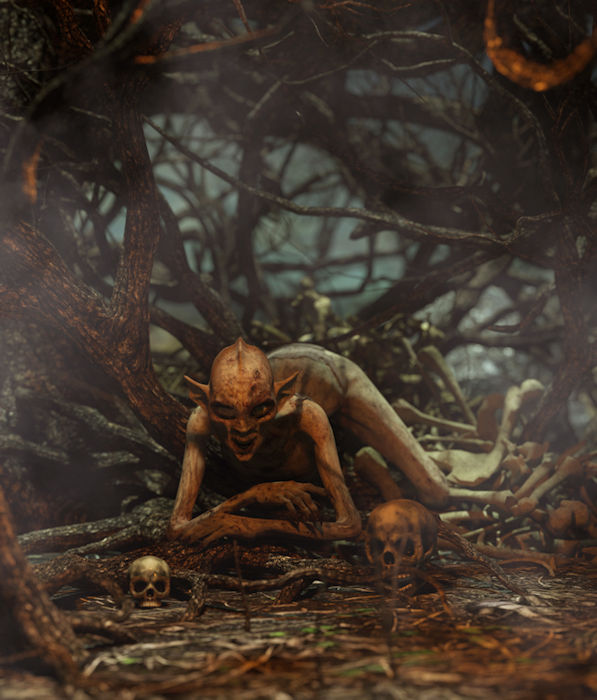
Credit: Adobe Stock - Joeprachatree
Modern-day Greek folklore still speaks of the empusa, who enters the body of its human prey (particularly children) to consume the flesh and blood of its victim. She loves to eat young and beautiful bodies and drink their blood because it’s strong and pure.
Empusa represents the Grecian form of a vampire. In the Greek myth, this female demon is usually described as having one prosthetic leg made of brass and the other leg of a donkey; from the waist up, Empusa is a human-like creature with hideous blemishes and scars on her skin.
She was said to have been the daughter of the goddess of witchcraft, the night, moon, ghosts, and necromancy, Hekate, and was sent by her to torment people, especially travelers.
This evil creature seeks its prey, and as the shape-shifter changes its apparition into an animal or a beautiful woman. She drinks her victims’ blood and consumes their flesh (like a vampire or succubus). The monster thrives in waters and on land, so it usually dwells along the coast.
An ancient story about a 25-year-old man of Lycia, Menippus, who is intelligent, handsome, and exceptionally well-built as an athlete, relates an encounter with this evil creature. One day, as Menippus walks along the road, he is met by an apparition. Empusa appears in the guise of a Phoenician woman, and Menippus lives under her spell. He falls in love with her and plans to marry her, unaware of what she is.
Apollonius is somewhat skeptical of her; he attends the wedding and is introduced to her by Menippus of Corinth, his former student. This wealthy woman is the mistress of all the servants. Hearing this, Apollonius tells Menippus that his wonderful bride is nothing but a vampire who – like others in her race - loves to devour flesh and blood of its victims.
Apollonius of Tyana made the young woman confess her true identity, thereby rescuing Menippus from a terrible fate on his wedding night.
Menippus’ bride is offended and orders Apollonius to leave, but his words have already broken her spell, and all the gold, silver, and servants vanished.
Pretending to weep, this demonic creature begs Apollonius not to force her to confess what she is, but he does. Finally, she admits she usually chooses her offers among young and beautiful people to dine on them, and Menippus is one of them.
Belief in this evil monster persists into modern times. Present-day shepherds blame her for accidents that happen to their animals, claiming that she suddenly appears, hurts them, and disappears again. Later tales describe a whole race of these monsters - the Empusae - living on the North African coast in Libya.
The ’Empusa’ is the early Greek term for the later Latin term ‘lamia.’ Over the ages, the descriptions of this female demon changed considerably and were often confused with Lamia
Ancient people believed that the only defense against these monsters was abusing them verbally or shouting insults. As a result, they screamed and fled their way.
Except for the Greek account of Empusa, the same awful creature is known in other ancient cultures of the Mediterranean region.
Written by – A. Sutherland AncientPages.com Staff Writer
Copyright © AncientPages.com All rights reserved. This material may not be published, broadcast, rewritten or redistributed in whole or part without the express written permission of AncientPages.com
Expand for referencesReferences:
Grant M, Hazel J. Who's Who in Classical Mythology
March J. R. Dictionary of Classical Mythology
More From Ancient Pages
-
 Unique Ancient Map Depicting The Earth As Seen From Space Restored Digitally
-
 Chilling Graffiti Found In 1,600-Year-Old Roman Prison In Corinth, Greece
-
 Paleolithic Mammoth Tusk Boomerang Found In The Oblazowa Cave Is Older Than Expected
-
 Fenrir: Oldest Of Three Monstrous Children Of God Loki In Norse Mythology
-
 On This Day In History: Vatican Began 7-Year-Long Trial Against Giordano Bruno – On Jan 27, 1593
-
 New Evidence Of The Destruction Of The Second Temple In The City Of David
-
 House Of Borgia – The Most Infamous Family Of Renaissance Italy
-
 Pyrgi Gold Tablets: A Rare Ancient Bilingual Treasure
-
 Was Hygiene Important For Our Ancestors?
-
 First Cemetery Dated To Roman Period Discovered In North Saqqara, Egypt
-
 Why Are Apples So Important During Halloween?
-
 Tomb Of Te K’ab Chaak, First Ruler Of Ancient Maya City Caracol – Discovered
-
 Ancient Disc-Shaped Copper Ingots Found In Shipwreck At Bulgaria’s Sea Coast
-
 ‘Empty’ Egyptian Coffin Kept In Museum Contained A 2,500-Year-Old Mummy
-
 Italian Sailors Knew Of America 150 Years Before Christopher Columbus – Ancient Documents Reveal
-
 Wupatki Ruins And Sacred Sunset Crater Of Ancestral Puebloans In Arizona
-
 Green Comet Last Seen By The Neanderthals 50,000 Years Ago May Be Visible To The Naked Eye This Week
-
 Daily Life Of Ancient Maya
-
 Curious Alien-Looking Slit Gongs Figures From Vanuatu Allowed Villagers To Communicate
-
 Treasure Trove Of Assyrian Kings Found In Tunnels Excavated And Plundered By Terrorists

