
Jeanne de Clisson ‘Lioness Of Bretagne’: Her Black Painted Ships With Red Sails Terrorized English Channel
A. Sutherland - AncientPages.com - Among many brave and rebellious women of old times that conquered the world was also Jeanne de Clisson (1300-1359). She took revenge for the death of her husband.
Known as the 'Lioness of Bretagne,' she became a famous pirate that stalked the English Channel and ravaged the French coastline.
 Jeanne de Belleville, aka Jeanne de Clisson. source
According to legend, Jeanne de Clisson's black-painted ships with red sails sowed terror in the region for thirteen years.
However, it wasn't without reason.
Jeanne de Clisson was born Jeanne de Belleville in Belleville-sur-Vie, a castle and fortress on the western coast of France.
She was a good mother and a happy wife to Breton nobleman Olivier de Clisson. Jeanne was a good and loyal French noblewoman for most of her life.
Jeanne's Husband Must Go To War
In April 1341, the War of Succession of Brittany broke out, and France went to war with England. The Breton War of Succession (1341–65) was an essential historical episode of the Hundred Years War (1337–1453, the conflict between England and France).
When Jean III, duke of Brittany, dies without leaving an heir, his duchy is disputed by two sides. On one side, by his niece, Jeanne de Penthievre, the wife of Charles de Blois, and on the other, by Jean de Montfort, Thus the duchy of Brittany becomes an issue even beyond its borders.
As a result, King Philip VI of France defends the party of his nephew Charles de Blois; several Bretons gather under the banner of Montfort (the half-brother of the deceased duke.) Jeanne's husband, Olivier, chose to back his friend, Charles de Blois, in his claim to the duchy.
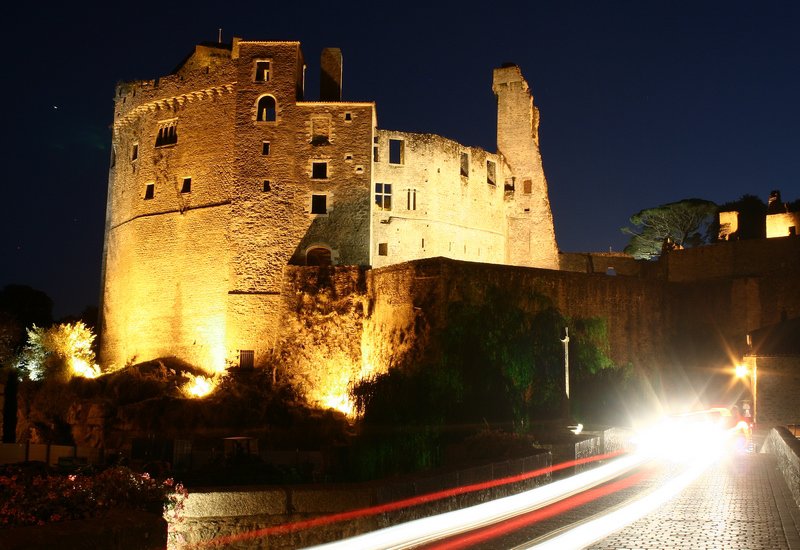
Clisson Castle at night. Image credit: Brice44 - CC BY-SA 3.0
In 1342, as one of the military commanders defending the city Vannes in northwestern France, Olivier de Clisson was taken prisoner, but he was soon released in a prisoner exchange.
Jeanne's Husband Was Not Trusted
Strangely, Charles de Blois became convinced that Olivier should not be trusted anymore. According to him, his friend was a traitor and had already defected to the English side. King Philip VI also believed Olivier was working for the English. On 19 January 1343, Olivier and fifteen other Breton lords were invited to a tournament on French soil.
He was suspected of not having defended the city to his fullest and accused of treason. He was arrested, taken to Paris, and tried.
On 2 August 1343, he was beheaded. His execution shocked Jeanne, his wife, and the whole nation.
Enraged, Jeanne Took To The Sea And Became A Cruel Pirate
After the death of her husband, Jeanne de Clisson made an important decision in her life as a widow and mother. She wanted to avenge her husband, who she believed was cunningly captured and executed at the court of the French king.
She did not intend to sink into mourning but gathered a small group and launched terrible attacks on French garrisons. When she could no longer stay on the continent, she moved to England and became a pirate.
 Execution of Olivier IV de Clisson. Painting is attributed to Loyset Liédet, Flemish illuminator (v.1420-v.1483) in the "Chronicles of Lord Jehan Froissart. Image credit: Liédet, Loyset - Public Domain
She sold the family property, sold her belongings, and decided to fight the French country not on the land but from the sea. She attacked from the fog without warning; she always left one survivor to spread the word of her doings. King Philip VI was furious and wanted to capture Jeanne. His soldiers hunted her, raiding her ship and killing her crew. On one occasion, she barely escaped with her children.
After this incident that could end tragically, Jeanne began rowing toward England. It took five days and nights, during which one of her sons died. Finally, she was rescued and arrived at Morlaix of Brittany in northwestern France.
Now she was ready to continue her revenge using the Black Fleet. With the English king's help and Breton's support, Jeanne prepared three black-painted warships with red sails. According to legend, her ships successfully sowed terror among French boats in the English Channel for thirteen years.
Her pirates burned cities, massacring French noblemen; her pirate crew attacked French ships during the Breton succession war from 1343 to 1356. She always left one (or three, in another version) sailors alive on the boats she attacked to ensure the French king was told she was in charge. It is possible, but not confirmed that she had concluded an alliance with England.
When King Philip VI died in 1350, the 'Lioness of Brittany' remained faithful to the Montfort House, supported by the English.
She finally abandoned piracy in 1356 and married Sir Walter Bentley, one of the faithful lieutenants of King Edward III, with whom she spent peaceful days in the coastal town of Hennebont. She died around 1359.
Written by – A. Sutherland - AncientPages.com Senior Staff Writer
Updated on September 27, 2022
Copyright © AncientPages.com All rights reserved. This material may not be published, broadcast, rewritten or redistributed in whole or part without the express written permission of AncientPages.com
Expand for referencesReferences:
Wagner J. A. Encyclopedia of the Hundred Years War
Duncombe, L. Sook. Pirate Women
Charles River Editors. History’s Famous Women Pirates
More From Ancient Pages
-
 2,000-Year-Old Huge Terracotta Jar Discovered In Turkey
-
 Mysterious And Magnificent Pasha Gardens Built For Unknown Reasons
-
 Latin America’s Oldest Beer Resurrected From 400-Year-Old Yeast
-
 How Large Was The ‘Giant’ Dunkleosteus Terrelli – Prehistoric King Of The Oceans?
-
 12th Century Idol Of Vishnumurthy Unearthed In Abandoned Well Near Udupi, India
-
 Secrets Of A Lake That Could Re-Write Ancient History Of America – Interesting Artifacts And Buildings – Part 2
-
 Fascinating Legend Of The 100 Sacred Ancient Signs Hidden In A Remote Cave And The Battle Against The Evil King Confirmed By Archaeologists
-
 Hidden Ancient Messages Found On Roman Glasswork Decoded
-
 Tooth Analysis Sheds Light On South Australia’s Early Colonial History
-
 Frey – Handsome Vanir God Of Fertility And Lord Of The Elves In Norse Beliefs
-
 On This Day In History: Edict Of Milan Is Signed – Persecution Of Christians Ends – June 13, 313 AD
-
 Unkulunkulu: ‘Great Oldest One’ Progenitor Of Mankind, Creator Of All Things And Origin Of Death In Beliefs Of Zulu People
-
 Why Didn’t The Spartans Build City Walls?
-
 Young Boy Discovers Rare Ancient Roman Treasure In Sussex, UK
-
 Was Biblical King David Unknowingly Part Of A Secret Master Plan?
-
 Europe’s Oldest Time Capsule Discovered Inside A Statue Of Jesus In Spain?
-
 Ancient Bronze Ring Bearing The Image Of St. Nicholas May Have Been Worn For Protection
-
 Controversial Tartaria Tablets: The First Writing System In The World?
-
 First Sumerian Revolt – People Oppose The Harsh Akkadian Empire
-
 Why Is The Hungry Ghost Festival Celebrated In August?


.jpg)