
Sokar – Patron Deity Of Ancient Necropolis Of Memphis In Lower Egypt
A. Sutherland - AncientPages.com - In Egyptian mythology, Sokar is an ancient falcon god of the Memphite necropolis, located in Memphis, Lower Egypt. It includes the sites of Giza, Saqqara, and Dahshur, rich in pyramids, mastabas, and tombs.
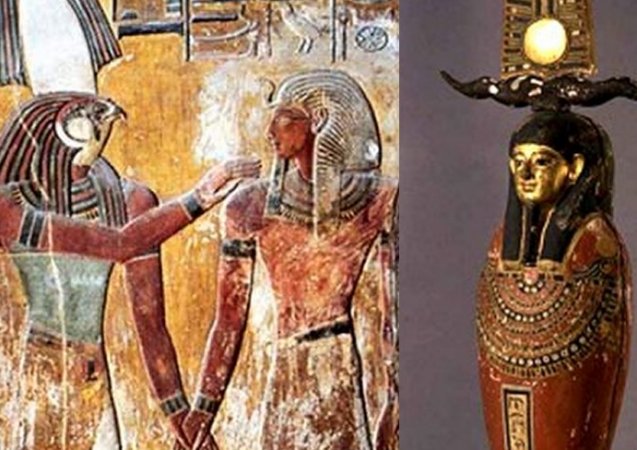
The deity was believed to have many names, and Sokar (Sokhar, Sokaris, Seker) was one of them, but the meaning of his name remains unclear. According to the Pyramid Texts, the ancient Egyptians linked his name to the Osiris’ cry for help to Isis 'Sy-k-ri' ('hurry to me'),[1] or possibly “skr”, meaning "cleaning the mouth".
Originally, Sokar was probably a god of craftsmanship; he fashioned silver bowls, as attested in the Book of the Dead, an ancient Egyptian funerary text, used from the beginning of the New Kingdom (around 1550 BC to around 50 BC. In the silver bowls, the feet of the deceased were washed. Another artifact (unearthed at Tanis) is the silver hawk-headed coffin of a pharaoh of the 22nd dynasty of Egypt, Sheshonq II (945-924 BC. The coffin was found decorated with Sokar iconography.

This is a preview of our premium article available only to members of Ancient Pages.
Become a member to read more - Click here
If you are already a member and have logged in to your account, you can access the article here

See also:
Seshat: Goddess of Astronomy Aligned Sacred Monuments To The Stars Long Before Imhotep
Gengen Wer – Goose God Who Guarded The Celestial Egg Containing The Life Force In Egyptian Beliefs
Khepri – Egyptian Progenitor God, Spirit Of Life, Resurrection And The Rising Sun
More From Ancient Pages
-
 Evidence Ancient Civilizations Had Knowledge About Planets In Our Solar System Thousand Years Ago
-
 Ancient Runestones Reveal A Surprising Viking Secret – Scientists Say
-
 Mysterious Disappearance Of Rome’s Founder Romulus And Strange Vision Of Proculus That United Ancient Romans
-
 Tarascan Indians: Intriguing Pre-Columbian Civilization Of Artists, Warriors And Skilled Metallurgists
-
 Did Ancient Romans And Greeks Love As We Do? Perhaps Even More Hopelessly
-
 Why Was The Moretta Mask So Popular?
-
 Legend Of Fintan Mac Bochra Who Escaped The Great Flood And Became The First Man In Ireland
-
 Delphic Mysteries – Extraordinary Encounter At An Ancient Temple – Part 2
-
 Legend Of Sleeping Hero Holger Danske: Viking Warrior Who Never Died
-
 Anartes: Forgotten Celtic Tribe And The Hercynian Forest With Strange Animals
-
 Ancient Knowledge Of Other Worlds And An ‘Impossible’ Being That Shouldn’t Exist
-
 Ancient Mediterranean Mystery In The Himalayas Puzzles Archaeologists – Can DNA Or Legends Solve The Riddle?
-
 Ancient Dacian Gold Helmet With Piercing Evil Eyes
-
 Unexpected Hero Saved The Gods And Humanity From An Evil Force – Rare Mesopotamian Myth Revealed On Ancient Sumerian Tablet
-
 Cupbearer Was Privy To Conversations And Political Secrets Hidden Behind Closed Doors
-
 Ancient Bizarre Experiments Conducted In Mysterious Underground Temple
-
 Mystery Of The Forgotten Explorers And Ancient Artifacts That Re-Write History Of North And South America
-
 Unexplained Mystery Of The Untraceable Stone-Throwers – Strangeness In Australia And New Zealand – Part 2
-
 Native Americans’ Visions Of Distant Explorers May Unravel Some Ancient Mysteries Of North America – The Arrival – Part 1
-
 Four Magical Treasures Of Tuatha De Danann

