
Holmgang – Dangerous Viking Duel Settled Disputes
Ellen Lloyd - AncientPages.com - Like in any other ancient society, Norse people had to follow laws and rules, but there were often disputes, and sometimes people decided it was better to solve a matter through a challenge.
It was done by a Holmgang, a duel that had to occur within three to seven days after the challenge was announced. Not showing up for the challenge was not a good idea.
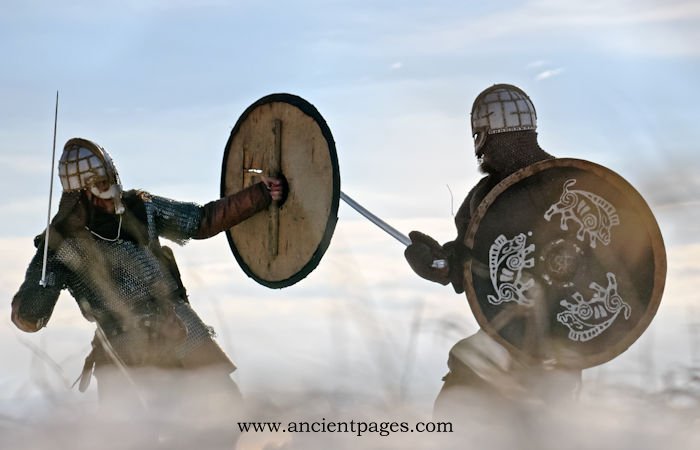
If the person challenged did not show up for the Holmgang, then his opponent was considered the winner of the dispute by default. Not turning for a Holmgang caused shame to the entire clan. A person who decided not to participate in a Holmgang was deemed niðingr.
In modern days, we would say a coward, but looking through the eyes of the Norse people, it was one of the worst things you could be called. It was a social stigma implying a loss of honor and a villainous status. The result was that he could be sentenced to an outlaw.

This is a preview of our premium article available only to members of Ancient Pages.
Become a member to read more - Click here
If you are already a member and have logged in to your account, you can access the article here

See also:
How Was A Viking King Elected And What Was Expected From Him?
Vikings Had Dark Humor And Joked Even During Deadly Battles
The Fierce Great Heathen Army And The Invasion Of East Anglia
More From Ancient Pages
-
 First Peoples Of Japan: Ainu Civilization And Its Unknown Origin
-
 Odd Encounter With A Mysterious Cave-Dwelling Creature Who Issued A Warning Described In A Norse Saga
-
 Sumerian ‘Mask Of Warka’ From Uruk: Sculptured Face May Depict Goddess Inanna
-
 Was Biblical King David Unknowingly Part Of A Secret Master Plan?
-
 The Faery Grail Of Hospitality And Accord – Secrets Of The Elucidation – Part 2
-
 Summer Solstice Festivals Around The World – Midsummer Celebration Is An Ancient Tradition Still Alive
-
 Unexplained Ancient Wars In America – Knowledge Of Ancient High-Tech Weapons? – Part 1
-
 Are Priceless Ancient Gold Tablets Of The Serpent People Hidden Underground In Los Angeles?
-
 Zhang Heng Seismograph Could Record Earth’s Dangerous Movements
-
 Persephone: Greek Goddess Of The Coming Spring And Lady Of The Land Of The Dead
-
 Oh, Whistle, And I’ll Come To You, My Lad – A Christmas Ghost Story
-
 Ur: One Of The Largest And Most Important Cities Of Ancient Mesopotamia
-
 Thor’s Hammer Pendant Found In Norfolk May Be Linked To The Great Heathen Army
-
 Cursed Magical Dainsleif Sword Of King Hogni And Legendary Battle That Continues Until The Coming Of Ragnarok
-
 Decebalus – ‘The Brave One’ – Last Mighty King Of Dacian People
-
 Magical And Malicious Creatures That Prey Upon Yggdrasil In Norse Beliefs
-
 Puzzling Connection Between Native Americans And Lost Northern European Race Could Re-Write History
-
 Unusual Viking Secret Hidden Underground In California Reminds Of A Similar Discovery In Colorado
-
 Secrets Of Viking Crystal Sunstones Revealed By Modern Science
-
 Neglected Ancient Artifacts That Could Re-Write History – Evidence Of Surprising Advanced Ancient Technology That Shouldn’t Exist

