
Vercingetorix – Visionary Nobleman And Mighty Warrior Who Led Army Of Gallic People Against The Roman Empire
A. Sutherland - AncientPages.com - Vercingetorix was an Arverni nobleman and a prominent figure in Gaul, recognized as the most renowned leader among the Gauls. He was known for his formidable skills as a warrior and played a significant role as an adversary to the Romans.
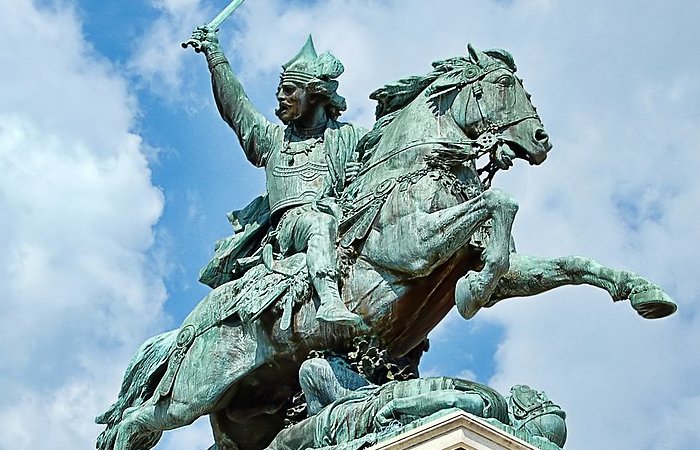
Statue of Vercingetorix , Place de Jaude in Clermont-Ferrand. IMage credit: Fabien1309 - CC BY-SA 2.0 FR
The young man was filled with ambition, driven by a clear vision of what he aimed to achieve: his dream was to unite all of Gaul. His name may not have been 'Vercingetorix,' a title meaning "supreme warlord" or "king of great warriors," but it symbolized the greatness he aspired to embody.
He and his father were much alike. His father was Celtillos (Celtillus), the Avernian, leader of the Gallic tribes. In Christopher Pelling's , 'Plutarch Caesar' we read that 'Celtillus, had been put to death by the Gaul [his own countrymen] when they thought he was aiming for tyranny.” Celtillus had already held a position of primacy but he also “was aiming for kinship…'
Were the Gaul tribes perhaps afraid of Celtillus’ leadership giving him the power to act oppressively or unjustly? It’s difficult to say because there is a lack of historical records on Arvernian kings from the time between 121 BC and 52 BC, but Celtillus was already associated with assassinations, intrigue, and conspiracies.
When Celtillus, leader of the Arverni tribe was murdered, his son Vercingetorix blamed the Romans because it looked as if his father was killed by someone using Roman weapons. He wanted revenge and was not afraid to follow in his father’s steps.
The only way to retain freedom was to unite forces and act together.
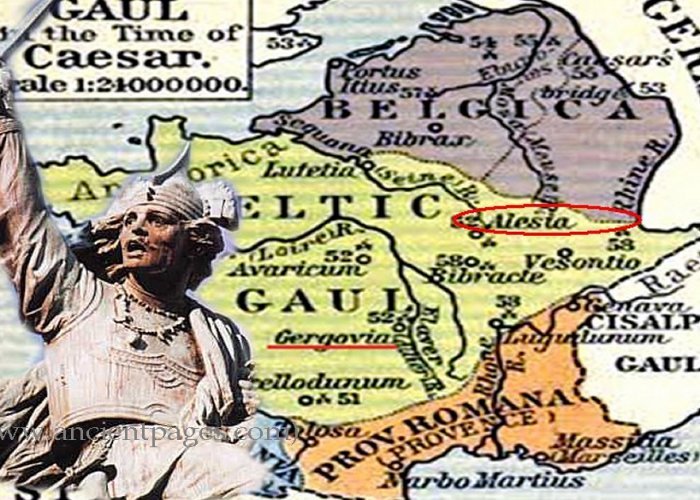
Vercingetorix’s uncle, worried about Roman retribution, expelled him from the Arverni town of Gergovia on the Gergovie plateau, but the young warrior did not give up.
The young man was aware that Caesar had already finished his campaign against the Gaul and his definitive goal was - to subdue all of them.
Getting little support from the nobles, he was forced to raise his own army from the poorest classes. He also raised support from young warriors from thirty tribes, and returned, proclaiming himself chief of his own Arverni tribe.
He was still prepared to do whatever was in his power to lead the Gallic people against the Roman Empire, but it wasn’t easy. His direct enemy was powerful - invincible Caesar and his army.
Vercingetorix adopted more current styles of warfare, but his military assets could not be compared to the great army of Caesar's soldiers.
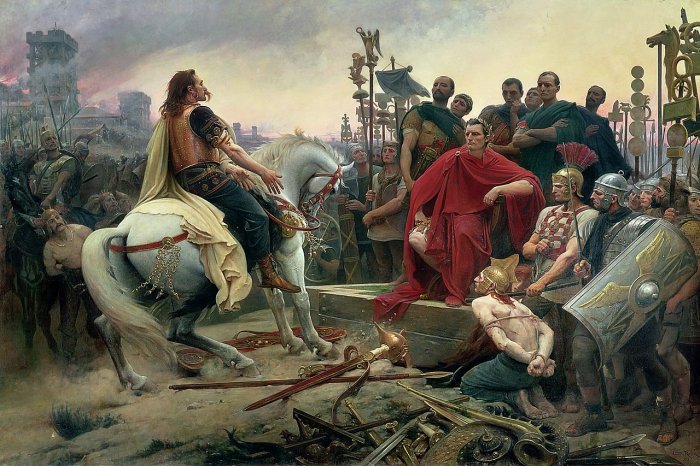
Vercingetorix lays his weapons at Caesar's feet ( historical painting by Lionel Royer, 1899) - Image credit: Lionel Royer -Musée CROZATIER du Puy-en-Velay. — http://www.mairie-le-puy-en-velay.fr - Public Domain
On the other hand, Caesar knew that if the tribes of Gaul decided to form a strong Gallic alliance, it would be much more difficult for his soldiers to conquer them.
Taking of the mountain stronghold of Gergovia (52 BC) in a battle, it was a success for Vercingetorix and AncientPages described this military encounter.
But the Siege Of Alesia was the last decisive battle that ended Gallic independence in France and Belgium. The great Gallic leader, Vercingetorix, decided to surrender the next day.

Reflecting on his fate, it's clear that he was not accorded the respect his bravery merited by his captors. Instead, he endured six long years of imprisonment in Rome. In 46 BC, Vercingetorix met his end—not on the battlefield where proud and courageous warriors often find their final rest—but in a manner that strongly contradicted the valor he had shown throughout his life.
He was publicly beheaded (or strangled) as a part of Caesar’s victory celebrations, and we can say that humiliation has never had limits.
With this development, the final significant obstacle to Rome's full conquest of Gaul quietly faded away, marking a pivotal moment in history.
Written by – A. Sutherland AncientPages.com Staff Writer
Updated on Oct 28, 2024
Copyright © AncientPages.com All rights reserved. This material may not be published, broadcast, rewritten or redistributed in whole or part without the express written permission of AncientPages.com
Expand for referencesReferences:
S. Sandler, Ground Warfare
M. L. Lanning, Battle 100: The Stories Behind History’s Most Influential Battles
Castleden R. Conflicts that Changed the World
More From Ancient Pages
-
 Atacama Desert Reveals More Ancient Secrets
-
 Oldest Known Spearthrowers Found At 31,000-Year-Old Archaeological Site Of Maisières-Canal
-
 Cult Of Zeus Discovered In The Ancient City Of Metropolis
-
 Who Was The Sapa Inca?
-
 Timur: Brutal Military Leader And His Desire To Conquer But Not To Rule
-
 World’s Largest DNA Study Of Viking Skeletons Re-Writes Ancient History – Norse Warriors Were Not Those Who We Thought
-
 Chromium Steel Was First Produced In Ancient Persia
-
 1.5 Million-Year-Old Human Vertebra Discovered In Israel’s Jordan Valley Sheds New Light On Migration From Africa To Eurasia
-
 On This Day In History: Sir Thomas Brisbane, Astronomer, Soldier And Governor Was Born – On July 23, 1773
-
 Mysterious Skeletons Of A Tall Unknown Race Discovered In California – Who Were These Beings?
-
 Holmgang – Dangerous Viking Duel Settled Disputes
-
 Dunino Den: Mysterious And Sacred Ancient Site In Scotland With Enigmatic Rock Faces And Symbols
-
 Cheomseongdae “Star-Gazing Tower” Is The Oldest Observatory In East Asia
-
 Mountain Meadows Massacre: Real Burial Sites Are Far From The LDS Monument’s Location
-
 Cooking In Indus Valley – Leftovers In Prehistoric Kitchen’s Vessels Analyzed
-
 Terahertz Imaging Reveals Hidden Inscription On Early Modern Funerary Cross
-
 Three Fun Paradoxes Created By Ancient Greek Philosophers To Puzzle Over
-
 ‘Curious’ Creature With No Anus Is Not Earliest Human Ancestor – Relieved Scientists Discover
-
 6,000-Year-Old Village Unearthed In Kurdestan
-
 Beehive’ Adobe Houses Of Ancient City Of Harran, Upper Mesopotamia

