
What Was Inti Raymi And Why Was It Celebrated By Inca?
Conny Waters - AncientPages.com - Inti Raymi is Inca’s Sun Festival, traditionally celebrated at Cuzco on June 24, which marks the winter solstice, the shortest day of the year - the Inca New Year (in regions south of the equator, the Gregorian months, June and July are winter months.)
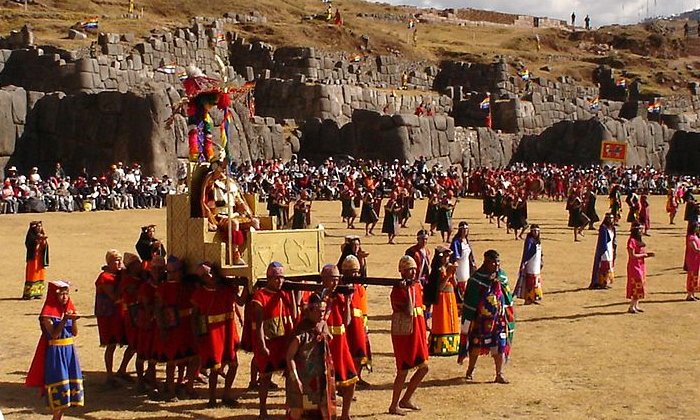
Inti Raymi (Festival of the Sun) at Sacsayhuaman,Cusco. Image credit: Cyntia Motta - CC BY-SA 3.0
It is an ancient Inca religious celebration of "The Inti or Sun." Formerly, the Inti Raymi lasted about 15 days, and the last one —carried out in the presence of the Inca Emperor—was in 1535, one year before ¨The Spanish Conquest¨ in 1536.
Today, it is a theatrical representation. Thousands of Cuzco and people from all over the world come together to this event, one of the most important cultural and traditional manifestations in this part of the world.
According to this ancient tradition, the Inca honored the beginning of the new solar year, a time when the Sun comes back to provide warmth for all life. It is the rebirth of the Sun, the Inca royalty, and the mythical origin of the Inca people.
Inti Raymi comes from the Quechua language: inti means “sun” and raymi means “festival.”
During the Inca Empire, only Inca males were allowed to participate in the festival. During the festival, offerings were made to the Sun, Viracocha, and the thunder god. The participants made many wooden statues dressed in fine clothes; at the end of the festival, the statues were burned.
The rituals associated with Inti Raymi are still performed and occur in front of huge crowds on this particular day each June at Cuzco, Peru.
The ancient fortress-ruins of Sacsayhuaman, in the hills overlooking the city, are filled that day with a very special atmosphere of Andean music, dance, a simulation of animal sacrifice (which originally served as an offering to the Sun God), parades, and ceremonies in the ancient Quechua tongue.
The lead figure is "The Inca" - the Emperor, supreme ruler of the Incan Empire. Carried on a platform and dressed in regal red and gold, the Emperor leads the ceremony with gestures and incantations to the Sun. During the festival, 500 actors representing Inca nobility are dressed in traditional clothes adorned with silver and gold. One actor portraying the Sapa Inca blesses the ceremony and speaks in the native language, Quechua, to honor the Sun.
According to Spanish chronicler, soldier, and poet Garcilaso de la Vega, the festival Inti Raymi was created by the ninth Sapa Inca Pachacuti in 1412 and lasted for nine days.
The last Inti Raymi with the Inca Emperor's presence was carried out in 1535, after which the Spanish and Catholic priests banned it for many years at least.
Little is known about the details of the Inti Raymi celebration, and most of what we see today is pieced together from archaeological findings, memories, and practices passed on from one generation to another to keep the ancient traditions alive.
As Quechua is not a written language, there are no written records of the rituals' origins. Among South American greatest celebrations, Inti Raymi is the second only to the festival in Rio de Janeiro.
Updated on June 1, 2024
Written by Conny Waters - AncientPages.com Staff Writer
Copyright © AncientPages.com All rights reserved. This material may not be published, broadcast, rewritten or redistributed in whole or part without the express written permission of AncientPages.com
Expand for referencesMore From Ancient Pages
-
 2,700-Year-Old Ancient City Of Limnai On Turkey’s West Coast – Discovered
-
 Indigenous People Of Ancient Sicily Were Acrive Traders Long Before The Greeks Arrived
-
 Ancient History Of Chinese Swords
-
 Agriculture In North America Led To Changes In Age-Independent Mortality
-
 Underground Ancient City Of Kish And Its Advanced Hydraulics System
-
 Mysterious 2,000-Year-Old Lost City Of Natounia May Have Been Found!
-
 Ancient Beliefs About The Soul
-
 Ice Age People Returned To Central Europe Much Earlier Than Previously Thought
-
 Ancient Mystery Of The Ladies Of Anavlochos: Bronze Age Art Found On Crete
-
 Has A Herculaneum Scroll Solved The Mystery Of Plato’s Death?
-
 Excavations Reveal New Artifacts That Change History Of Ancient City Of Pergamon
-
 Legendary Minamoto No Tametomo – First Samurai To Commit Seppuku
-
 7,000-Year-Old Ibex Remains Found Under The Ice In Italy Are 1,700 Years Older Than Ötzi!
-
 Curse Tablets With Messages To The Gods Of The Underworld Found In 2,500-Year-Old Well
-
 Moirai (The Fates): Greek Incarnations Of Destiny And Personification Of A Single, Unavoidable Fate
-
 Huge Ancient Ceramic Workshop With Hundreds Of Stunning Artifacts Solves An Archaeological Mystery In Israel
-
 Stunning Spanish Stonehenge Built By The Celts Revealed By Drought
-
 Deciphered Ancient Tablet May Depict Biblical Tower Of Babel – New Evidence
-
 A 500-Year-Old Stolen Copy Of da Vinci’s “Salvator Mundi” Painting – Found By Italian Police
-
 First Odometer Was Invented By Vitruvius Around 15 BC

