
Was Hygiene Important For Our Ancestors?
A. Sutherland - AncientPages.com - How important was hygiene in ancient times and expectations about keeping oneself clean?
Although the term "hygiene" came into use at the beginning of the nineteenth century, an instinctive desire to preserve or restore purity is very old.

Written sources, iconography and a variety of artifacts demonstrated a significant role of hygiene and each epoch had its ‘own way’ of understanding of dirt and cleanliness.
Ancient societies put a great deal of importance on bathing. In ancient times, it was generally believed that hygiene was the most effective means to fight disease. Antiquity was the cleanest epoch in human history.
The ancient Egyptians, for example, rightly assumed that high temperatures and considerable humidity of the Nile River could result in the development of diseases.
According to the Ebers Papyrus, a medical document dated to about 1500 BC, the ancient Egyptians bathed regularly and mixed vegetable and animal oils with alkaline salts were used to form a soap-like material. These ancient people daily used a lot of makeup cosmetics such as cream, pastes and face masks. Daily bathing helped to remove both makeup and other impurities. Cleanliness was also dictated by religious considerations.
The designs of entire cities in the Harappan culture included centralized baths and running water and in the Indus valley, archaeologists have discovered the first toilet 4,500 years.
The Hindus tradition of bathing and its benefits was known 3,000 years ago.
The Ancient Greeks adopted the idea of bathing from the Hindus, who were familiar with the benefits of bathing as early as 3,000 years ago. Baths were initially not so much a way of daily care of the body, but rather a kind of ritual.

Ancient tapestry depicting a heavily romanticized courtly bath in the early 1500s, set in a woodland glade, surrounded by various delights such as food, music, sweet smells. Image credits: Cluny Museum
Greek homes, even those not wealthy ones, were equipped in ceramic tiled baths. Baths - connected with a variety of beauty treatments and numerous utensils for bathing purposes - purified and strengthened the body.
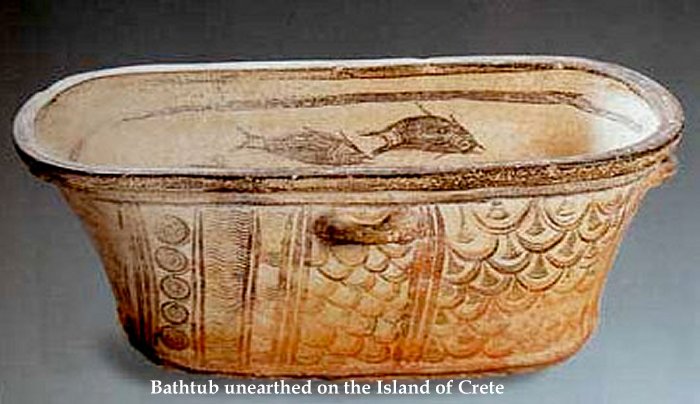
Archaeological findings confirm that the first known to us, bathtub comes from the palace of Knossos on Crete - 1700 BC an the earliest known flushing toilet, which was screened off by partitions and was flushed by water kept in cisterns or by rain water.
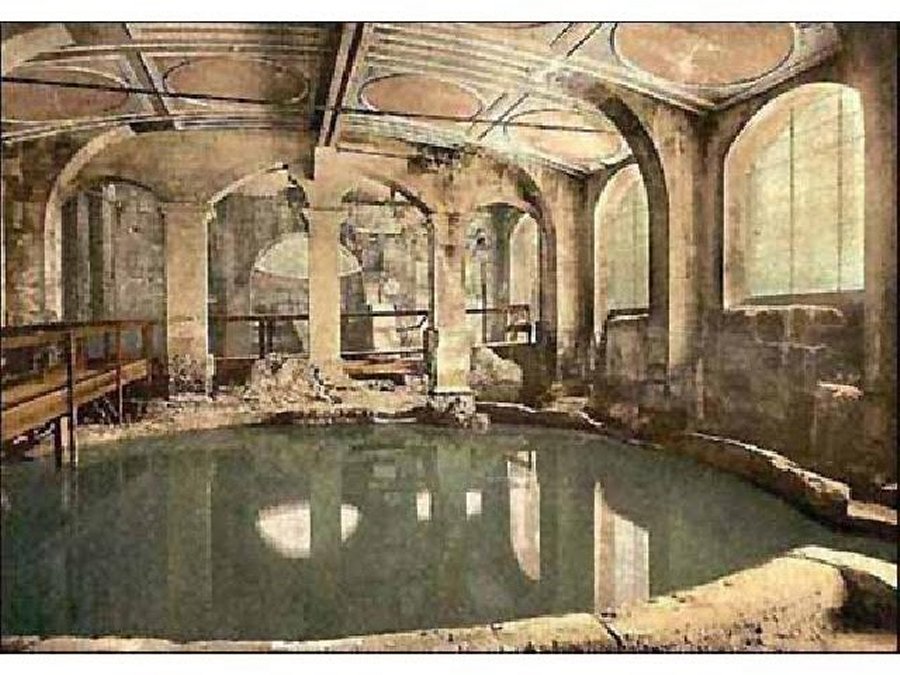
The Romans had large public baths and incredibly popular thermal baths. The Finns popularized the sauna, which was also used by the Koreans (“hanjeungso”), the Karo people of Indonesia (oukop), and the so-called “Turkish Bath” was used throughout the Middle East.

Medieval Europeans bathed less frequently than their Norse forerunners, who bathed at least once a week. However, to say that medieval faces, hands, and bodies were always dirty, their clothes were evil-smelling and everything around them was dirty, would be to condemn all medieval people. It would be unfair to do so.
If you had the money, you could pay for servants to heat water and fill a wooden tub for one,
but most people used the public baths. Based on ancient sources, by the thirteenth-century there were thirty-two bathhouses in Paris and eighteen in London; even the smaller towns had bathhouses.
The Medieval Europeans have always valued a nice smelling plant, but oils, soap, colognes and perfume. The art of perfume and other wonderful smells such as rosewater originated from the Holy Lands and was brought to Europe by the crusaders.
Maino De Maineri (also known as Magninus Mediolanensis, who died in 1368, was a 14th-century Italian physician, astrologer and writer, described more 57 bathing prescriptions and gave his own rules to use in specific conditions, such as traveling, pregnancy and old age.
Before the Middle Ages, public baths were much more common and still, during the 4th and 5th centuries, Christian authorities allowed people to bathe for cleanliness and health. However, the Church condemned attendance to public bath houses for pleasure and condemned women going to bath houses that had mixed facilities.
Over time, more and more restrictions appeared for Christians, who were prohibited from bathing naked. Eventually, public bathing was considered immoral activity that led to diseases and prostitution.
Written by – A. Sutherland AncientPages.com Staff Writer
Copyright © AncientPages.com All rights reserved. This material may not be published, broadcast, rewritten or redistributed in whole or part without the express written permission of AncientPages.com
Expand for referencesReferences:
T. Scully, The Art of Cookery in the Middle Ages
S. Cavallo,T. Storey, Healthy Living in Late Renaissance Italy
More From Ancient Pages
-
 1,000-Year-Old Church Walls Unearthed In Ethiopia By Polish Archaeologists
-
 1,700-Year-Old Vase For Olive Oil And Wine Unearthed At Historic Site Of Diyarbakir Fortress, Turkey
-
 On This Day In History: Henry II Crowned King Of England – On Dec 19, 1154
-
 Burials Of An Unknown Race Of Unusually Small Humanoids Found In Ohio May Confirm Native American Legend
-
 The Oseberg Tapestry And Other Artifacts Show Intense Colors Were A Viking Symbol Of Status And Wealth
-
 1,000-Year-Old Tomb Of Famous Viking Warrior, Ulv Galiciefarer May Have Been Unearthed
-
 Historical Document Confirms Martyrdom Of Japanese Christian Retainers 400 Years Ago
-
 Magnificent 2 Meters Tall Marble Apollo Statue And Other Artifacts Found In San Casciano dei Bagni, Italy
-
 Mysterious And Feared Underground World That No One Can Visit And Return To Tell About – Cherokee Reveal A Secret
-
 On This Day In History: Richard The Lionheart Arrives To The Holy Land – On June 8, 1191
-
 New Inscriptions, Gold And Paint Showed Thanks To Restoration In Temple Of Edfu
-
 ‘Exceptionally’ Rare Iron Age Axle Found In Suffolk
-
 Cimmerians – Ancient People Searching For A Home
-
 The Red Dragon Of Wales – Ancient Symbol Dating Back To Roman Times
-
 British Museum Is World’s Largest Receiver Of Stolen Goods – Says QC
-
 Headteacher’s Sarcophagus Unearthed In Ancient City Of Aigai, Turkey
-
 Wreck Of Historic Royal Ship ‘Gloucester’ Discovered Off The English Coast
-
 Grave Of Scythian Amazon Warrior Wearing A Golden Ceremonial Headdress Discovered In Voronezh, Russia
-
 Apulian Secrets: Ancient Burial Rituals Shed Light On A Culture That Left No Written History
-
 On This Day In History: Spanish Conquistadors Led By Hernan Cortés Entered The Aztecs Capital Tenochtitlán – On Nov 8, 1519

