
Ancient Egyptian Men Used Eye Makeup For Many Reasons
AncientPages.com - Frescoes discovered in ancient Egyptian temples illustrating daily life reveal men often wore makeup. In facts, it’s almost impossible to find a portrait of an ancient Egyptian whose eyes are not decorated.
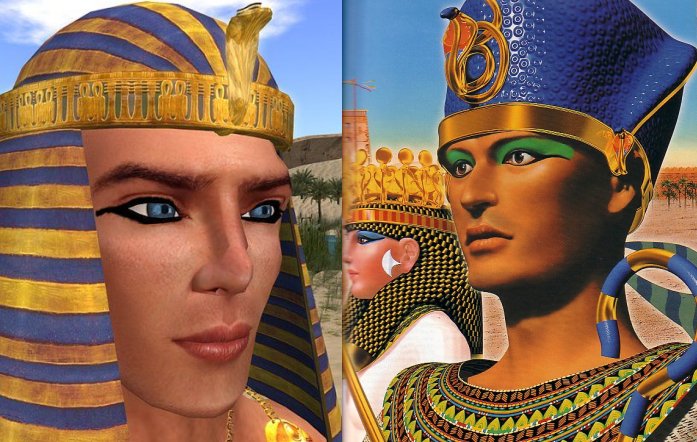
During all periods and dynasties, eye makeup was a daily prerequisite for both men and women. Why did ancient Egyptian men wear eye makeup? There were a number of reasons actually.
Ancient Egyptian eye makeup was very elaborate and used as early as 4000 B.C. Eye makeup equipment (palettes, grinders, applicators) has been found among the earliest burials of the pre-dynastic period and seem to have been essential items for the afterlife.
Ancient Egyptians used a variety of cosmetics such as eye make up, rouge and perfumed oils that softened the skin and prevented burning in the sun and damage from the sandy winds. Galena powder possesses disinfectant and fly-deterrent properties.
It is believed to offer the eyes protection from intense sun.
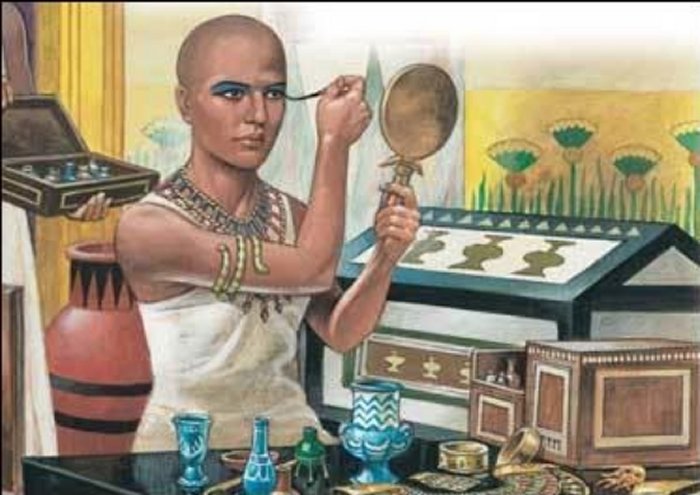
The smoky kohl liner served both practical and ritualistic purposes. It was thought to repel flies, protect the eyes from the Sun's rays and ward off infection. Makeup helped to imitate the looks of the gods. Favorite eye make up colors were black and green and outlining the eyes with pigment was deliberately done to created an almond or feline shape.
Eye make up provided psychic protection as well. The Egyptian word for eye-palette seems to derive from their word for "protect." An unadorned and thus unprotected eye was believed vulnerable to the Evil Eye. Outlining the eyes thus became a personal protective amulet drawn right upon the skin; an amulet that once applied could not be lost or misplaced. Makeup was believed to have magical healing powers.
Although cosmetics were certainly used for the purpose of beautification, in ancient Egypt, eye makeup did more than paint a pretty face.
Copyright © AncientPages.com All rights reserved. This material may not be published, broadcast, rewritten or redistributed in whole or part without theexpress written permission of AncientPages.com
More From Ancient Pages
-
 Mystery Of The Ancient Talayot Sword
-
 Simple 1,000-Year-Old Medieval Medicine Cure Can Treat Modern Infections – Study Shows
-
 Ancient Mystery Of The Biblical Canaanites – New DNA Insight
-
 Mystery Of Arthur’s Stone In UK – Solved?
-
 The Black Obelisk Of Shalmaneser III – Great Assyrian Ruler
-
 Was Organized Society A Disruptive Or Calming Force In Ancient Andes Populations?
-
 Young Girl Finds Rare Ancient Megalodon Shark Tooth On Maryland Beach
-
 900-Year-Old Coins And Jewelry Unearthed In Polish Village – Could They Belong To A Ruthenian Princess?
-
 On This Day In History: Battle Of Lissa Took Place In The Adriatic Sea – On July 20, 1866
-
 On This Day In History: Battle Of Nineveh Was Fought – On Dec 12, 627 AD
-
 Zagros Mountains: Home To Tribes, Kingdoms And Empires For Thousands Of Years
-
 Wasabi Plant Can Save Ancient Bio-Deteriorated Papyrus
-
 Mystery Of Marquis of Haihun: 2,000-Year-Old Royal Coffin Opened In China
-
 Huehueteotl: Old Aztec God Of Fire, Time And Aging – Ceremony Of The New Fire
-
 Previously Unknown Monumental Etruscan Temple Found Near The Tempio Grande, Vulci, Latium, Italy
-
 Rare Well-Preserved Viking Artifacts Lost On Mountain Pass – Revealed By Retreating Glaciers
-
 Neanderthals Had Older Mothers And Younger Fathers Compared To Modern Humans
-
 European Medieval Burial Practices Were Different Than Previously Thought
-
 Shattering The Myth Of Men As Hunters And Women As Gatherers
-
 Ancient Stone Monoliths In Ethiopia Are 1,000 Years Older Than Previously Thought

