
Unique 2,000-Year-Old Hexagonal-Shaped Bronze Matrix Of Sarmizegetusa Regia, Romania
A. Sutherland - AncientPages.com - An ancient bronze matrix, over 2,000 years of age, has just become the most valuable archaeological piece, presented at the Dacian and Roman Civilization Museum of Deva.
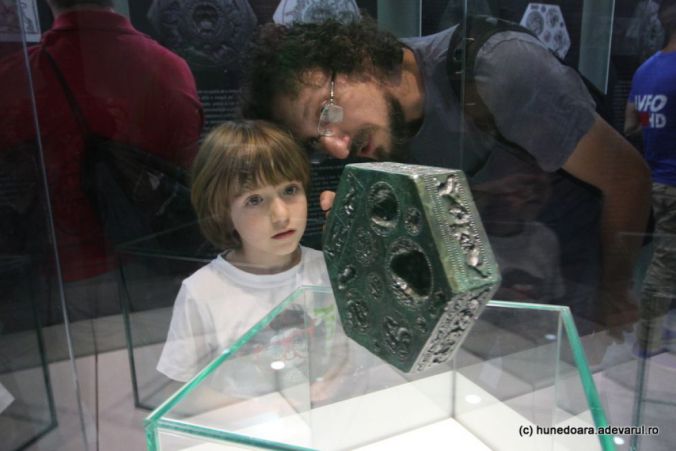
The matrix was discovered in 2013 and has been subjected to research by specialists.
The unique and priceless artifact was unearthed after a storm at the roots of a tree that had collapsed within the Sarmizegetusa Regia Archaeological Site, Romania. The matrix is the only one of its kind in Europe and is highly complex.
The origin of the matrix comes from a Dacian jeweler workshop.
"Its importance and value are so great, we have decided the matrix should be displayed alone, in a single, well guarded, secured room. Its display has been made in such a way that the visitors can have a more special interaction with the images depicted on the matrix.

The object found shows the extraordinary artistic quality of the craftsman who made their products. Credits: Dacian and Roman Civilization Museum of Deva.
"The showcase and the lights make possible a much detailed view of all its facets." – said Liliana Tolas, manager of the Dacian and Roman Civilization Museum of Deva.
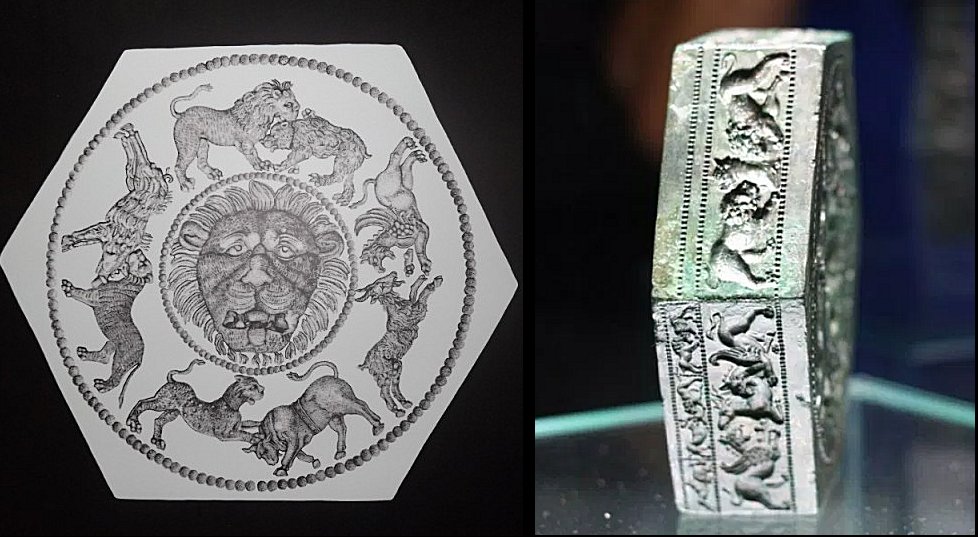
According to archaeologists, the matrix was used to create decorative pieces from precious metals. The hexagonal shape is encrusted with sculptures representing mythological creatures from the Mediterranean region.

Image credit: Dacian and Roman Civilization Museum of Deva.
"There is a whole series of real and fabulous animals in this matrix, and the fact it functioned within Sarmizegetusa Regia, in the midst of the Roman conquest, tells us that the Dacian mediums resonated with this art that illustrates mythological creatures such as griffins and other animals.
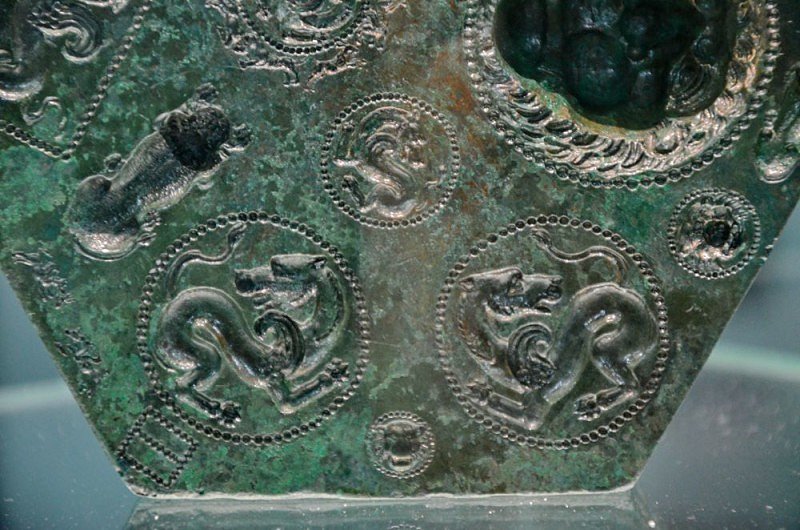
The matrix weighs approximately 8 kg, with 8 facets, of which the two main ones are of hexagonal shape. Its thickness is 5 cm. The piece was found in good conditions of conservation. Credits: Dacian and Roman Civilization Museum of Deva.
"This tells us that the Dacian aristocracy resonated with everything that makes this fabulous universe, no matter the provenience. The art which the matrix illustrates speaks an international language with links within the Mediterranean and northern Pontic region.
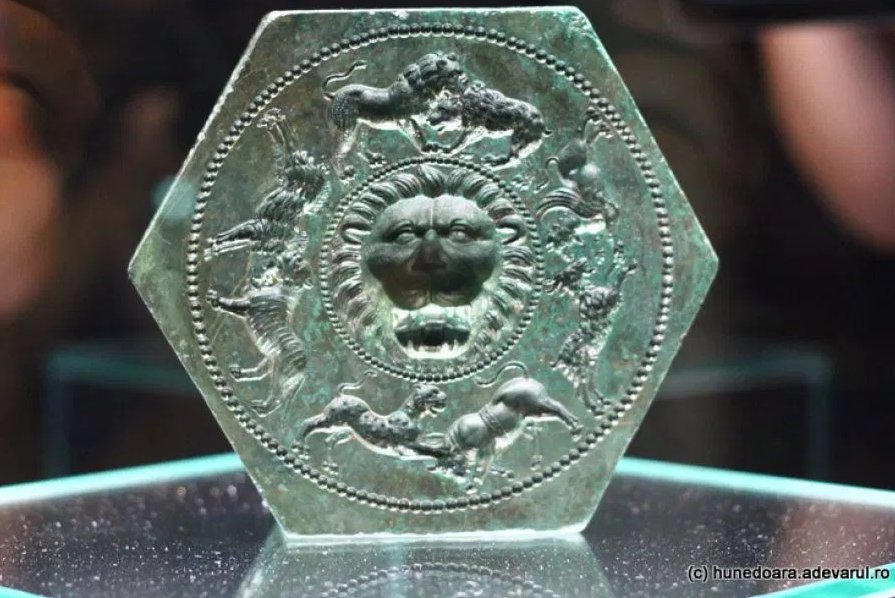
Sarmisegetusa the eve of the conquest by the Romans was a cosmopolitan environment in which elites Kingdom Dacian were able to purchase products and services of high quality, “said Dr. Gelu Florea last year., who coordinated the research tracking the history of the region. Credits: Dacian and Roman Civilization Museum of Deva.
"It is important that it was discovered and functioned within Sarmizegetusa," said the historian Gelu Florea.
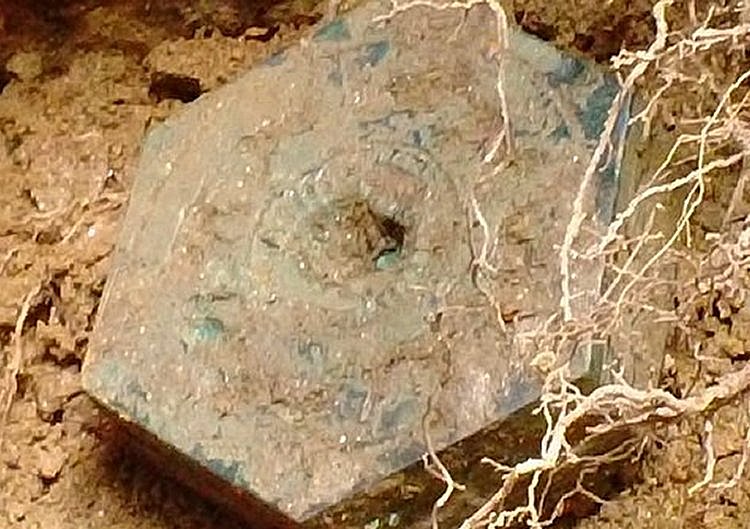 The 2,000-year-old mold with which the Dacians made their gold jewelry. Trunks uprooted by storms revealed a real treasure: the mold with which the Dacians made their gold jewelry.
The matrix weighs approximately 8 kg, with eight facets, of which the two main ones are hexagonal. Its thickness is 5 cm. The piece was found in good conditions of conservation.
Historians said that such a piece was quite costly. Its bestiary, rich and fabulous, represented on the matrix, is rich and diverse and composed of griffins and real animals such as the lion, the tiger, the leopard, the rhinoceros, the hippopotamus, the bear, the boar, the wolf, the bull, the tur, the antelope and the rabbit.

The theme of the sceneries represented on the matrix displays battles between animals, and it is ancient and well spread within vast cultural spaces.
On the matrix, there are also three griffins: the vulture-griffin, the lion-griffin, and the wolf-griffin, which is specific for the northern pontic region. A griffin is a legendary creature with the head and wings of an eagle, a lion's body, tail, and back legs, and sometimes an eagle's talons as its front feet.
 Credits: Dacian and Roman Civilization Museum of Deva.
According to historian Gelu Florea, the matrix was created and used in the 1st century BC. Its presence within the Dacian capital kingdom is proof of the connection to this cultural space's artistic and high technological flux in antiquity.
Written by – A. Sutherland - AncientPages.com Senior Staff Writer
Updated on September 22, 2023
Copyright © AncientPages.com All rights reserved. This material may not be published, broadcast, rewritten or redistributed in whole or part without the express written permission of AncientPages.com
More From Ancient Pages
-
 4,500-Year-Old Skeletons Found In SW China
-
 Intriguing Study Reveals Genes And Languages Aren’t Always Found Together – What Does This Say About Our Ancestors?
-
 Afterlife: Ancient Egyptian Mummification Balms Studied
-
 Kylfings – Unknown Warriors Mentioned On Norse Runes – Were They Members Of The Varangian Guard?
-
 Was Princess Tadukhipa Of The Mitanni Kingdom Queen Nefertiti?
-
 Thousand Unearted Artifacts Reveal ‘Major’ Ancient Migration To Timor Island
-
 Ancient Dragons And Dragon Kings In Myths And Legends
-
 Secrets Of The Japanese Shirasaya Sword Mounting
-
 Dresden Codex – Probably The Oldest And Best Preserved Book Of The Maya
-
 73 Intriguing Burial Bundles And Carved Masks Placed On False Heads Discovered In Peru
-
 Pharaoh Ramses II’s Sarcophagus On Display For The First Time In 50 Years
-
 Evidence For A Divergence Between Eastern And Western Mediterranean Indo-European Languages Finally Provided By Ancient Genomics Study
-
 350-Year-Old Remains Unearthed In A Stone Age Site In Portugal
-
 Mysterious Grave Of King Valdemar IV Atterdag – Will The 600-Year-Old Historical Puzzle Ever Be Solved?
-
 How Did A Rare 2,000-Year-Old Gem Seal Depicting God Apollo End Up In The City Of David?
-
 Medici Family – Powerful Renaissance Godfathers And Patrons Of Galileo Galilei
-
 5,000-Year-Old Perga City And Kommagene Civilization: Most Of Treasures Are Still Underground
-
 Berserkers In Mesopotamia, Europe And India: Old Tradition Of Mad Fighting Dates Back At Least 3000 BC
-
 Artifacts From King Henry VIII’s Warship The Mary Rose – Analyzed
-
 Cairn de Barnenez: Europe’s Largest Megalithic Mausoleum Is One Of The World’s Oldest Man-Made Structures

