
Did Pharaoh Shishak Plunder King Solomon’s Temple?
Ellen Lloyd – AncientPages.com – Scholars have confirmed many Biblical events, but there are still accounts in the Holy Book that remain shrouded in mystery. One such case concerns the possible connection between Pharaoh Shishak and King Solomon's Temple.
According to the Bible, Israel was very wealthy during the reign of King Solomon. At the same time, a much weaker and poorer Egypt was still struggling in their Third Intermediate Period (1069–747 B.C.)
After the death of Pharaoh Ramesses XI (reign 1107–1078/77 B.C.), Egypt declined and lost much of its glory. Smendes I, the first King of the 21st Dynasty, ruled from Tanis. Still, he had difficulties maintaining power in Thebes, whose priests were becoming increasingly influential.
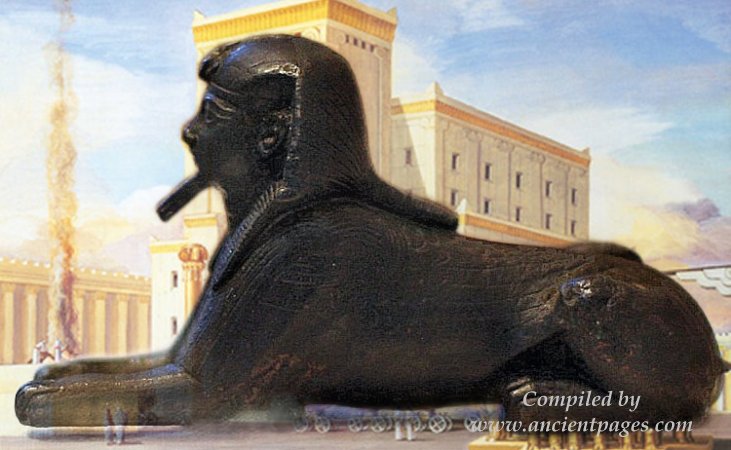
Sphinx of King Shishak. In the background artistic impression of King Solomon's Temple.
The Bible tells us that knowledge of King Solomon's wealth spread worldwide. This raises the question of whether ancient Egyptians were interested in Solomon's treasures.
It has been suggested that Pharaoh Shishak plundered King Solomon's Temple, but what evidence supports such claims? While investigating this story, we encounter obstacles and unconfirmed events.
Jeroboam, the first King of Israel, fled to Egypt after King Solomon tried to kill him following prophecies by Yahweh. Jeroboam remained in Egypt, where Shishak ruled until Solomon's death. According to Biblical scholars and Jewish experts, Israel owned thousands of tons of gold and silver. Needless to say, such treasures must have been very appealing to any Egyptian ruler, and Shishak wouldn't have second thoughts about bringing this wealth to his country, but did he have such an opportunity?
After Solomon's death, Jeroboam left Egypt, returned to Israel, and asked the new King Rehoboam to reduce taxes, but his wish was not granted. Jeroboam traveled north and rebuilt and fortified Shechem as the northern kingdom's capital.
Four years later, in support of his ally Jeroboam, Pharaoh Shishak led an army of 60,000 horsemen and 1,200 chariots to invade Judah.
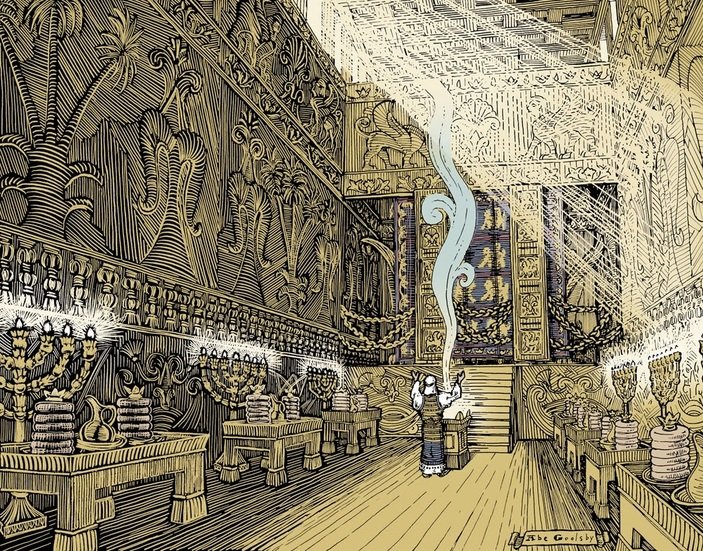
Artistic impression of King Solomon's Temple and its interior. Credit: Public Domain
Pharaoh Shishak sacked Jerusalem and his successful military campaign gave him the perfect opportunity to plunder and boost Egypt's economy. Pharaoh Shishak did unite Egypt, but did he get his hands on Solomon's wealth?
Some scholars speculate that Judah was so weak at the time that it was decided to give King Solomon's riches to Shishak to save the precious Temple.
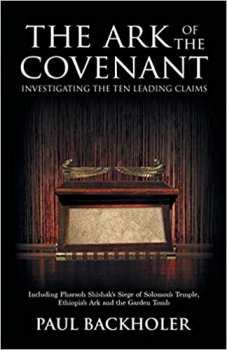
According to Paul Backholer, author of the book The Ark of the Covenant, Investigating the Ten Leading Claims: Including Pharaoh Shishak's Siege of Solomon's Temple, Ethiopia's Ark & the Garden Tomb, finding historical or archaeological evidence that Pharaoh Shishak plundered King Solomon's Temple, is a complicated issue.
 Backholer writes that "grave robbers are sometimes as infamous as the pharaohs, for they managed to search out and empty the royal tombs of their wealth. In fact, the situation was so bad that Egyptian priests eventually gathered and hid away the mummified bodies of their pharaohs in order to protect them.
Pharaoh Shishak's tomb and the wealth within have never been found. No leads there then. Nevertheless in Tanis riches were uncovered second only to Tutankhamun's; yet the discovery was never made famous for this excavation took place during WWII when the world had bigger problems to think about and the finds were only published in French.
Tanis was the burial ground for the successors of the pharaoh who attacked Jerusalem and just fifty years after his death, Pharaoh Osorkon II came to power.
The Bible declares that Shishak took the wealth of Jerusalem and Egyptians were always working on projects, including burial deposits that needed gold and silver.
Therefore was any of Solomon's treasure melted down and recast to be buried in these royal tombs?
Many of the antiquities of Jerusalem were taken by Shishak and when archaeologists excavated these tombs, they identified golden treasures that the grave robbers had missed. Inside they dug up a bracelet bearing the name of Sheshonq I, the man who took Judah's wealth, and his relatives were buried with gold and silver. Sheshonq II had a golden face mask and a large silver coffin. When Solomon reigned he boasted of the abundance of silver in Jerusalem, but after his death, Egypt plundered the nation, 2 Chronicles 9:10-27."
While visiting an Egyptian museum, Backholer saw virtually unheard of artifacts in the Western world.
Bachelor explains that in the Tanis exhibit, next to Tutankhamun's display, he saw a" bracelet worn by the pharaoh who entered Jerusalem and took the wealth from Israel's first Temple! How many
Did Christians visit this museum without realizing that the man who wore this bracelet saw Solomon's Temple?
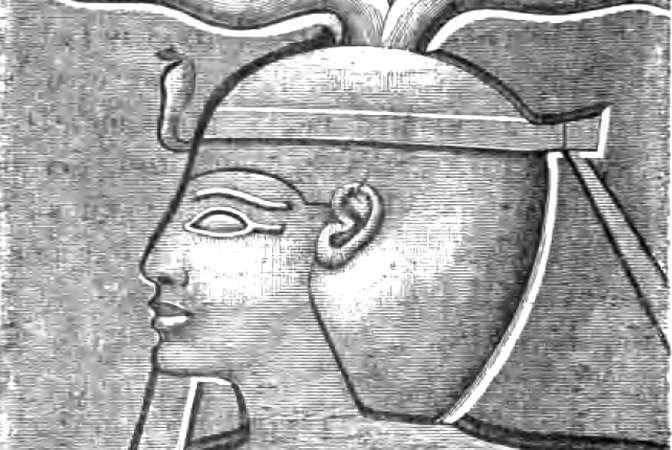
The head of Shishak. Image credit: Bible History Online
Two steps away, we found the silver coffin and the golden facemask. These discoveries are almost unknown to the public, and while experts cannot prove that these antiquities were made with Jerusalem's wealth, the link remains provocative.
When we ask what happened to the wealth of Solomon's Temple, the Bible gives us the answer. One of the culprits who stripped the Temple was Shishak, and plunder from his campaign would have been used to build his memorial in the Temple of Karnack, and some of Jerusalem's gold and silver may have been recast, and buried in Tanis."
See also: More Biblical Mysteries
So, yes, Pharaoh Shishak may have plundered King Solomon's Temple, but before making such claims, archaeologists must first offer reliable evidence the structure did exist. This may be very difficult as the Temple may have been completely destroyed.
Updated on January 26, 2023
Written by Ellen Lloyd – AncientPages.com
Copyright © AncientPages.com All rights reserved. This material may not be published, broadcast, rewritten or redistributed in whole or part without the express written permission of AncientPages.com
More From Ancient Pages
-
 Cuchulainn: Irish Mythical Hero And His Cruel Magical Spear Gae Bolg
-
 Was Organized Society A Disruptive Or Calming Force In Ancient Andes Populations?
-
 Six Ancient Giant Stone Spheres Recovered From The Diquís Delta, Costa Rica
-
 Is ‘Someone’ Regularly Altering The Course Of History? – Is So How, Why And Who? Part 1
-
 Unexpected discovery of hidden color in ancient mummy portraits
-
 Mystery Of The Cursed Ancient Temple With Treasures Guarded By Serpents
-
 Enigmatic Newport Tower – Built By The Vikings, Knights Templar, Freemasons Or Someone Else?
-
 Baby Carriers Were Used 10,000 Years Ago – New Evidence
-
 Tower Of The Winds And Daydreaming Of Andronicus Of Cyrrhus
-
 Siege Of Alesia: Last Decisive Battle That Ended Gallic Independence In France And Belgium
-
 Ancient Tools Used In Religious Rituals In Honor Of Goddess Hathor Discovered In Egypt
-
 ‘Homo Erectus’ From Gongwangling Could Have Been One Of The First Human Beings 1,6 Million Years Ago
-
 Curly Hair Protected The Brain Of Early Humans And Helped It Grow
-
 Neanderthals May Have Been Carnivores – New Study
-
 Hesperides – Greek Nymphs Who Guarded Fabled Garden With Divine Apples Of Immortality
-
 Ancient Human Remains Buried In Spanish Caves Were Subsequently Manipulated And Utilized
-
 Ancient Egyptian Knowledge Of The Cosmic Engine And Unseen God Of The Universe
-
 Monumental King’s Grave (Bredarör) In Kivik, Sweden With Spectacular Rock Carvings
-
 Late-Surviving Dinosaurs In New Mexico Lived In Vibrant, Regionally Distinct Communities Until The Very End
-
 Unique Ancient Gold Cloth Found In The Necropolis Of Saint-Pierre-l’Estrier Is The Largest Antique Piece Found To Date

