
Mysterious Ancient Fortified City Of Djado On Dangerous Journey Across Sahara
A. Sutherland - AncientPages.com -There is a mysterious ancient city of Djado located on the southern border of the Djado plateau in northeastern Niger. Once, there were several cities on this plateau, but today, the area is largely uninhabited.

The ruins of abandoned cities, forts, and beautiful cave art are still there.
The Djado Plateau in the northeast is also rich in art, where remarkable paintings and engravings have been discovered in the Aïr Mountains.
Dated back to 3,500 to 2,500 BC, rock art depicts vegetation and animal presence somewhat different from our modern expectations. The remote northeastern town of Djado, a very ancient fortified complex, was a fort and trading center located along the routes towards Libya.
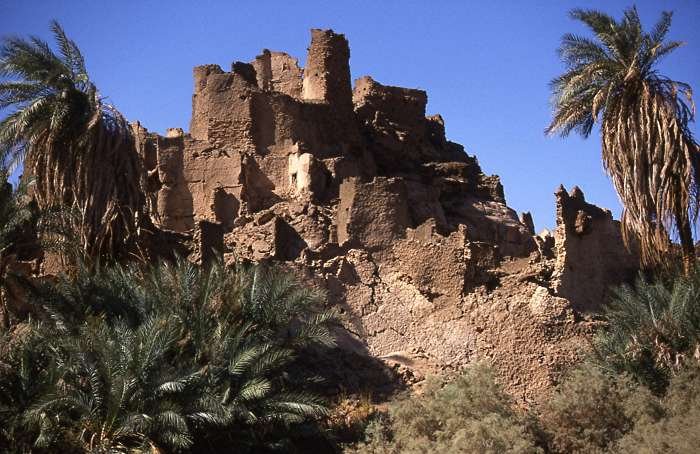
Ruins of the clay construction houses of Djado, the city abandoned centuries ago in the north-east of Niger. Image credit: Holger Reineccius - CC BY-SA 2.0 DE
On the other hand, archaeologists estimate that Djado was built approximately 800-1,000 ago, and it was an oasis and an important station on the dangerous route across the Sahara Desert.
Prehistory and even more modern history of this region have yet to be discovered.
Today, Djado is a ghost town in Bilma, an oasis town and commune in northeast Niger, with, as of the 2012 census, a total population of 4,016 people.
It has good protection from the desert dunes under the Kaouar Cliffs and is the largest town along the Kaouar escarpment. It is known for its gardens, salt, and natron production through evaporation ponds and as the destination of one of the last Saharan caravan routes.
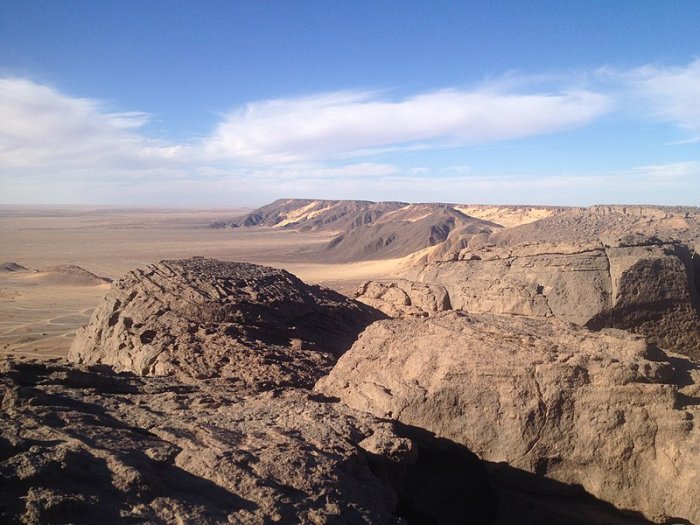
From top mountain of Djado in sahara desert. Image credit: Maireymaradi - CC BY-SA 4.0
The settlement lies on the plateau and has the same name but was not called Djado. This remote ancient site has never been excavated, so the actual name of the settlement is unknown. Djado was part of the kingdom of Sayfema of Kanem-Bornu, at least since the reign of Dunama Dibalemi (1203–1243).
Once they were independent, they re-joined the Idris Alauma empire (1564–1596).
Idris Alauma moved through the desert from Fachi to Bilma, 260 kilometers (160 mi) south of Djado.
As the power of the Bomu empire decreased, the people of the oasis were exposed to several raids of the Touareg in the 18th and 19th centuries.
They started to abandon the place and settled in Kaouar.
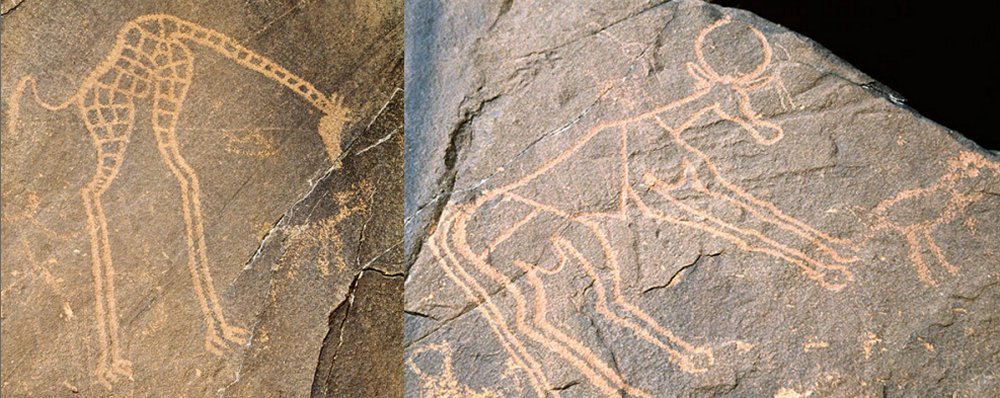
Rock art in form of carvings and paintings of mostly animals and vegetation and dated 3,500 to 2,500 BC, was found in the Aïr Mountains in northeastern Niger, not far from the city of Djado. Image credit: africanrockart.org
Another reason might be that cattle herding in the region also introduced mosquitoes that spread malaria. In 1860, about 1000 Kanuri are said to have been left. In the middle of the 20th century, only a few Kanuri and Toubou were left. They mostly lived from growing dates and harvesting salt.
The region of Niger and this part of the Sahara has revealed considerable archaeological evidence that about 60,000 years ago, humans inhabited what has since become the desolate Sahara Desert of northern Niger.
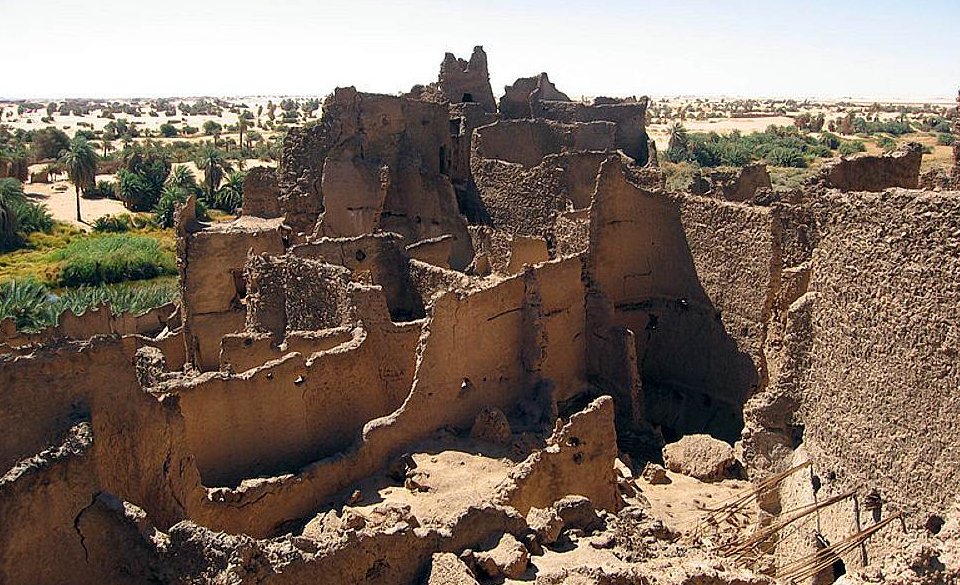 Ancient ruins of Djado. Image credit: freevst.x10.mx
From at least 7,000 BC, inhabitants of these vast fertile grasslands were busy raising livestock, herding sheep and goats, and leaving large settlements and pottery. Cattle were introduced to the region approximately from 4,000 to 3,500 BC.
Rock art in the form of carvings and paintings of primarily animals and vegetation and dated 3,500 to 2,500 BC was found in the Aïr Mountains in northeastern Niger, not far from the city of Djado.
Written by – A. Sutherland - AncientPages.com Senior Staff Writer
Copyright © AncientPages.com All rights reserved. This material may not be published, broadcast, rewritten or redistributed in whole or part without the express written permission of AncientPages.com
Expand for referencesMore From Ancient Pages
-
 Tuonela – The Land Of The Dead In Beliefs Of Ancient Finnish People
-
 Osiris: Enigmatic And Powerful God In Ancient Egypt
-
 Remains Of 3,400-Year-Old Canaanite Citadel Unearthed In Nahariya, Western Galilee
-
 Discovery Of Half-Million-Year-Old Wooden Structure Shows We’re Wrong To Underestimate Our Ancient Relatives
-
 Mesopotamian City Jemdet Nasr Dated To 3100–2900 BC: Sophisticated Irrigation Techniques And Earliest Cylinder Seals
-
 Ancient Monastery In The Middle Of ‘Syria’s Stonehenge’ – Underground Caves, Tombs, Stone Circles Older Than Pyramids
-
 Ekambareswarar Temple In Tamil Nadu, India Dedicated To Lord Shiva
-
 Rare 2,500-Year-Old Scythian Bone Sceptre Discovered In Bulgaria
-
 Gaocheng: China’s Oldest Observatory And Large Gnomon Installation Of The Ancients
-
 Sutton Hoo Burials May Belong To Anglo-Saxons Who Fought For The Byzantine Empire – Professor Suggests
-
 Great Sakya Library Is Home To 84,000 Scrolls Left Untouched For Hundreds Of Years
-
 10 Great Ancient Mysteries Of Africa
-
 Siege Of Masada – The Last Stand Against The Roman Empire
-
 Enigmatic, Grand Neolithic Dolmen Roche-aux-Fées Built By Fairies And Steeped In Aura Of Love And Hope
-
 Secrets Of The Magnificent 3000-Year-Old Peebles Hoard Revealed
-
 Ask And Embla: First Human Pair Created By Powerful God Odin And His Two Brothers
-
 Denisovan DNA May Explain Why Tibetan Women Thrive In Low Oxygen At High Altitudes For Over 10,000 Years
-
 The Third Greatest Fire Temple That Existed In Ancient Iran’s Sassanid Age – Unearthed
-
 Fossilized Million-Year-Old Human Skull Of Yunxian Man Excavated In China
-
 Amazing Thirteen Ming Tombs: Gigantic Stone Animals And Human Figures Were Symbols Of Royal Power

