
Inca Llajta: Largest And Most Impressive Inca Complex In Bolivia
A. Sutherland - AncientPages.com - Inca Llajta (in Quechua means ‘Inca Town’) is considered the largest and most impressive Inca military complex in Bolivia, which served as the most eastern fortress of the large Inca-empire. The fort is strategically located in a mountain range (2,900 to 3,200 meters above sea level).
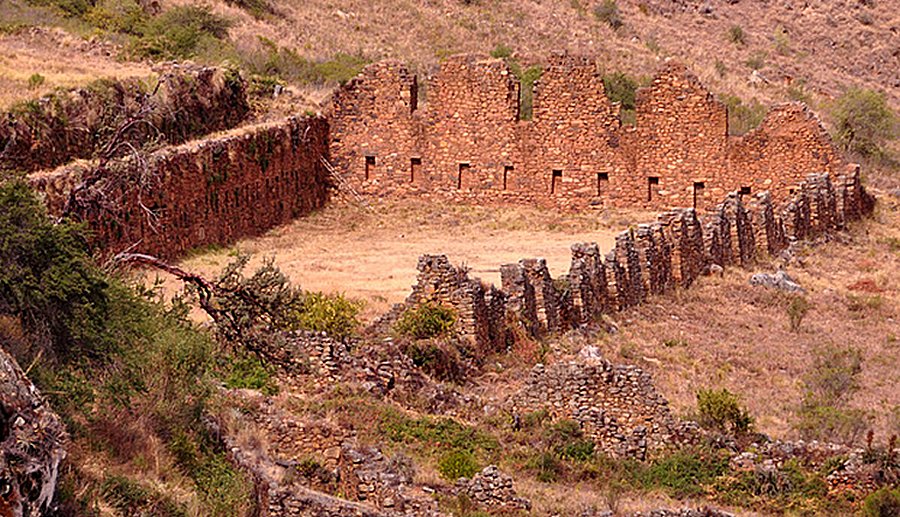
Whether Inca Llajta was built against attack by the Indian nation, Chiriguanos, who, as records say, were the toughest opposition the Spaniards ever faced in the center of South America, or against the increasing Spanish pressure in the area – is unclear. Photo via Explore Pangea
Around 1470, the Incas took residence in this stone fortress and were present there until 1525.
It is unclear, whether Inca Llajta (Inkaltajta ) was built against attacks organized by the Indian nation, Chiriguanos. According to ancient records, Chiriguanos people represented the toughest opposition the Spaniards ever faced in the center of South America.
Another possibility is that Inca Llajta was constructed for protection against the increasing Spanish pressure in the area.
According to the earliest accounts, the Indian tribe, Chiriguanos of the Eastern lowlands had their origin in migration of Guarani people from the lands located to the east of the Paraguay River.
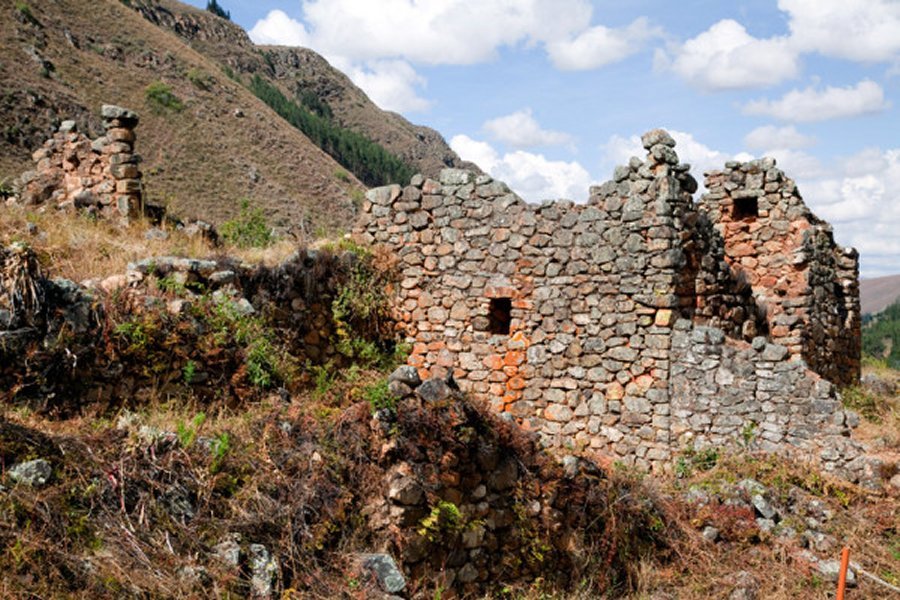
Destroyed by time and the Spanish Conquistadors, Inca Llajta remains in ruins.
Inca Llajta was ordered to be built by the Inka Tupac Yupanqui (in Quechua) "noble Inca accountant." Yupanqui was the eleventh Sapa Inca (1471–93) of the Inca Empire, and tenth of the Inca civilization.
His father was Pachacuti, the ninth Sapa Inca (1418–1471/1472) of the Kingdom of Cusco, and his son was Huayna Capac also the famous and powerful Inca ruler.
This fascinating historical Bolivian place was discovered in 1913 by Erland Nordenskiold, a Swedish archaeologist and anthropologist who focused his research on the prehistory of South America. Nordenskiold found the fortress in ruins as the town and its fortress were destroyed by the Spanish Conquistadors. He measured and mapped the ruins of Inca Llajta.
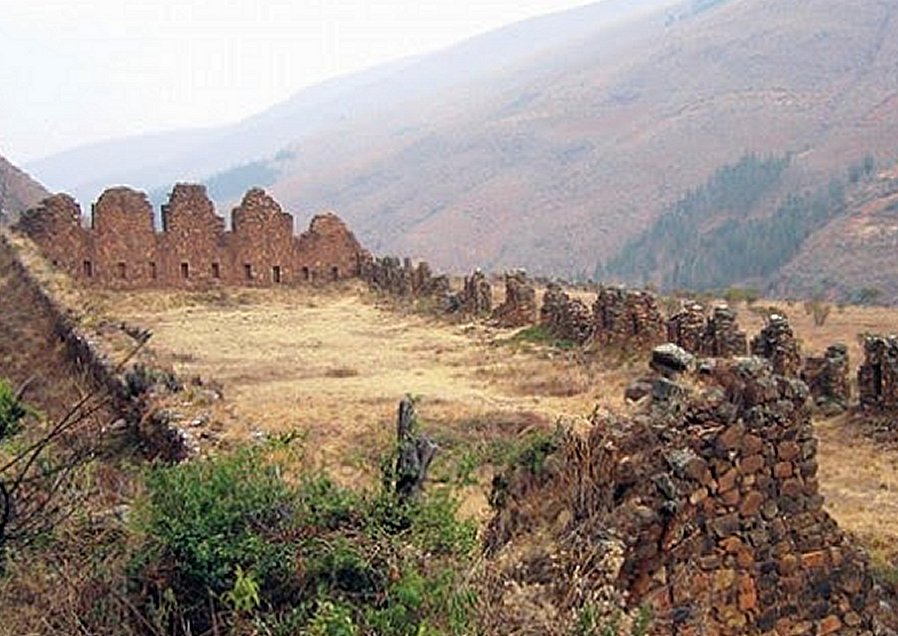
Inca Llajta was a military outpost to protect the region from raids by the unconquered Indian tribe, Chiriguanos of the Eastern lowlands, some believe.
Even if the complex is in ruins, it still remains an impressive example of architectural engineering of Inca, especially Inca Llajta’s defensive wall.
Interestingly, the original name of the complex of Inca Llajta has been lost a long time ago.
There are huge, zigzag defensive walls still standing, a network of dormitories, a prison, some remains of a strange tower that could have been an "intiwatana" (birth of the Sun), in which the seasonal changes were registered and were made other astronomical observations.
There are also remains of the largest Incan building to have ever been found that are still clearly visible. It is the kallanka’ (Kallanca), Inca Llajta’s most noteworthy structure, measuring 80 meters by 25 meters, with the roofed enclosure supported by massive columns and probably utilized for military purposes.
It is located on an ejection cone, in the strong almost completely inaccessible ravine. The Inca builders used trapezoidal shapes and the geometric figure characteristic of these particular ruins is the trapeze. ("La Cancha") or patio, is a polyfunctional mythical space, which most probably had multiple functions.
Outside the structure, there is a large boulder, probably a speakers’ platform.
Written by – A. Sutherland - AncientPages.com Senior Staff Writer
Copyright © AncientPages.com All rights reserved. This material may not be published, broadcast, rewritten or redistributed in whole or part without the express written permission of AncientPages.com
More From Ancient Pages
-
 Remarkable Funerary Relief Of Life-Size Couple Discovered At The Necropolis Of Porta Sarno In Pompeii
-
 Horrifying Flying Head That Terrorized The Iroquois
-
 Civita di Bagnoregio – Magnificent 2,500-Year-Old Etruscan City In The Sky Is Struggling To Survive
-
 Amazing Ancient Underwater Treasures And Temples Discovered At Thonis-Heracleion
-
 Native Americans And European Legends Tell Peculiar Beings From The Sky Still Live On The Earth
-
 Leonardo Da Vinci’s Mother Might Have Been A Slave – Here’s What The Discovery Reveals About Renaissance Europe
-
 Manx: Ancient Dead Gaelic Language That Refused To Die And Has Been Revived Again
-
 Mysterious Biblical Celestial City And Its Connection To The North Star – Nonhuman Hands – Part 1
-
 Mazu: Chinese Goddess Of The Sea – Protector Of Fishermen
-
 Gigantic Asipatra: Terrifying Mythical Monster Bird In Hindu Beliefs
-
 The Four Bases Of Anti-Science Beliefs – What Can Be Done About Them?
-
 First Neanderthal Footprints Discovered In Gibraltar Dunes
-
 Several Climate Crises In Mesopotamia – New Study
-
 Huge Viking Age Mason Owned By Herigar Finally Found At Birka In Sweden
-
 Tummal Inscription’ – Thirty-Two Lines Of Sumerian Document Popular In Babylonian Schools
-
 Mysterious ‘Temple Of The Crossed Hands’ Of Kotosh – One Of The Oldest Structures In Peru
-
 Beer And Hallucinogens Reinforced The State Of The Wari Culture
-
 Atlatl Weapon Use By Prehistoric Females Equalized The Division Of Labor While Hunting – Study Shows
-
 Intriguing Fragment Of A Byzantine-Era Jar Handle, Dating Back Approximately 1500 Years – Unearthed
-
 Amazing Victorian Time Capsule – 135-Year-Old Message In A Bottle Found In Edinburgh

