
Oldest Door Lock Comes From Ancient Egypt
AncientPages.com - The oldest preserved door locks we have ever found belong to the ancient Egyptians and date back to at least 2000 B.C. It’s believed, but not proven, that they existed even earlier than that.
What separates the Egyptian lock from later inventions is the fact that the whole thing was made out of wood, the key included.

Locks and keys are mentioned in the Old Testament and were used by the ancient Greeks, although in a different and less secure form than their Egyptian counterparts.
The first Egyptian lock comprised a wooden bolt securing a door, with a slot with several holes on its upper surface. A device attached to the door contained wooden pins which would drop into the holes and secure the bolt. The key, also wooden, was a large toothbrush–shaped affair, whose 'bristles' were actually pegs that matched the holes and pins in the lock.
To open the door, it would be inserted into the keyhole located below the pins and lifted, raising the pins and allowing the bolt to be slid out.
See also:
What Were Ancient Egyptian Schools Like?
Clothing And Jewelry In Ancient Egypt – How Did The Ancient Egyptians Dress?
Why Ancient Egyptians Used Pillows Made Of Stone
In fact, the basic idea for a lock—the pin tumbler—is still the most common type used today. There was one minor difference between their keys and ours though: Theirs were nearly a foot long, which made it much harder for would-be thieves to pick the locks.
It’s believed that the Egyptians designed these complex locks as a way to guard valuable items or places of religious significance. A simple latch or bolt normally sufficed, but this new system enabled places to be cordoned off, making actual security guards unnecessary. Also, the door could only be locked (or unlocked) from the outside, and a bolt was used to do the actual locking.
Locks and keys are mentioned in the Old Testament and were used by the ancient Greeks, although in a different and less secure form than their Egyptian counterparts.
The Romans created new types of door locks and developed the idea of the Egyptian lock, substituting iron for the wooden lock and often bronze for the key. Keys were no longer too big to lose (or lift), indeed some Roman keys were small enough to wear on a finger.
Roman locks, too, were an improvement on the Egyptian model. 'Wards' were developed – projections inside the lock which demanded a corresponding 'bit' on the face of the key. Only the key with the correct slots for the projections to pass through would be able to rotate and throw the bolt.
Copyright © AncientPages.com All rights reserved. This material may not be published, broadcast, rewritten or redistributed in whole or part without the express written permission of AncientPages.com
Expand for referencesReferences:
More From Ancient Pages
-
 Unexpected Archeogenetic Study Results Obtained In Graves Of Mödling And Leobersdorf, Lower Austria
-
 Archaic Hominins Began Sea-Crossings The Aegean Sea 450,000 Years Ago
-
 Ancient Burial Of Woman Equipped With A Unique Gold Pectoral Ornament Discovered In Siberian ‘Valley Of The Kings’
-
 Beautiful Ancient Irish Legend Of The Blessing Of The Bees – Ancient Tradition Revived In Ireland Again
-
 Ceiba Tree: Sacred Tree Of Life Of Maya People And Universal Concept In Ancient Beliefs
-
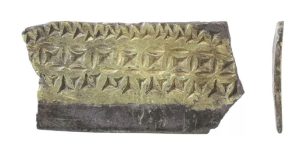 What Is The Roman Silver Fragment Found In Norfolk? Experts Are Baffled
-
 Hidden Text Discovered Inside Ancient Scroll
-
 Code Of Chivalry: ‘Knightly’ Behavior, Courageous Medieval Knights, Warriors And Superior Men
-
 Ornaments And Human Remains Found In The Walled Complex Utzh An In Chan Chan, Peru
-
 Tages: Etruscan Prophet Who Revealed Sacred Knowledge Before He Vanished
-
 Four Roman-Era Brooches And A Ring Found In The Borki Forest, Poland
-
 Historical Artifacts Found In The Mammoth Cave’s Mysterious Passageway
-
 Why The Aztecs Called Themselves ‘Mexica’
-
 Mystery Of Biblical Adam – A Hidden Story Within A Story Open To Interpretation
-
 On This Day In History: Krakatoa – Most Dangerous Volcano Erupted- On August 26, 1883
-
 When Giants Ruled North America – Encounters With Mysterious Races Of Giants – Part 1
-
 Magnetic Fields Used To Explore Doggerland And Other Prehistoric Submerged Sites
-
 Secret Encounter With A Mysterious ‘Out-Of-Place’ Lost Tribe In The Amazon Jungle – Did They Possess Strange Mental Powers?
-
 World’s Oldest Narrative Art Depicts An ‘Unusual And Unique’ Scene – 11,000-Year-Old Carving Investigated
-
 What Was Eaten In Old Dongola – Capital Of The Kingdom Of Makuria?

