
Troll Cross – Protection Symbol Believed To Ward Off Evil Powers
A. Sutherland - AncientPages.com - No matter religion, ancient beliefs and traditions, many people believe that the world around us is not only inhabited by human beings and animals but also other creatures.
There are many ancient stories about the fairy folk. Long ago, it was believed that witches got their power from the fairies.

These creatures and similar evil spirits were often blamed for causing various misfortunes because they possessed evil powers and could cast spells.
However, it was possible to ward off their bad powers with the help of – iron, a metal that was considered to be sacred in ancient times. Like the powerful Hamsa symbol, the iron was known to possess power over the Evil Eye.
Over the centuries, the people began to hang iron horseshoes outside the front door, above it and even inside the front door, as a protection symbol.
A magic cross – ‘troll cross’ was another beautifully formed piece of iron, that was believed to be helpful in warding off malevolent magic.
This cross has never had a specific historical background, which is associated with magical hammer axe-hammer, Mjölnir. However, this small object provided protection against trolls, elves and witchcraft.
Fear Of Trolls
The troll is a fascinating mythological creature, well-known not only in Sweden but also in all surrounding Scandinavian countries.
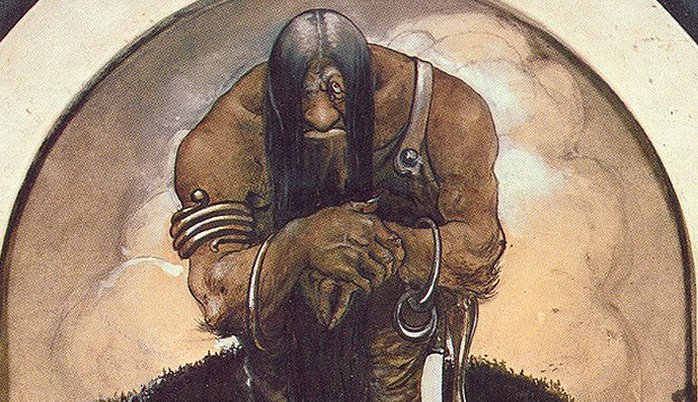
According to an ancient belief, a troll was reputed to be anti-Christian since this religion became a stronghold in Sweden in the 1300s. These curious beings – usually hairy, huge, and ugly in appearance - may come in varying shapes and sizes, some may even have nine heads.
The trolls could be invisible or behave in the shape of different animals or objects, but usually, their appearance was very similar to that of ordinary people with beautiful clothes.
Trolls were described as good neighbors doing small favors to each other or dangerous creatures with a voracious appetite for thieving and causing trouble.
Troll Cross Protected Humans, Animals And Possessions
The troll cross was made of a wrought iron piece, and it could have a few different forms, but essentially, its two ends must cross each other.
Another magic cross was usually carved on an object, over a door or window, on a doorstep, window frames, benches, chairs, and tables by a sorcerer. This type of cross was an important part of Swedish folklore.
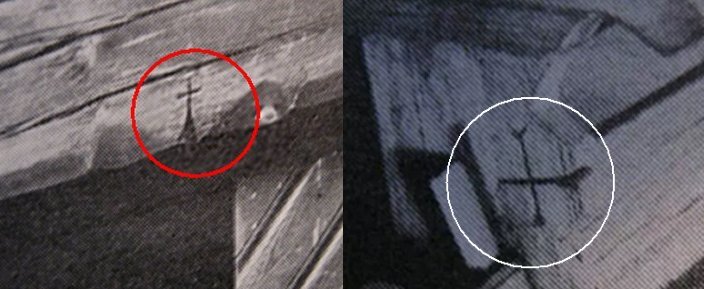
However, it was not an object but rather a sign to prevent trolls or evil powers from getting in and injuring people, animals, or possessions.
Both types of crosses had the same function and were used by the early Scandinavian peoples. The troll cross is believed to have been invented by the smith Kari Erlands from western Dalarna (a historical province (or landscape) in central Sweden), sometime in the late 1990s. It was claimed to have been a copy of a protective rune found at her parent's farm, but this has not been verified.
However, if it was a protective rune, the symbol must be as ancient as the runes are.
Crossed objects have also been attributed to many properties. The iron troll cross was often seen hanging in the barn to protect the animals and sometimes on the wall of cow boxes.
All over Scandinavia, the troll cross still continues to be a popular jewelry item, such as a necklace and a component to create other amulets, often believed to be some kind of protection against natural dangers but probably not against trolls anymore, as it was in ancient times.
Pregnant women also used witchcraft to protect the unborn baby from black magic and other evil powers. The magic cross was usually hung around the throat; even today, this tradition continues, and wearing a magic cross in a leather strap around a neck is not a rare sight.
Especially in pagan circles, the true magic cross has gained popularity in the form of amulets.
As mentioned in Ancient Pages, many important Viking and Norse symbols exist.
Some of these symbols remain mysterious, and their meaning is still unknown, but there are also signs we know much about. Vikings and Norse people were often superstitious and believed unseen forces could harm them. This is one of the reasons why they often carried protection symbols. One of the most powerful protection symbols was the Vegvisir.
Vegvisir is among the oldest and sacred Norse symbols, and it initially originated in Iceland, where ‘Vegur' means - road or path and ‘Vísir’ means – Guide. The device was believed to show the way back home and protect seamen and their ships from storms. The Vegvisir was like a guide helping its bearer to find his way home. Norse people believed that the Vegvisir had special powers, and it was treated like a talisman for blessings, luck, and protection. This powerful symbol could help a person to find the right way in storms or bad weather, whatever unfamiliar surroundings he or she may encounter.
It has also long played an important role among people who believe in magic powers, such as Norse Shamans.
Written by A. Sutherland – AncientPages.com Staff Writer
Copyright © AncientPages.com All rights reserved. This material may not be published, broadcast, rewritten or redistributed in whole or part without the express written permission of AncientPages.com
Expand for referencesReferences:
Rosalind Franklin R. Baby Lore: Superstitions and Old Wives Tales from the World Over Related to Pregnancy, Birth and Babycare
More From Ancient Pages
-
 How The Horseshoe Became A Symbol Of Good Luck
-
 Llanbadoc Discovery: Late Medieval Artifact And The Battle Of Usk
-
 Tangaroa – Polynesian God Of Ocean And Fish In Constant Struggle With His Brother
-
 Rome’s Most Wanted Enemy – Poison King Mithradates Murdered 80,000 Roman Civilians
-
 Iktomi – Native American Spider-Trickster Spirit Whose Stories Teach Moral Values
-
 Ancient DNA Reveals That Female Lineages Dominated Neolithic City Of Çatalhöyük, Turkey
-
 Tricksters: Mischievous Troublemakers Making Attempts To Help And Hinder In Mythologies Of Ancient Cultures
-
 Lilith – Beautiful Demonic And Brave Symbol Of Equality And Adam’s First Wife Who Refused Subordination
-
 Submerged Ancient Bridge Found In Genovesa Cave Reveals Humans Settled In Mediterranean Much Earlier Than Previously Thought
-
 65,000-Year-Old ‘Stone Swiss Army Knives’ Show Early Humans Had Long-Distance Social Networks
-
 Girl’s Ancient Tooth Solves One Of The Biggest Mysteries Of The Denisovans
-
 Ancient Manuscripts Of Mythical City Of Timbuktu
-
 16 Dead Sea Scrolls Fragments Are Forgeries – U.S. Bible Museum Says
-
 Ancient Society In The Sahara Desert Rose And Fell With Groundwater – Study
-
 Oldest Scandinavian DNA Found In Ancient Chewing Gum
-
 5000-Year-Old Cold Case: Neolithic Fisherman Died By Drowning – Forensic Study Shows
-
 1,800-Year-Old Relief Of Mythological Satyr Figure Under Restoration
-
 Rare Discovery Of More Than 18,000 Inscribed Pot Sherds Document Life In Ancient Egypt
-
 Pharaoh Ramses II’s Sarcophagus On Display For The First Time In 50 Years
-
 ‘The Waters Become Corrupt, The Air Infected’: Here’s How Ancient Greeks And Romans Grappled With Environmental Damage

