
Yokai (Yōkai): Mysterious Interdimensional Force With Odd Abilities In Japanese Mythology
A. Sutherland - AncientPages. com - There is a mysterious force that in Japan is known as Yokai (“Yōkai”).
According to ancient Japanese beliefs, Yōkai (in Chinese: 'kanji', which means “strangeness, mystery, or suspicion”) are weird creatures that dwell in the borderlands and in spaces, which are located “in-between”.

The Ground Spider , October 1892. From the Thirty-six Ghosts series. 9.25" x 14.25". The print depicts Minamoto no Yorimitsu attacking a ground spider monster. - Art Gallery NSW - Public Domain
The belief in Yōkai was mentioned in “Shoku Nihongi” text dated to the eighth-century and still, this ancient belief is alive in the Japanese modern society.
Yokai can take many different forms and are mostly associated with villages, old abandoned towns, deserted mountain passes.
Yōkai does not belong to anybody. They just exist, appear usually at twilight, when our surroundings look strange and are difficult to recognize. They haunt bridges and tunnels, entranceways, and lurk and disturb at crossroads and thresholds; they are elsewhere, changing their forms and places.
Research suggests that this creature dwells in the contact zone between fact and fiction, between belief and doubt. Yōkai is the common name for monsters, transformed humans and animals, demons, spirits, or goblin.
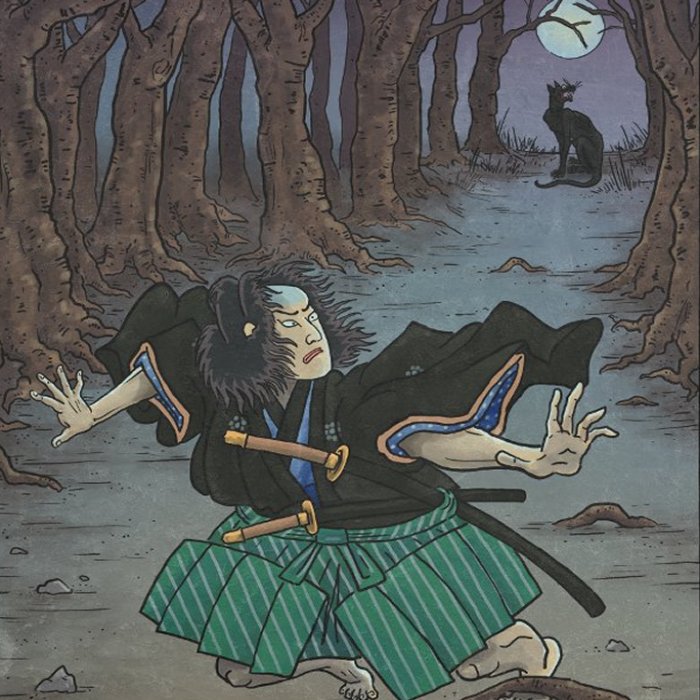
They haunt bridges and tunnels, entranceways, and lurk and disturb at crossroads and thresholds; they are elsewhere, changing their forms and places. Image credit: Mathew Meyers Yokai.com
People say they are simply monsters. Their nature varies from benign to mischievous to seriously scary.
In his book "The Book of Yokai: Mysterious Creatures of Japanese Folklore", which is based on his long study of Yokai, M.D. Foster, mentions an intriguing and unpleasant story from "A Collection of Tales from Uji, c. 1220" -m (Uji shūi monogatari).
This story tells of "a monk traveling alone through the province of Settsu, located in the vicinity of the present-day city of Osaka.
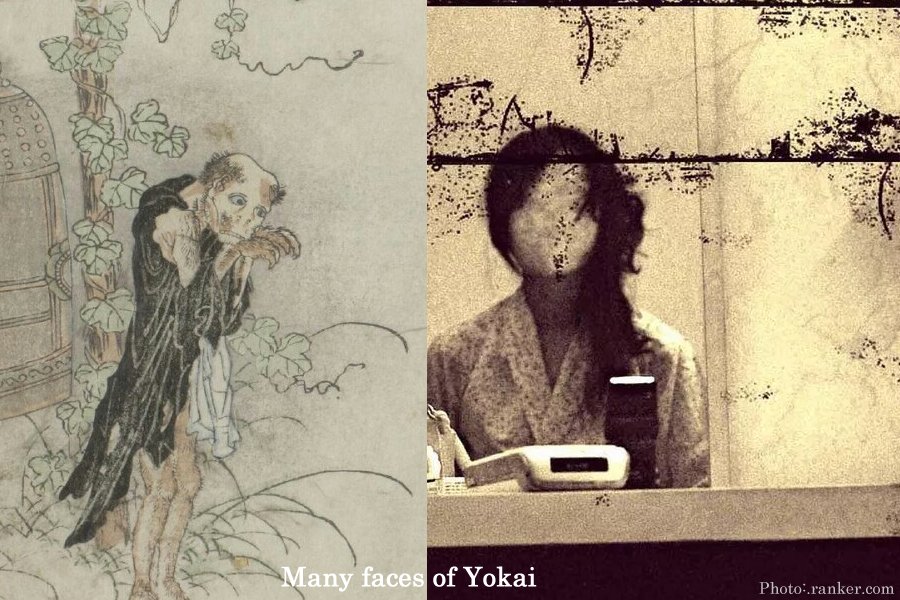
Coming upon a deserted temple, he decides to settle in for the night and begins chanting an incantation to the guardian deity Fudō, who battles evil with his immovable faith and compassion.
But suddenly, “a crowd some hundred strong came surging into the temple, every one of them with a torch in his hand.
When they got close, he saw that they were fantastically weird creatures, not men at all; there were all sorts of them, some with only one eye, some with horns, while their heads were more terrible than words can describe.”
The monk spends a terrifying night, surviving only because Fudō protects him. After the gang of oni finally leaves and the sun rises, the monk is shocked to discover that there is actually no temple at all and he cannot even find the path that brought him there.
Eventually, he meets some travelers who inform him that he is in the province of Hizen— hundreds of miles from Settsu!"
It is worth mentioning that "oni" is a term usually associated with danger and fear; this term is generally translated today as “demon” or “ogre.”
During the Heian period, "oni" meant a nasty and threatening creature, that frequently appeared in human-like form. "Oni" has enormous evil power and when engaged in the fight, these terrible creatures can reattach body parts they lose in fights.
They crush the enemy with one blow from their spiked iron club (kanabo; they can also fly, change form at will and cause diseases, insanity, and death. Their favorite food is human flesh.
Were these terrible "oni" creatures responsible for teleportation of the monk to another, very distant location? What did really happen to him?
Written by – A. Sutherland AncientPages.com Staff Writer
Copyright © AncientPages.com All rights reserved. This material may not be published, broadcast, rewritten or redistributed in whole or part without the express written permission of AncientPages.com
Expand for referencesReferences:
Foster, M. D. The Book of Yokai: Mysterious Creatures of Japanese
More From Ancient Pages
-
 Catastrophic Final Flooding Of Doggerland By The Storegga Tsunami – New Study Results
-
 Rare And Unexpected Celestial Phenomenon May Solve A Mysterious Pharaoh’s Ancient Secret
-
 Cacao Was Cultivated By Cultures Along The Pacific Coast Around 5,000 Years Ago – New Study
-
 Smuggled Ancient Egyptian Artefacts Finally Arrive Home From Italy
-
 Boomerangs Were Used To Shape Stone Tools By Aboriginal People
-
 On This Day In History: First Siege Of Rome Began – On March 2, 537
-
 The Battle Of Anghiari – Lost Painting Of Leonardo Da Vinci – One Of Art History’s Greatest Mysteries
-
 Amazing Ancient One-Stroke Dragon Art Tradition – Painting Dragons With A Single Brush Stroke
-
 How Did A Roman Sarcophagus End Up On A Beach Near Varna In Bulgaria?
-
 Prehistoric Human Migration In Southeast Asia Driven By Sea-Level Rise – Study Reveals
-
 Teaching Is Not Essential For People To Learn How To Make Tools, Study Says
-
 5,000-Year-Old Perga City And Kommagene Civilization: Most Of Treasures Are Still Underground
-
 Nerva: ‘Pater Patriae’ – Aging Roman Emperor Who Succeeded In Time Of Crisis
-
 Large Collection Of 2,200-Year-Old Tombs With Boat Coffins Made Of Nanmu Wood, Unearthed In SW China
-
 Stone Age Humans Unlocked The Glucose In Plants 40,000 Years Ago
-
 Knaresborough Hoard Reveals Its Secrets – Unusual Roman Discovery In The British Isles
-
 Secret Ancient Knowledge Of Venus – Controversial Theory And Surprising Discovery – Part 1
-
 Lost Knowledge Of Energy And Crystal Technology In Ancient Egypt
-
 Quatrefoil Symbol Was Used By The Olmecs And Maya Long Before It Appeared On Christians Churches
-
 Rene Descartes – Independent French Thinker And His Main Ideas

