
Mystery Of Ancient Language PIE From Which Half Of All Languages Originate
Ellen Lloyd - AncientPages.com - Did you know that about three billion people speak languages that all originate from one root language that was spoken about 6,000 years ago?
Ancient language PIE is not a universal language, but it is the common ancestor of the Indo-European languages, the world's most widely spoken language family. As many as 400 languages and dialects originate from it.
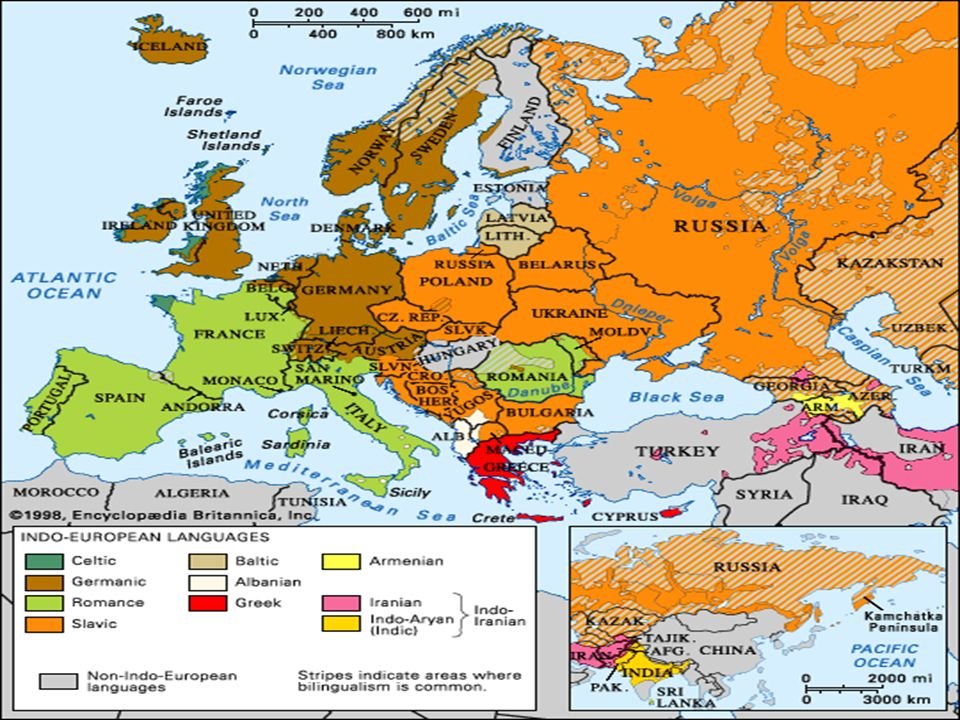
Hindi, Bengali, Persian, English, German, Spanish, and Greek all come from the same root, known as Proto-Indo-European (PIE).
Proto-Indo-European, or PIE, was discovered in 1868 by German linguist August Schleicher.
When And Where Was PIE First Spoken?
It remains unknown when, where, and by whom PIE was spoken, and scholars disagree on how the language spread.
However, many theories attempt to unravel the mystery of this fascinating ancient language.
Currently, the Kurgan hypothesis is the most accepted theory according to which language PIE formed in a region known as the Pontic-Caspian Steppe, a sprawling grassland north of the Black and Caspian Seas today encompasses parts of Russia, Ukraine, and Kazakhstan. The earliest Kurgans date to the 4th millennium BC in the Caucasus and are associated with the Indo-Europeans.
Language PIE is believed to have been spoken in the region from about 4500 to 2500 B.C. Linguist Will Chang from UC Berkeley conducted a comprehensive study of the Proto-Indo-European language and discovered that the first linguistic divergence occurred about 6,500 years ago. By cross-referencing these findings with an analysis of the Indo-European language tree, Chang and colleagues concluded that conquering Indo-Europeans spread PIE as they moved westward.
The Kurgan hypothesis has also been confirmed by David Reich of Harvard University. Reich examined 69 ancient Eurasian mummies who lived 8,000 to 3,000 years ago. One of the mummies was the famous Iceman Ötzi discovered in a 5,000-year-old glacier in the Ötzal Alps in South Tyrol. Genetic tests revealed that certain ailments, including hay fever, derive from Neanderthal genes.
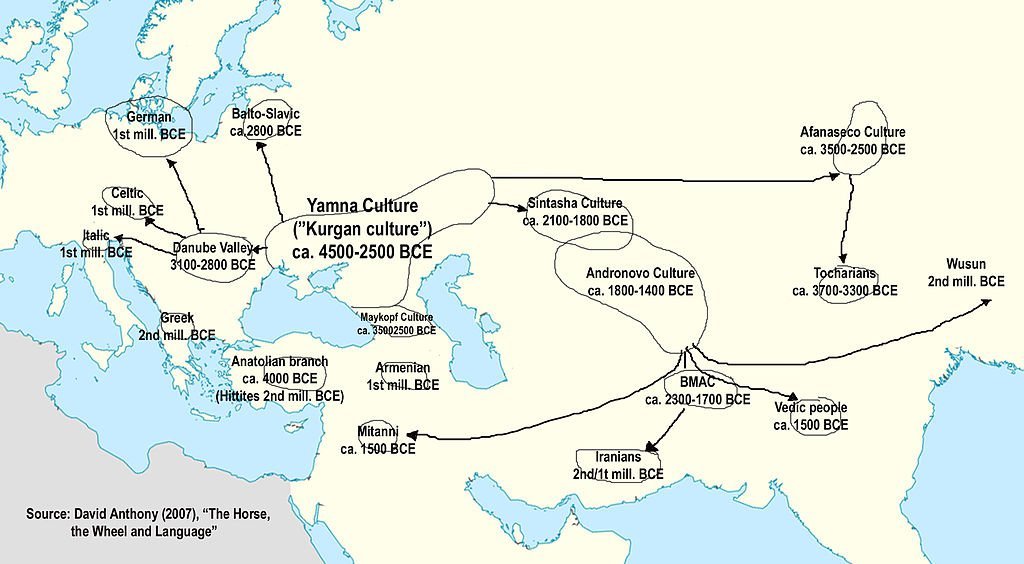
Based on these results, scientists could conclude that European hunter-gatherers came from the Yamnaya steppe in Russia, appearing around 6,000 to 5,000 years ago. These herders originated in the Near East.
Later, about 4,500 years ago, the Corded Ware people created settlements in the Northern part of Europe, including Germany. According to the genetic study conducted by Reich, the Yamnaya Steppe people swept through from the East, settling in Europe and eventually becoming the Corded Ware people. Genetic evidence suggests that most Europeans can trace their ancestry to the Corded Ware people.
Another theory also attempts to explain the origin of the PIE language. According to the Anatolian hypothesis that was first developed by British archaeologist Colin Renfrew in 1987 and later supported by evolutionary biologists from the University of Auckland, New Zealand, speakers of the Proto-Indo-European language (PIE) lived in Anatolia during the Neolithic era, beginning about 10,200 BC, and ending between 4500 and 2000 BC.
The Kurgan and Anatolian hypotheses contradict each other, but scientists seriously consider both since they offer compelling evidence.
Scientists also consider the possibility there is one common universal language that ties all other languages together.
The idea of a universal human language goes back at least to the Bible, in which humanity spoke a common tongue but was punished with mutual unintelligibility after trying to build the Tower of Babel all the way to heaven.
Some researchers think they have found a universal language that self-organizes so that related concepts stay as close together as possible within a sentence, making it easier to piece together the overall meaning.
Updated on August 3, 2024
Written by Ellen Lloyd – AncientPages.com
Copyright © AncientPages.com All rights reserved. This material may not be published, broadcast, rewritten or redistributed in whole or part without the express written permission of AncientPages.com
Expand for referencesMore From Ancient Pages
-
 Agora: An Ancient Meeting Place Visited By Many Famous Philosophers
-
 Thales Of Miletus: One Of The Famous “Seven Sages Of Greece” Who Predicted A Solar Eclipse
-
 Unearthed Ancient Egyptian Tombs At Tel El-Deir Will Rewrite The History Of Damietta – Archaeologists Say
-
 Denisovan Genetic Heritage Could Affect The Mental Health Of European And Asian Populations
-
 Hidden Text Discovered Inside Ancient Scroll
-
 On This Day In History: Statue of Liberty Arrived In New York Harbor – On June 17, 1885
-
 Mystery Greek tomb was dedicated to companion of Alexander – experts say
-
 Pharaoh Ramses II’s Sarcophagus On Display For The First Time In 50 Years
-
 Trialeti Culture: Ancient Caucasian People Who Still Hold Their Secrets
-
 Armenia: Old Land Where Myths, Legends And Long History Meet
-
 Cursed Magical Dainsleif Sword Of King Hogni And Legendary Battle That Continues Until The Coming Of Ragnarok
-
 1,500-Year-Old Roman Settlement Destroyed By The Goths Discovered In Bulgaria
-
 Archaeologists Solve A 1,000-Year-Old Mystery Mentioned In Norse Sagas
-
 Lost City That May Have Defeated King Midas’ Kingdom Phrygia – Found Accidentally
-
 Face Of Neanderthal Who Lived 56,000 Years Ago Reconstructed
-
 Investigation Of The Elusive Will-o’-the-Wisp Leads To A Surprising Discovery
-
 Keezhadi Excavations Reveal: Tamil-Brahmi Script Older Than Previously Thought
-
 Four Magical Treasures Of Tuatha De Danann
-
 Qeros: Study Of Drinking Vessels Provide New Clues To Long Traditions Of Andean People
-
 Scientists Solve The Mystery Of Cicero’s Puzzling Words By Analyzing Ancient Roman Coins – Evidence Of Financial Crisis?

