
Underground Catacombs Of Alexandria: Ancient Time Capsule Which Remained Hidden For Almost Two Millennia
A. Sutherland - AncientPages.com - The catacombs of Alexandria - one of the best-preserved Alexandrian complexes are the largest burial site dating back to the Greco-Roman period in Egypt.
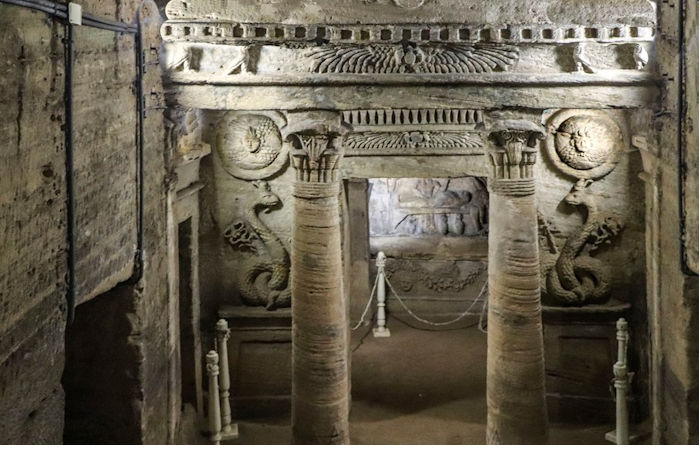
Entrance of the principal tomb chamber. Credit: Clemens Schmillen - CC BY-SA 4.0
They are situated in the vicinity of Pompey's Pillar, a Roman triumphal column, and represent the largest of its type of construction that can be found outside of Rome and Constantinople.
The catacombs (Kom El Shuqafa, which means hill of treasures) were discovered accidentally at the beginning of the 20th century when one day, a donkey-drawn cart fell into a pit, which led to this crucial historical discovery.
The old place, dating back to the 2nd century AD, is fascinating because its architecture and decorative art have been influenced by Roman, Hellenistic, Pharaonic, and ancient Egyptian art.
The underground structure is like a time capsule, which remained hidden and undisturbed for almost two millennia.

Credit: Clemens Schmillen - CC BY-SA 4.0
The cemetery - underground tunnels dug inside the rock to a depth of 35 meters (115 feet) - consists of three levels, all located underground. Still, the lowest level of the catacombs suffered due to the flooding, which took place in the area, so it is now inaccessible.
Still, there are structures such as a spiral staircase of 99 steps, a shaft to lower the deceased's body using ropes, a dome, a banquette hall, and a vestibule with two shell-shaped niches. In one alcove to the east is a statue of a man, and to the west, there is a statue of a woman.

Decorated sarcophagus and panel with Apus-bull. Credit: Clemens Schmillen - CC BY-SA 4.0
Both statues were sculpted with the influence of Egyptian art, with some Greek features.
In the vestibule, there is an antechamber and a burial chamber with three recesses. In each of them, there is a coffin.
Other elements from mingling cultures are the winged sun disk, the Falcon God Horus, the Uraeus, or the cobra.

Central panel with Anubis mummifying a body. Credit: Clemens Schmillen - CC BY-SA 4.0
The cemetery consists of statues, human heads, Alexandrian tombs, and Pharaonic funeral cult archaeological objects strongly influenced by the Hellenistic and early Imperial Roman periods.
The catacombs were used for the last time in the 4th century AD.
Alexandria was initially established by Alexander the Great, the most famous Greek King and army leader, in 332 BC. It soon became the cultural and commercial center of the Mediterranean Sea region.
The Catacombs of Alexandria are the result of the mingling of the Greek and the Pharaonic cultures that lived side by side. At first, these were private tombs, which later became public burial places.
Written by – A. Sutherland - AncientPages.com Senior Staff Writer
Updated on February 12, 2023
Copyright © AncientPages.com All rights reserved. This material may not be published, broadcast, rewritten or redistributed in whole or part without the express written permission of AncientPages.com
Expand for referencesReferences:
Christensen w., Empire of Ancient Egypt
Johnson, P. The Civilization Of Ancient Egypt
More From Ancient Pages
-
 On This Day In History: Antonio Neri Was Born in Florence, Italy – On Feb 29, 1838
-
 Sound Healing And Crystal Therapy, Ancient Arts Being Practiced Today – What Does Science Say?
-
 2,700-Year Old Eclipse Mystery Solved With The Help Of Historical Geography
-
 They Spoke The Language Of The Gods – Secret Symbols, Unknown Books And Manuscripts – Part 2
-
 Fascinating Expedition In A Dugout Canoe Sheds Light On Long Unanswered Questions
-
 Evolution Puzzle – Broken Hill Skull And Homo Heidelbergensis Cast Doubt Over Modern Human Ancestry
-
 Ancient City Of Koh Ker Was Occupied Much Longer Than Previously Thought
-
 Mysterious Books With Dangerous Secret Knowledge Deliberately Hidden From Public View
-
 Ancient Artifacts With Puzzling Signs Found In North America May Be Evidence Of A Lost Civilization Or Unknown Native American Tribe
-
 Modern Horses Have Lost Their Additional Toes, Scientists Confirm
-
 Enigmatic Figure Dated Back To 40,000 From Prehistoric Stadel Cave, Germany
-
 Mysterious Ancestor Of All Mammals Identified Through Genome Reconstruction
-
 Ancient Coin Reveals Name Of Unknown British Iron Age King – Who Was ‘Esunertos’?
-
 Unravelling The Mystery Of Apollonius Of Tyana – Was He A Superhuman?
-
 Curious Giant Shaped Rock In China – An Ancient Man-Made Construction Or Natural Formation?
-
 The First Australians Ate Giant Eggs Of Huge Flightless Birds That Went Excinct Over 47,000 Years Ago
-
 Something Never-Before-Seen Is Hidden Beneath 15 Giant Viking Burial Mounds Spotted By Radar In Norway
-
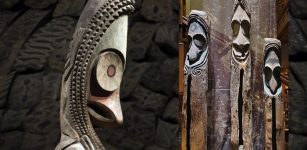 Curious Alien-Looking Slit Gongs Figures From Vanuatu Allowed Villagers To Communicate
-
 Unexplained Mystery Of Secret Knowledge And Extraordinary Sightings Hidden In An Author’s Book
-
 Legend Of The Immortal Wandering Jew Cursed By Jesus

