
The Word Salary Has Roots In Ancient Rome And History Of Salt
Ellen Lloyd - AncientPages.com - Have you ever wondered where the word salary comes from?
The word salary can be traced to ancient Rome and the history of salt. Salt was used as a trading medium just as money is used today. Ancient Roman warriors who served the empire received payment with a handful of salt each day. Roman historian Pliny the Elder, stated as an aside in his Natural History's discussion of seawater, that "In Rome. . .the soldier's pay was originally salt and the word salary derives from it.”
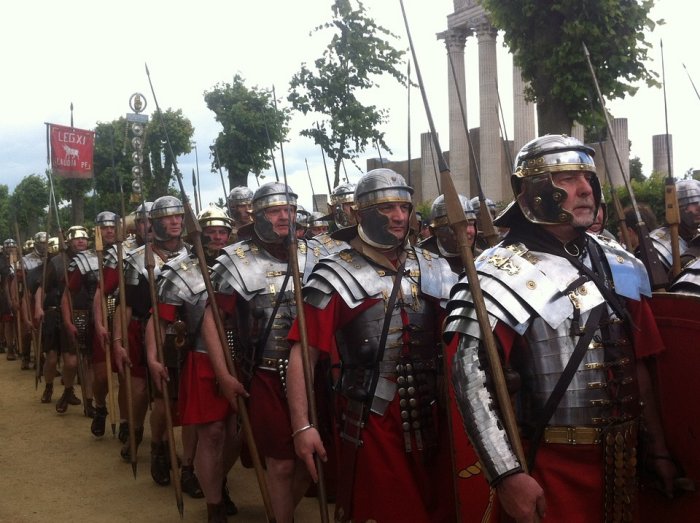
However, according to more modern sources, it is stated that although Roman soldiers were typically paid in coin, the word salarium is derived from the word sal (salt) because at some point a soldier's salary may have been an allowance for the purchase of salt the price of having soldiers conquer salt supplies and guard the Salt Roads (Via Salaria) that led to Rome.
See also:
Ancient Round Coins Were Invented To Prevent Fraud
Beer Was Used As Medicine And Payment In Ancient Egypt
What Was Legio Martia And Why Were The Roman Soldiers Called The Martians?
There are also some people who claim that the word soldier itself comes from the Latin sal dare (to give salt), but most historians disagree, noting that the word soldier more likely derives from the gold solidus, with which soldiers were known to have been paid.
When the term salarium entered into English it was modified to modern-day salary!
Written by - Ellen Lloyd - AncientPages.com
Copyright © AncientPages.com All rights reserved. This material may not be published, broadcast, rewritten or redistributed in whole or part without the express written permission of AncientPages.com
Expand for referencesMore From Ancient Pages
-
 On This Day In History: Sweden Declares War On Its Ally The United Kingdom – On Nov 17, 1810
-
 Achaemenid Empire Was The World’s Largest Ancient Empire
-
 Tomb Of Christopher Columbus Finally Found But There Is One Problem With His Body
-
 Venus Cloacina: Roman Goddess Of Sewers And Drains
-
 Dozens Of Elongated Skulls Unearthed In An Ancient Hungarian Cemetery Shed New Light On The Fall Of Rome
-
 Mysterious Ancient Tully Monster Is So Weird It Cannot Be Classified
-
 Antediluvian Discoveries In Britain, Germany And France That Could Re-Write History
-
 Mysterious Ancient People Who Mastered Thought-Transmission Through Space And Spoke At Distance
-
 Strange 1,000-Year-Old Artifact Melted Out Of The Ice Identified With Help Of Photo!
-
 God Patecatl – Father Of ‘Four Hundred Rabbits’ In Aztec Beliefs
-
 On This Day In History: Christiaan Huygens Discovers Saturn’s Largest Moon Titan – On Mar 25, 1655
-
 On This Day In History: Battle Of Marathon Was Fought – On Sep 12, 490 BC
-
 Beer ‘Chicha’ Helped To Keep Peruvian Wari Empire Stable – New Study
-
 Earliest Evidence Of A 260-Day Maya Calendar Found Inside Guatemalan Pyramid
-
 Oldest Case of Decapitation In the New World – Lapa do Santo, East-Central Brazil
-
 Parthians: Their Great Empire And Skilled Horse Archers
-
 Bones Of Giants Unearthed In Ancient Cave
-
 New Dating Of Intriguing Cave Art Reveals History Of Puerto Rican People
-
 Thousands Magnificent Jade Artifacts Discovered In Han Dynasty Tombs – China’s Golden Age In New Light
-
 Mysterious Rock Inscription Found In Brittany Baffles Experts – Reward If You Can Decipher It

