
Codex Gigas – The Devil’s Bible – Ancient Secrets Of The World’s Largest Book
Ellen Lloyd - AncientPages.com - The origin of this ancient giant book is unknown. It has been compared to the Seven Wonders of the World in the Middle Ages.
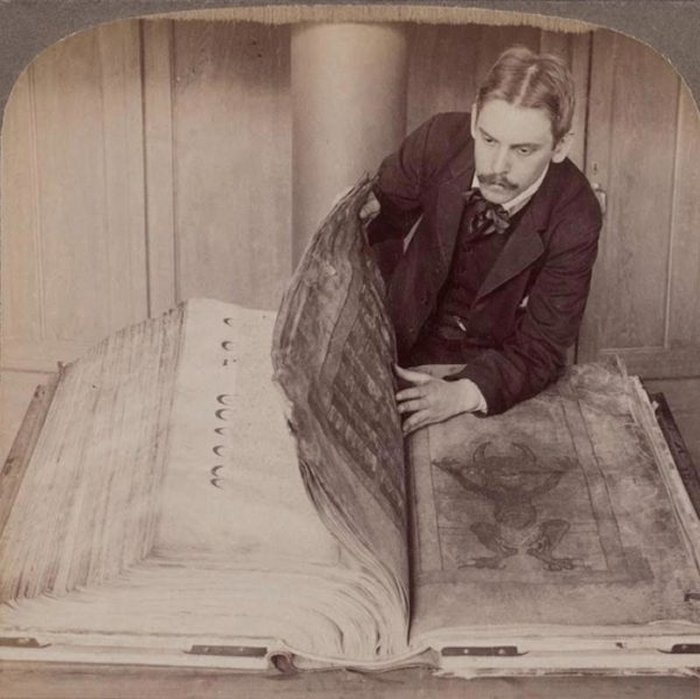 Codex Gigas - Courtesy of National Library of Sweden.
For over 700 years, this ancient manuscript has fascinated scholars. The existence of the book is connected with a particular legend that should have worried the Church, but the truth is that the Inquisition never condemned this ancient manuscript.
The World's Largest Bible
That the Church would allow a Bible that depicts the Devil sounds like a contradiction, but in this case, it is true. According to one legend, it was written by a monk who wrote it with the help of the Devil.
The Codex Gigas, which means "Giant Book," is known as the Devil's Bible. It is the most extensive medieval manuscript in the world.
The true origin of Codex Gigas is unknown. Still, a note in the manuscript reveals it was created in 1295 in the Benedictine monastery of Podlažice in Bohemia (today, modern Czech Republic). Shortly after, the manuscript ended up in another monastery in Brevnov near Prague.
Later, in 1594 Rudolf II, the Holy Roman Emperor, King of Bohemia, and King of Hungary, Croatia, and Slavonia, took the manuscript to his castle, where it remained until the Swedish army stole it during the Thirty Years War (1618 - 1648).
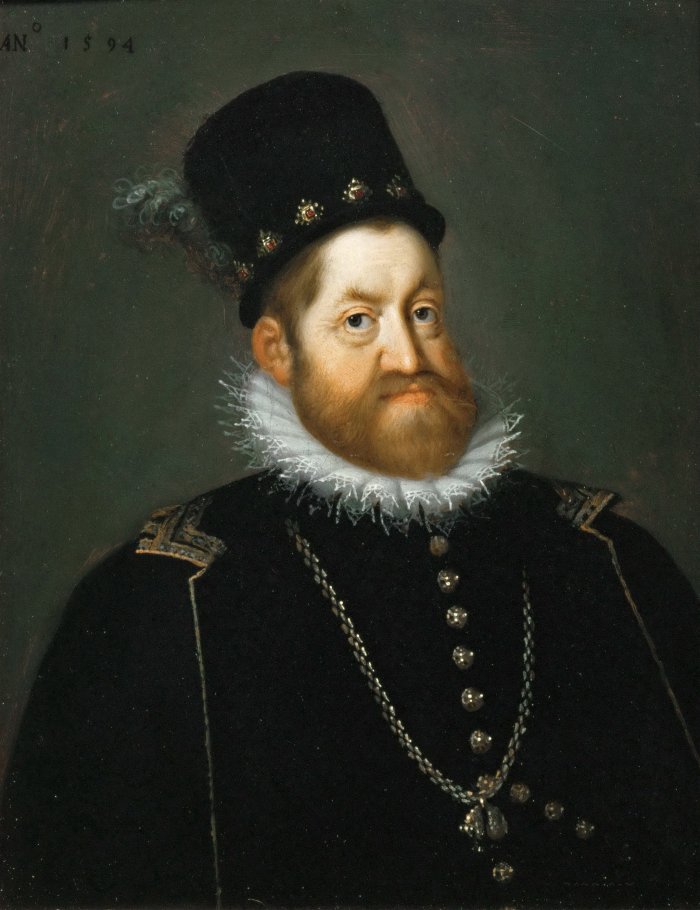
King Rudolf II by Hans von Aachen. Credit: Public Domain
It became a part of the collection of Queen Christina of Sweden. Only on two separate occasions it was exhibited abroad, in New York and Berlin. Today, Codex Gigas is kept in the National Library of Sweden in Stockholm. The manuscript is no longer open to the public.
On September 24, 2007, after 359 years, the Swedes permitted the manuscript to be displayed in Prague. Conditions for exhibiting the Codex were strict, and the state had to guarantee the Bible for 15.1 million US dollars. In January 2008, the Devil's Bible returned safely to the National Library in Stockholm.
This giant book was compared to the Seven Wonders of the World in the Middle Ages.
It weighs nearly 75 kg, requiring two librarians to lift it. The Codex Gigas has 312 parchment folios; hence 624 pages and the pages are 890 mm tall by 490 mm wide.
The Codex includes a full version of the Bible, written in Latin. There are also some short texts in the manuscript. The first is work on repentance, a manual for priests with a list of sins and appropriate ways of atonement. Parts of this work clarify that it was written by a churchman who committed sins.
The Codex also contains a magic formula for overcoming evil, misfortune, and disease. Inside is a calendar containing a list of saints and local Bohemian persons. This calendar was used to keep track of the feast days of the Church.

Courtesy of National Library of Sweden
All the indications are that it was the life work of one person. Historians estimate that the scribe must have spent as many as twenty years on such a monumental work.
Codex Gigas is called the Devil's Bible because this large book has an image of the Devil. The portrait of the Devil is the most famous image in the Codex Gigas. It is not uncommon to find pictures of the Devil in ancient medieval manuscripts and other works, but this one is slightly different.
The purpose of the illustration was to portray the Devil as the Prince of Darkness. For one thing, the Devil is depicted alone and occupies a whole page. He is shown in an empty landscape standing between two large towers and raising his hands in the air. He has only four fingers and toes.
Legend says a monk who once lived in the monastery of Podlažice, Czech Republic, was sentenced to be walled up alive for his sins.
To escape punishment, he promised in one single night to write a gigantic book in the world that would make the monastery famous.
He soon realized that the task was beyond his powers, and he invoked the aid of the Devil, who demanded the monk's soul as payment. When the book was completed, the monk drew an image of the Devil to thank him for his support. The legend says that the monk avoided the punishment but lost his peace of mind, and his life turned into hell.
We live in a strange world. One would assume that the legend behind the creation of the world's giant book was disturbing for the Pope and the Church, but this was not the case. Despite its unconvincing source, the Inquisition never condemned this medieval manuscript. On the contrary, it was studied by several scholars.
You can view the images and read more at the Swedish National Library to learn more about this ancient manuscript,
Written by Ellen Lloyd – AncientPages.com
Updated on August 28, 2024
Copyright © AncientPages.com All rights reserved. This material may not be published, broadcast, rewritten or redistributed in whole or part without the express written permission of AncientPages.com
More From Ancient Pages
-
 Researchers Use 21st Century Methods To Record 2,000 Years Of Ancient Graffiti In Egypt
-
 Ancient Reptilian-Like Humanoids Hold Secrets Of Mankind’s Origin
-
 On This Day In History: Julius Caesar Dedicated Temple To Venus Genetrix – On Sep 26, 46 BC
-
 Old Clay Pig Figurine And A 5,000-Year-Old Settlement Found Near Mysterious Sanxingdui Ruins, China
-
 Medieval City Dating Back To The Great Northern War Discovered In Tartu, Estonia
-
 Unsolved Ancient Mystery: Why Were These Foreign Shoes Hidden In A Temple?
-
 Enormous And Impressive Derawar Fort, Bahawalpur, Pakistan Will Be Restored
-
 Unique Tomb Of Egyptian Commander Discovered In Abusir Sheds Light On ‘Globalisation’ In Ancient World
-
 Airmid: Irish Goddess Of Healing And Herbs And One Of The Tuatha Dé Danann
-
 Magnificent Ancient Treasure Discovered In Crimea – But Who Does It Belong To?
-
 Rare Pre-Columbian Archaic Settlement Discovered In The Dominican Republic May Solve A Caribbean Mystery
-
 Reconstruction Of Five-Story Patara Lighthouse Built By Roman Emperor Nero – Begins
-
 Facial Reconstruction Of Chinese Emperor Wu Who Lived 1,500 Years Ago
-
 Genetic Changes In Bronze Age Southern Iberia
-
 Mysterious Ancient Tomb And A Strange Vanishing In France – DNA Failed To Solve The Riddle?
-
 Many Roman Citizens Joined The Huns And Preferred Their Nomadic Lifestyle – New Study
-
 Sacred Number Four – Perfect Number And Deep Meaning Behind It
-
 41,500-Year-Old Ivory Pendant Is The Oldest Evidence Of Humans Decorating Jewelery In Eurasia
-
 Khopesh Sword – Symbolic Weapon Of The Pharaohs And Emblem OF Egyptian Deities
-
 Burial Chambers In The Pyramids Of Tombos Change Our Understanding Of Ancient Egyptian Civilization

