
Impressive Pyramid Of Kukulkan (El Castillo’) At Chichen Itza
A. Sutherland - AncientPages.com - The largest and most important structure of Chichen Itza is the KukulcanTemple (also known as ‘The Castle’ – El Castillo). It is the legacy of the Toltec overlords, whose culture had a profound influence on Chichen Itza.
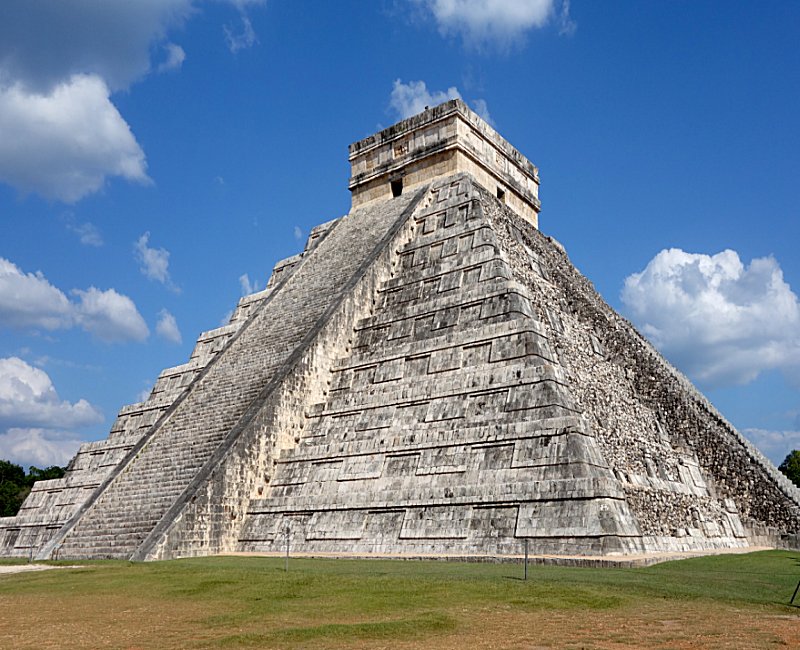
Westside of the Temple of Kukulcan. Image credit: - CC BY-SA 4.0
Chichen Itza, located in the north of the Yucatan Peninsula near the city of Valladolid, in Mexico, was one of the most important centers of the Mayan culture. It was founded about the sixth century, probably by the Maya peoples of the Yucatán Peninsula.
Impressive Pyramid Temple was dedicated to the Feathered Serpent, Quetzalcoatl (known among the Maya people as Kukulcan); this deity, ever-present at Chichen Itza, is of Central Mexican origin and assumed a distinguished position in the pantheons of Teotihuacan and Toltec Tula.
While it is relatively small, it has become one of the most famous pyramids in the world. This is due to the huge elegance, which ensured its symmetry making it even more beautiful.
The pyramid was built in the second half of the eleventh century or in the middle of the twelfth century. Interestingly, in its interior archaeologists discovered the remains of a similar pyramid built about a hundred years earlier.
It has a square base with sides of length 55 m (181 ft) and a height of 30 m (99 ft) and it is, therefore, very small compared to the pyramid of Cheops at Giza or the Pyramid of the Sun in Teotihuacan, Mexico.
Each side of the structure’s four sides has 91 steps, leading to the temple on top; along with the temple platform on top as the final “step”, totally 365 steps – the number of days in the solar year.
Nine terraces decorated with a meander motif, probably symbolize the writhing snake. On either side of each stairway, the terraces, which make 18 on each face of the pyramid; this equals the number of months in the Maya solar year (each month consisting of 20 days). On the sloping vertical faces of these terraces are 52 empty panels, representing the 52-year Calendar Round cycle required to bring the two Maya calendars.

Researchers used 3D imaging techniques to discover the structure, hidden beneath outer layers at the pyramid of Kukulkan at the Mayan ruins of Chichen Itza.
One of them is the heavenly (solar) 365-day calendar and another, the earthly, 260-day calendar related to rituals, which was most probably derived from the 9-month period of human gestation — into alignment.
Recently, researchers announced the discovery of a 10 m pyramid 10 meters tall (33 feet) inside two other structures that make up the pyramid also known as El Castillo, or the Castle.
During earlier archaeological diggings in the 1930s had already revealed one structure inside the pyramid containing a red jaguar throne decorated with jade.
A. Sutherland - AncientPages.com
More From Ancient Pages
-
![Horses in the Eurasian steppes: Already 5000 years ago, they served pastoralists as a source of milk and a means of… [more] © A. Senokosov](https://www.ancientpages.com/wp-content/uploads/2021/09/pastoraliststeppe15-307x150.jpg) Milk Enabled Massive Steppe Migration – A New Study
Milk Enabled Massive Steppe Migration – A New Study
-
 Lost Since 1362: Researchers Discover The Church Of Rungholt – A Sunken Medieval Trading Place
-
 Catequil – Inca God Of Thunder And Lightning Who Predicted The Future And Was Cultural Hero Of Inca People
-
 Ymir – Primordial Norse Giant Whose Body Parts Formed The World
-
 Ancient Runestones Reveal A Surprising Viking Secret – Scientists Say
-
 Ancient Stone Monoliths In Ethiopia Are 1,000 Years Older Than Previously Thought
-
 New Clues About The Fascinating Ancient Roman City Falerii Novi Revealed By Scientists
-
 Ancient Maya Reservoirs Can Solve Today’s Water Crises – Scientists Say
-
 Georgia Guidestones Damaged By An Explosive Device – By Whom And Why?
-
 New Macedonian-Era Tomb With Four Chambers Was Discovered In Pella
-
 Ancient Colorful Nile-Scene Mosaics, Plastered Walls, Water Cistern Unearthed On The Shore Of The Sea Of Galilee
-
 Rare Find Provides New Insight Into Etruscan Life Under Rome
-
 Rollo: Viking Sea Lord, Chieftain, Lone Wolf And The First Ruler Of Normandy
-
 Previously Uncounted Copies Of Newton’s Groundbreaking ‘Principia’ – Discovered
-
 What Happened To Britain’s Economy After The Romans Left?
-
 Well-Preserved 1,000-Year-Old Ulfberht Sword Found In The Wisla River, Poland
-
 Chester Stash Could Have Been Savings Hidden In An Iron-Glazed Mug
-
 Lost Ancient Coptic City Discovered In The Kharga Oasis In Egypt’s Western Desert
-
 Enormous And Impressive Derawar Fort, Bahawalpur, Pakistan Will Be Restored
-
 Impact Of European Contact With Pacific Islands Was Devastating – New Study Reveals

