AncientPages.com - During their expeditions against the various barbarian tribes, the Roman armies reached the territory of the present city of Brno, located in South Moravian, the Czech Republic.
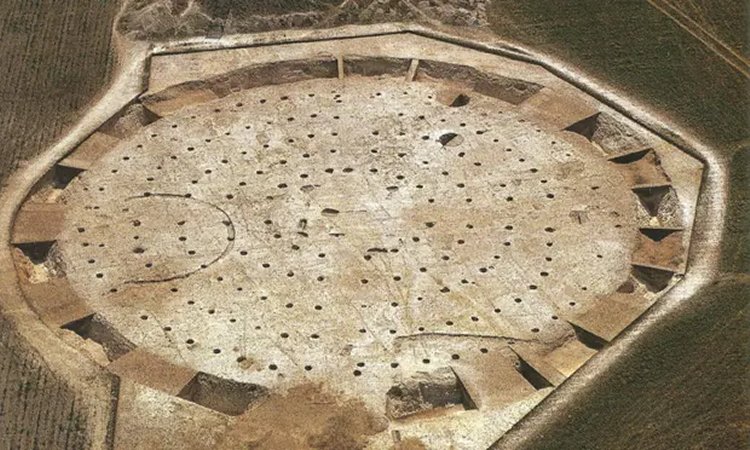
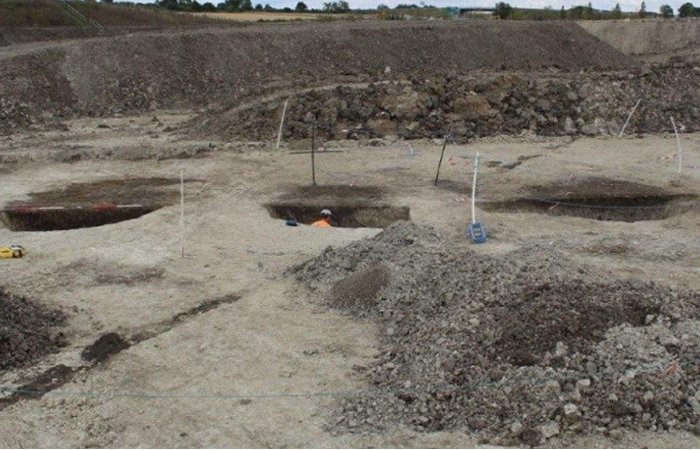
Recent archaeological excavations in Brno revealed the remains of a Roman military camp, which archaeologists date back to the second century AD.

While on their way of pursuing the European barbarian tribes, the Romans
According to an archaeologist, Václav Kolarík of the company Archaia, who is in charge of these excavations the camp dates from the time of the Marcomannic Wars, a series of wars that lasted from c. 166 AD to 180 AD. During this time, the Romans were at war with Germanic tribes of the Middle Danube.
See also:
Antonine Wall: Impressive Roman Frontier Built By Empire’s Three Legions In Scotland
Unique More Than 1,600-Year-Old Board Game With Pieces Recovered From Roman Soldier’s Tomb
The camp, of which remains have been discovered in the center of the city of Brno, was built during the Roman offensive, between 172 AD and 180 AD. "
The Romans built also other military camps on the territory of what is now Moravia, the eastern part of the Czech Republic, at the time, these regions were inhabited by inhabited at the time by the Marcomanni who entered into a confederation with other peoples including the Quadi, Vandals, and Sarmatians, against the Roman Empire.

Earlier, another Roman camp was also discovered in the town of Modrice, also in the vicinity of Brno.
Kolarík said that on their way north of Danube, Europe's second longest river, located in Central and Eastern Europe, the Romans built camps that ensured their progress on the territory of the barbarians. The largest concentration of these camps in the Czech Republic, is near the lakes of Nové Mlýny, in Mušov, and then in Pribice and Ivan. Other camps were also found in Central Moravia.
The Brno camp served only as a temporary, small-capacity camp that could not accommodate more than one unit of Roman soldiers.
The tents, erected on an area of several hundred square meters, were protected by a rampart.

"It was one of the points of support of the Romans on their way to Barbaricum. It is located on the Svratka River, near a major fording. The aim of the camp was to keep watch over this ford and thus ensure that the Roman soldiers made a quiet advance into the interior of the country. It also functioned as a supply station for units that had already crossed the river," Kolarík explained.
Usually, the Romans did not leave artifacts, private objects and other remains used by their soldiers, but buried them.
However, it is sometimes possible to discover something left by the Roman soldiers.
In Brno, archaeologists discovered a ceramic pot, almost completely used to prepare the meal. This pot was found broken and the soldiers abandoned it on the spot. Another find was bronze ornament that was part of the armor of Roman legionaries.
The field work will be completed in mid-January and all unearthed artifacts will later deposited in the Museum of the city of Brno.
AncientPages.com
Expand for referencesReferences: