
Riddle Of Brazilian Atlantis – Strange Discovered Rocks The World Forgot About
Ellen Lloyd - AncientPages.com - The legendary lost continent of Atlantis appears in ancient myths and legends worldwide. Ancient people were familiar with a marvelous land that vanished a very long time ago.

Researchers have debated the existence of Atlantis for years. Some say the continent is nothing but a myth, while others are convinced that we will one day uncover the remains of this long-lost land.
Finding the remains of Atlantis is challenging because it’s difficult to determine where to look. Also, let us assume we do find ancient underwater ruins. How can we say with certainty that these are the remains of Atlantis? There are many submerged ancient cities.
There are several underwater ruins around the world, and all of them could be part of Atlantis. Atlantis is Greek for the 'island of Atlas'.

This is a preview of our premium article available only to members of Ancient Pages.
Become a member to read more - Click here
If you are already a member and have logged in to your account, you can access the article here

See also:
Lost Ancient Golden City Of Vineta – The Atlantis Of The North
More From Ancient Pages
-
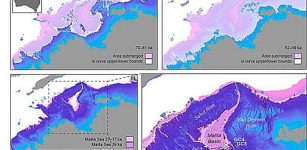 Ancient Sahul: Its Submerged Landscapes Reveal A Mosaic Of Human Habitation
-
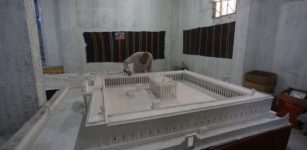 Memory Of Palmyra’s Ancient Ruins Preserved Thanks To One Man’s Dedication And Mini Models Of Lost Temples
-
 Who Was The Woman Buried With 25 Warrior Monks Of The Order Of Calatrava At The Castle At Zorita De Los Canes, Guadalajara?
-
 What Is A Mural Of Tepoztēcatl, Aztec Rabbit God Of Alcohol Doing In A Mexican Church?
-
 Surprising Discovery Of Ancient Roman Salt Factory In England
-
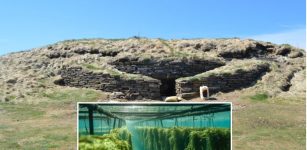 Ancient Europeans Ate Seaweed And Freshwater Plants – Evidence Found
-
 Sutton Hoo Burials May Belong To Anglo-Saxons Who Fought For The Byzantine Empire – Professor Suggests
-
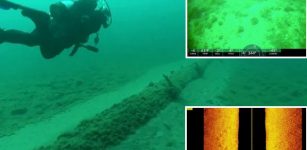 Evidence Of Unknown Ice Age Civilization Discovered In Michigan Ignored By Pipeline Company!
-
 Skilled Neanderthal Hand Engraved Ancient Stone And Hashtag Symbol
-
 Mysterious Ancient Oil Lamps In Ohio And Wisconsin – Evidence Of Pre-Columbian Contact?
-
 Viking Age Shields From The Gokstad Ship Burial – Re-Examined
-
 Clovis People Invented ‘Fluting’ Ancient Stone Weaponry
-
 Aristotle’s Influence On Education Of Alexander The Great – Historical Encounter Of Two Famous Men
-
 2,000-Year-Old Teeth Reveal The Diet Of An Iron Age Woman
-
 Were Owl-Shaped Plaques Children’s Toys In Copper Age?
-
 Mysteries Of Old Europe – Intriguing Gradeshnitsa Tablets Might Hold Secrets Older Than Egyptian Hieroglyphs
-
![Horses in the Eurasian steppes: Already 5000 years ago, they served pastoralists as a source of milk and a means of… [more] © A. Senokosov](https://www.ancientpages.com/wp-content/uploads/2021/09/pastoraliststeppe15-307x150.jpg) Milk Enabled Massive Steppe Migration – A New Study
Milk Enabled Massive Steppe Migration – A New Study
-
 Mysteries Of The Great Dismal Swamp – Unexplained Vanishings, Bewildering Encounters With Weird Beings, And Scary Legends
-
 World’s Earliest Evidence Of Food Fermentation Discovered In Southern Sweden
-
 3,000-Year-Old Shoe Found On A Beach In Kent, UK

