
Kingdom Of Judah: Government Complex And 120 Seal Impressions Stamped On Jars – Unearthed
Conny Waters - AncientPages.com - A significant administrative storage center from the days of Kings Hezekiah and Manasseh (8th century to the middle of the 7th century BC) has recently been unearthed during the archeological excavations in the Arnona neighborhood of Jerusalem.
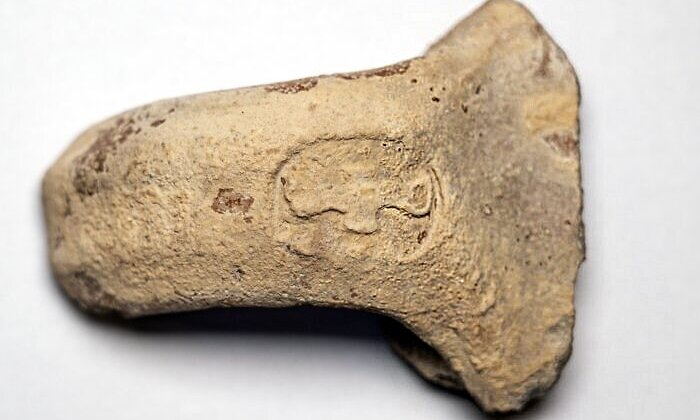
'To the King' - two-winged seal impression. Image credit: Yaniv Berman, Israel Antiquities Authority
Among the 2,700-year-old finds, there were more than 120 inscribed seal impressions on jars handles at the storage facility. In the First Temple times, the jars were filled with food collected as taxes for kings Hezekiah and Menashe (8th century to the middle of the 7th century BC).
The seal impressions contain ancient Hebrew script and many of the handles bare the inscription "LMLK" - (belonging) to the King- with the name of an ancient city, while others feature the names of senior officials or wealthy individuals from the First Temple Period.
This is one of the largest and most important collections of seal impressions ever uncovered in archaeological excavations in Israel, and they will help to better understand the tax collection system in the period of the Judean monarchs, according to press release.
This is one of the most significant discoveries from the period of the Kings in Jerusalem made in recent years. At the site we excavated, there are signs that governmental activity managed and distributed food supplies not only for a shortage but administered agricultural surplus amassing commodities and wealth," according to Neria Sapir and Nathan Ben-Ari, directors of the excavations that take place only three kilometers (1.8 mile) outside the Old City.
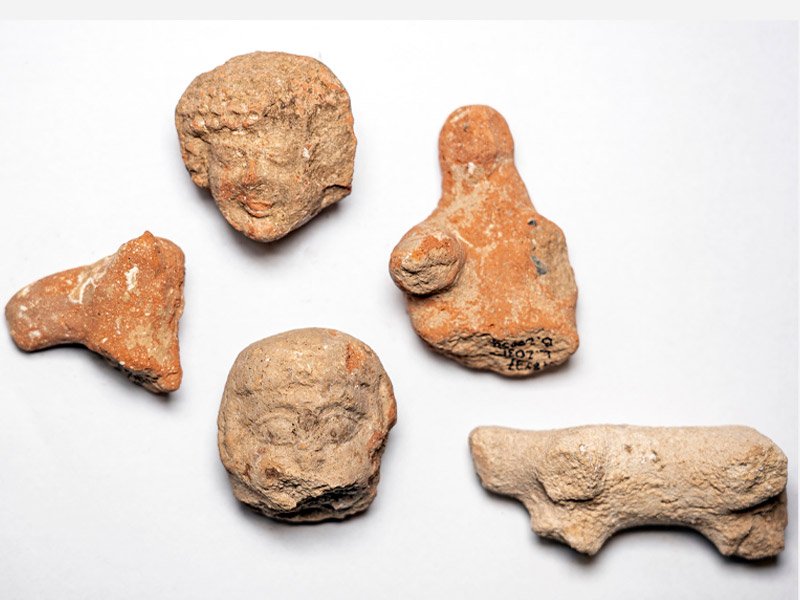 Clay figurines of women and animals found at the site. Photography: Yaniv Berman, Israel Antiquities Authority.
Evidence shows that at this site, taxes were collected in an orderly manner for agricultural products such as wine and olive oil.
“The site once dominated large agricultural plots and orchards of olive trees and grapevines which included agricultural industrial facilities such as winepresses for winemaking. The site is dated to a period documented in the Bible by upheavals such as that of the Assyrian conquest campaign - under the command of King Sennacherib in the days of King Hezekiah.
“It may be that the government economic provisions indicated by the stamp seals are related to these events however, the excavation revealed that the site continued to be active after the Assyrian conquest. Moreover, the array of stamped seals indicated that the system of taxation remained uninterrupted during this period.
 A mound of stones: Image credit: Yaniv Berman, Israel Antiquities Authority
“It is interesting to note that some of the storage jar handles are inscribed with the names of senior officials and wealthy individuals from the Kingdom of Judah - Naham Abdi, Naham Hatzlihu, Meshalem Elnatan, Zafan Abmetz, Shaneah Azaria, Shalem Acha, and Shivna Shachar. These names appear on storage jar handles at various sites across the Kingdom of Judah and attest to the elite position of those whose names are impressed on the jars.
“It is estimated that these are senior officials who were in charge of specific economic areas, or perhaps wealthy individuals at that time - those who owned large agricultural lands, propelled the economy of their district and owned private seals."
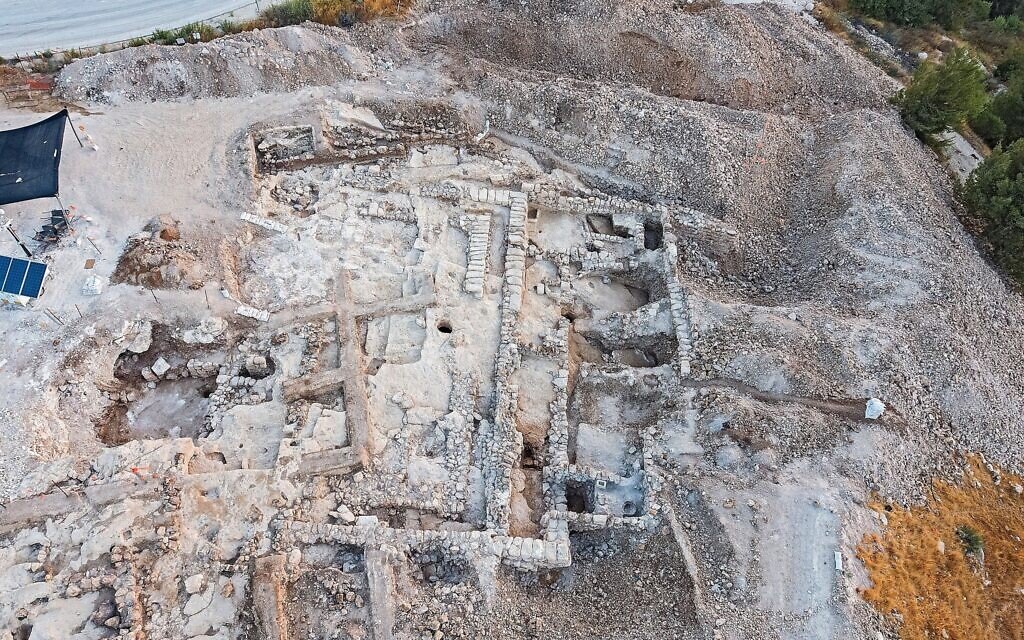 Aerial image of the Arnona neighborhood excavation of a 2,700-year-old administrative complex in Jerusalem (Yaniv Berman, Israel Antiquities Authority)
The excavators also posit that a large number of seal impressions at the site clearly indicate that during the latter part of the Kingdom of Judah, the governmental activity took place in the area south of the City of David. It is also possible that this governmental activity was related to the nearby site of Ramat Rachel, which may be identified with the palace of the Kings of Judah and/or as an administrative center.
The majority of the seal impressions uncovered contain the ancient Hebrew letters "LMLK." These impressions are characterized by a sun disk, flanked with two wings. Above the sun disc appears the word 'to the King' and below one of four cities in the kingdom of Judah: Hebron, Ziph, Socho or Mmst. According to Sapir and Ben-Ari, while the identification of Hebron, Ziph and Socho can be identified with known ancient cities in Judea in the Hebron Hills area, the identification of Mmst is still controversial."
During the ancient period, for reasons not understood, the large building at the site was covered over with a massive pile of flint stones forming an artificial hill measuring 20 meters high and extending over seven dunams (!). Even today, this huge pile of stones stands out from the surrounding hills and is visible from a great distance.
According to the researchers, "These artificial stone hills have been identified at several sites in Jerusalem and are a phenomenon to the end of the First Temple period and have aroused the curiosity and fascination of Jerusalem researchers since the beginning of archeological research in the area. Nevertheless, the reason for the huge effort made in stacking them over many acres remains an unresolved archaeological mystery."
Another find that sheds light on the character of the period is a collection of figurines – clay statuettes. According to archaeologists Sapir and Ben-Ari, "Some of the figurines are designed in the form of women, horse riders or as animals. These figurines are usually interpreted as objects used in pagan worship and idolatry - a phenomenon, which according to the Bible, was prevalent in the Kingdom of Judah."
"It seems that shortly after the site was abandoned, with the destruction of the Kingdom of Judah in 586 BCE and Babylonian exile, the site was resettled, and administrative activity resumed. During this time governmental activity at the site was connected to the Judean province upon the Return to Zion in 538 BCE under the auspices of the Achaemenid Persian Empire, which then ruled over the entire ancient Near East and Central Asia," the researchers said.
According to Dr. Yuval Baruch, the IAA Jerusalem District Archaeologist, "The archeological discoveries at Arnona identify the site as a key site - the most important in the history of the final days of the Kingdom of Judah and of the return to Zion decades after the destruction of the Kingdom. This site joins a number of other key sites uncovered in the area of Jerusalem which were connected to the centralized administrative system of the Kingdom of Judah from its peak until its destruction."
Written by Conny Waters - AncientPages.com Staff Writer
More From Ancient Pages
-
 Ancient Burial Site At Vulci Reveals Treasure Of Coins Dated To 3rd Century B.C
-
 The “Drunk Hypothesis” And Alcohol’s Crucial Role In Numerous Early Civilizations
-
 Painted Tikal Altar Unlocks The Ancient Secrets Of A Mysterious Maya Period
-
 Scientists Investigate – Did The Human Brain Shrink 3,000 Years Ago?
-
 Race Against Time: Crucial Expedition To Delve Into Bouldnor Cliff, Europe’s Mesolithic Underwater Stone Age Site
-
 900-Year-Old Crypt At Old Dongola: Magical Inscriptions And Mysterious Signs Found
-
 The Italian People Have Devoted Millennia To Meticulous Refinement Of Grape Cultivation Practices
-
 On This Day In History: Storming Of The Paris Fortress – Prison Bastille – On July 14, 1789
-
 Has The Mystery Of The Lost Trading Ship Zuytdorp Been Solved?
-
 Has The Mysterious Ancient Underground Labyrinth Of Mitla Finally Been Found?
-
 LIDAR Uncovers Ancient Secrets At Cahokia – North America’s First City
-
 Magnificent Viking Era Sword Found By Divers In The Supraśl River, Poland
-
 Roman Copper-Alloy Tortoise Figurine Discovered In Suffolk, UK
-
 Oldest Human Cranium Fossil Discovered In Aroeira Cave In Portugal
-
 Unique Roman Oil Lamp Decorated With A Crafted Mask Discovered In The Netherlands
-
 Surprising Evidence Prehistoric People In Survived In The Coldest Regions Of Spain
-
 Part Of Secret Vatican Manuscript Decoded
-
 Find Out Which Indigenous Lands You Live On With This Interactive Map Covering The Whole World
-
 Human-Driven Mass Extinction Is Eliminating Entire Branches Of The Tree Of Life – New Study
-
 Large Underwater Site That Was Home To 500,000 People About 14,000 Years Ago Identified Northwest Of Australia

