
Yum Kaax, Mayan God Of Agriculture, Lord Of Woods And Caretaker Of Animals
A. Sutherland - AncientPages.com - The pantheon of early South and Mesoamerican gods included many deities to whom people regularly made offerings.
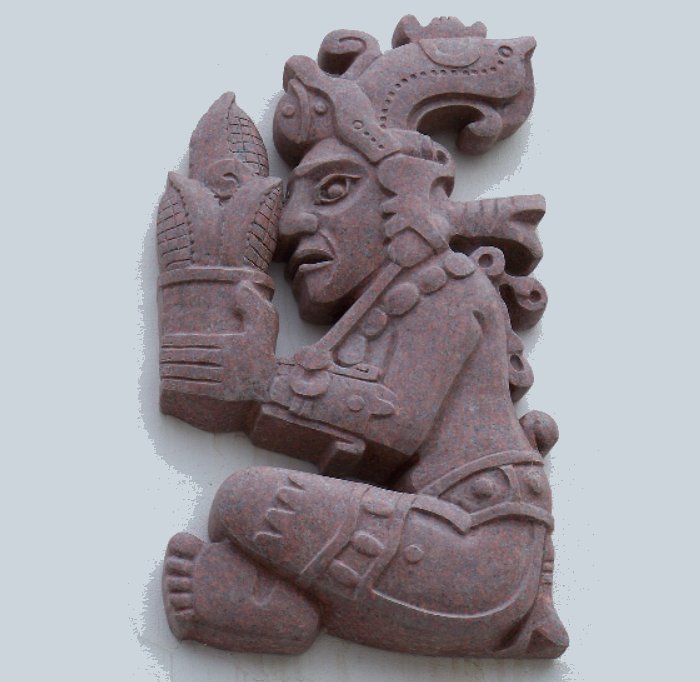
Yum Kaax (Lord of the woods in Yukatec) - patron of the glasshouses. Josefa Suka 1388, Botanical Garden, a relief upon the entry of the Tropicana greenhouse. Teplice, Teplice District, Ústí nad Labem Region, the Czech Republic. Image credit: ŠJu (cs:ŠJu) - CC BY-SA 3.0
One of them was Yum Kaax (also known as Ah Mun, Yum K'aax, or Yum Uil), often portrayed with the most sacred food of the Maya people - corn. His name originates from the Maya words 'Yum' ("lord") and 'Kaax' ("forest") or "the wild." Therefore, this great deity is, first of all, Lord of the Forest and guardian of all wildlife.
The ancient Maya regarded Yum Kaax as a benevolent agricultural god symbolizing abundant life and prosperity. During the Classical period, he was identified as a priest watering corn grains over Mother Earth's head.

This is a preview of our premium article available only to members of Ancient Pages.
Become a member to read more - Click here
If you are already a member and have logged in to your account, you can access the article here

See also:
Alux: Little Mythical Troublemaker And Guardian Of Corn Fields In Mayan Folklore
Ceiba Tree: Sacred Tree Of Life Of Maya People And Universal Concept In Ancient Beliefs
Centeotl: Lord Of Maize Who Was Revered Before The Olmecs By All Mesoamerica’s Inhabitants
More From Ancient Pages
-
 Dzibilchaltún: One Of The Most Ancient Mayan Centers In Northwest Yucatan, Mexico
-
 Rasputin – Controversial Mystic With Healing Powers – An Evil Or Misunderstood Man?
-
 Summer Solstice Festivals Around The World – Midsummer Celebration Is An Ancient Tradition Still Alive
-
 Djoser: Most Outstanding King Of The Third Dynasty In Ancient Egypt And His Step Pyramid
-
 Red-Headed Alevi In Kurdistan Could Be Guardians Of Watchers’ Secret Knowledge And Shed Light On The Excalibur Legend
-
 Falerii Novi – Huge Ancient Underground Roman City Reveals Its Secrets
-
 Archaeologists Investigate A Fascinating Ice Age Mystery In A Cave Beneath A British Castle
-
 Secret Encounter With A Mysterious ‘Out-Of-Place’ Lost Tribe In The Amazon Jungle – Did They Possess Strange Mental Powers?
-
 Unexplained Phenomenon Around Yellowstone Puzzles Scientists
-
 ‘Impossible’ Ancient Traces Of Humans – No, We Are Not The First
-
 Unexplained 2,500-Year-Old ‘Teleportation’ Case Of A Writer Who Vanished Into Thin Air And Reappeared Miles Away
-
 Archaeologists Solve A 1,000-Year-Old Mystery Mentioned In Norse Sagas
-
 Yew: Mysterious Ominous And Sacred Tree Revered By Our Ancestors Since The Dawn Of Civilization
-
 Unknown History Of Gigantic Obelisks Created With Ancient Lost Technology
-
 Beware Of The Night Marchers – Deadly Ghosts Of Warriors Who Kill With Just One Look
-
 Mysterious Piasa Bird – Native American Dragon That Existed Thousands Of Moons Before The Pale Face Came
-
 Circe: Powerful Divine Greek Sorceress Who Mastered Healing, Miracles And Transformed People Into Animals
-
 Kali: Hindu Goddess Of Death, Fear And Horror Who Destroys Ignorance, Evil And Establishes World Order
-
 Unexplained Phenomena In Arkansas – Old Mysteries Still Puzzling The Modern World
-
 They Spoke The Language Of The Gods – Secret Symbols, Unknown Books And Manuscripts – Part 2

