
Late Neolithic Italians Mastered Complex Metal Technologies – New Study
Conny Waters – AncientPages.com – A new study reveals that late Neolithic Italians mastered much more complex metal technologies than previously thought.
Scientists from Italy and the United Kingdom say that during the 4th and 3rd millennia BC, Italy was home to complex networks of metalwork exchange. However, relatively little is known about metalwork exchange across the country, especially south of the Alps.
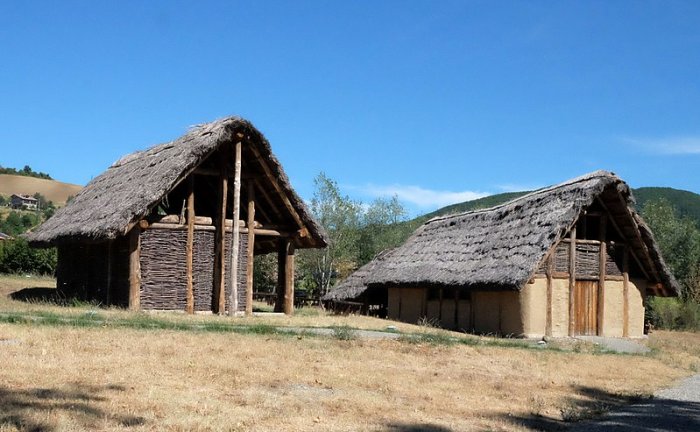
Reconstruction of the Neolithic village of Travo, Italy. Credit: Giuale, CC BY-SA 4.0
Scientists are now attempting to understand how commonly and how widely copper was imported and exchanged throughout Late Neolithic (Copper Age) Italy.
The researchers conducted an analysis of 20 copper items, including axe-heads, halberds, and daggers, from central Italy dating to the Copper Age, between 3600 and 2200 BC.
Comparing archaeological data and chemical signatures of these items to nearby sources of copper ore, as well as to other prehistoric sites, they were able to determine that most of the examined objects were cast from copper mined in Tuscany, with the rest sourced from the western Alps and possibly the French Midi.
See also:
Copper: First Metal Used By Ancient Man More Than 10,000 Years Ago
Troublesome Ancient History Of Forks Started In Tuscany, Italy In 11th Century
‘Altar Of Twelve Gods’ At Gabii, Italy Was Once An Important Ancient Place
These results not only confirm the importance of the Tuscan region as a source of copper for Copper Age communities in Italy, reaching as far as the Tyrolean area home of the Alpine Iceman, but also reveal the unexpected finding that non-Tuscan copper was a significant import to the region at this time. These data contribute to a growing picture of multiple independent networks of Copper Age metal exchange in the Alps and neighboring regions.
According to the study conducted by Andrea Dolfini of Newcastle University (UK), and Gilberto Artioli and Ivana Angelini of the University of Padova (Italy), more research must be carried out to uncover other early sources of copper, as well as more details of the interactions between these early trade networks.
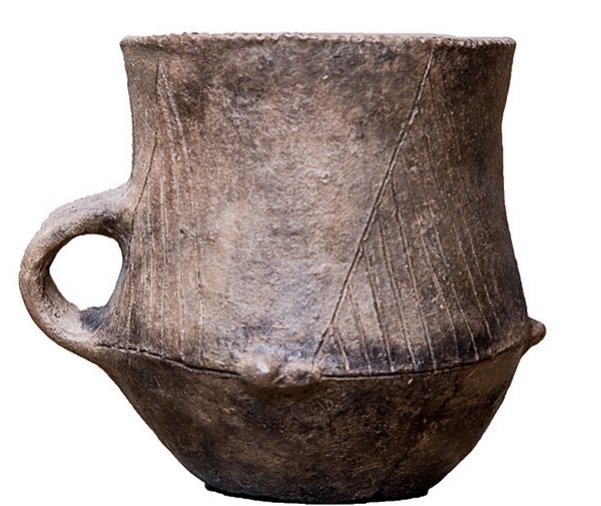
Credit: Public Domain
“The first systematic application of lead isotope analysis (a geological sourcing technique) to Copper Age metal objects from central Italy, 3600-2200 BC, has shed new light on the provenance of the copper used to cast them.
See also: More Archaeology News
The research has revealed that, while some of the copper was sourced from the rich ore deposits of Tuscany, as was expected, some is from further afield. This unforeseen discovery demonstrates that far-reaching metal exchange networks were in operation in prehistoric Europe over a thousand years before the Bronze Age," authors write in their science paper.
Written by Conny Waters - AncientPages.com Staff Writer
More From Ancient Pages
-
 Neanderthals Of The Mediterranean Areas Became Extinct But Not Because Of Climate
-
 On This Day In History: Battle Of The Rhyndacus – Oct 15, 1211
-
 Excavations At Oylum Höyük In Southeast Anatolia Near Syrian Border – Resumed
-
 14th Century Murals With ‘Warrior Saints’ Found In Church Of Ancient City Cherven In Bulgaria
-
 On This Day In History: Powerful Warlord And Emissary Of Spear-Thrower-Owl Arrived At Tikal – On Jan 8, 378 AD
-
 New Astronomical Knowledge Sheds Light On The Start Of Viking-Age Trade
-
 Burial Chamber Of Ankhesenamun, Tutankhamun’s Wife May Soon Be Found
-
 Mystery Of Europe’s Bog Body Phenomenon Solved By Scientists
-
 Ancient Burials Of World’s First Horse Riders Found Near The Black Sea
-
 More Sophisticated Manufacturing In The Bronze Age – New Evidence
-
 Part Of Jerusalem’s Wall Destroyed By The Babylonians In 586 BC – Unearthed
-
 On This Day In History: ‘Sea King’ Ragnar Lodbrok Seizes Paris – On March 28, 845
-
 Unique Heart-Shaped Jesuit Ring At Fort St. Joseph In Michigan
-
 Extraordinary Etruscan And Roman Treasure Trove Unearthed In San Casciano dei Bagni, Italy
-
 Intriguing Discovery Could Offer Proof Of The Tabernacle – Has The Dwelling Place Of God Been Located?
-
 Biblical Pool Of Siloam In The City of David To Be Excavated And Opened To The Public
-
 DNA From Doggerland That Separates The UK From Europe – New Study
-
 Reconstructed Roman Gateway Tells The Story Of Britain’s Invasion
-
 A Head Of A Statue Dated To 700 BC, Animal Figurines And Jordan Valley’s Occupation History
-
 Unique 3,000-Year-Old Petroglyphs Found Buried By A Massive Landslide In Gauldal, Norway

