
Kylfings – Unknown Warriors Mentioned On Norse Runes – Were They Members Of The Varangian Guard?
Ellen Lloyd - AncientPages.com - Several Norse runes mention a group of unknown warriors named Kylfings. According to scholars, the Kylfings may have been members of the Varangian Guard, but who these people were and where they came from remains a historical mystery.
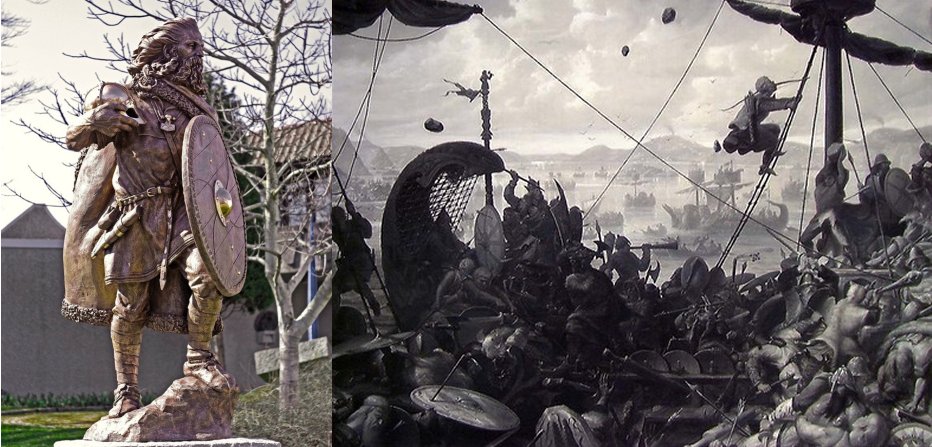
Left: Norway's first king Harald Fairhair. Credit: Public Domain - Right: Battle of Hafrsfjord by Ole Peter Hansen Balling, 1870. Credit: Public Domain
Who Were The Kylfings?
From the late ninth century to the early twelfth century, the Kylfings were present in Northern Europe during the Viking Age.
They are mentioned in the Norse runestones, sagas, poems, Byzantine records, and Rus' law codes. The Kylfings obviously played an important role in many countries, but tracing these peoples' history has been difficult.
To begin with, we don't even know whether the term Kyfling refers to a particular tribe or is the name of a socio-political or economic group. Some scholars have suggested that the word kylfing was probably derived from Old Norwegian kylfa' club', which means 'man with a club.'

The Norslunda Runestone, bearing runic inscription U 419, mentions the personal name Kylfingr. Credit: Wikipedia
However, whether the Kylings were ethnically Finnic or Norse is still debated. They could have originated from Denmark, Sweden, or the Eastern Baltic.
The Kylfings And Their Battle Against Viking Chief Harald Fairhair
According to the Sagas, the Kylfings opposed the consolidation of Norway under the Viking chief Harald Fairhair.
The Kylfings participated in the great naval Battle of Hafrsfjord, sometimes between 872 and 900. When Harald Fairhair won the battle, the Kyflings started raids in Northern Norway and fought against King Harald Fairhair's warriors. The monument Sverd I Fjell – Swords In Rock, located just outside Stavanger, Norway, commemorates the Battle of Hafrsfjord.
Egil's Saga reveals that Kylfings were trading and plundering in Finnmark around 900. Thorolf Kveldulfsson, King Harald's tax agent in northern Norway, engaged Sami scouts to monitor the Kylfings' movements and report back to him. When Thorolf Kveldulfsson encountered the Kyflings, he killed all of them.
"Far and wide about Finmark did he travel; but when he reached the fells eastward, he heard that the Kylfings were come from the east and were there for trading with the Finns but in some places for plunder also.
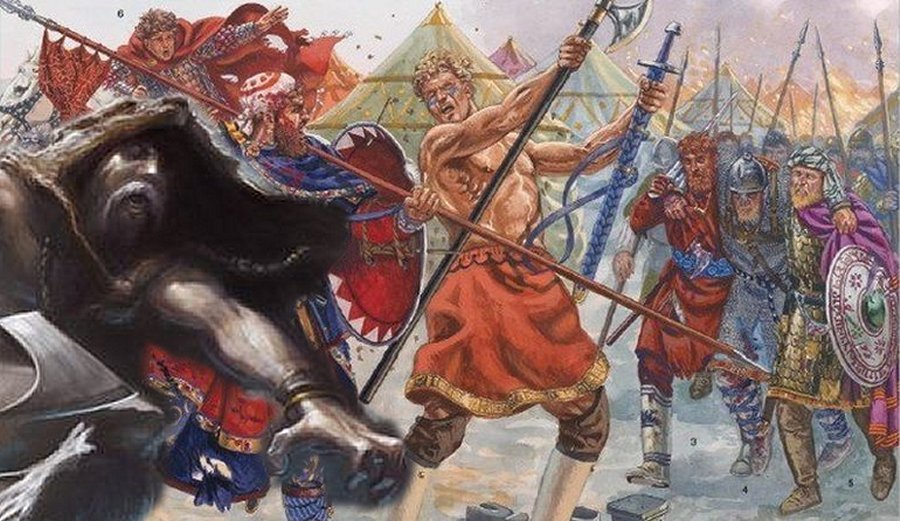 Roman Empire needed berserker warriors and hired them among northern mercenaries or in other places in Europe. Read more
Thorolf set Finns to spy out the movements of the Kylfings, and he followed after to search for them and came upon thirty men in one den, all of whom he slew, letting none escape." (Egil's Saga, Chapter: Thorolf in Finmark)
Kyflings And The Varangian Guard
Historians have found evidence that the Kylings were also mentioned in connection with the Varangian Guard. The Varangian Guard represented the elite heavy infantry regiment of the Roman ('Byzantine') Empire from AD 988 AD to around 1404 AD. and consisted of professional Viking warriors who successfully conquered territories.
However, whether the Kyflings actually served as a unit of the Byzantine army has not been historically proven.
Who these unknown warriors were and where they came from is still a controversial subject. One theory proposed they were a Finnic tribe or West Slavic people. Still, many have also suggested that the Kylfings were from East Scandinavia, possibly Swedish tribe, or originated from eastern Baltic and northern Russia.
Written by Ellen Lloyd – AncientPages.com
Updated on October 2, 2022
Copyright © AncientPages.com All rights reserved. This material may not be published, broadcast, rewritten or redistributed in whole or part without the express written permission of AncientPages.com
Expand for referencesSaga Och Sed: Kungl. Gustav Adolfs Akademiens Årsbok
P. Sture Ureland, Iain Clarkson - Scandinavian Language Contacts
Egil's Saga
More From Ancient Pages
-
 Archaeologists to revisit Fort Rock Cave, Oregon – site of the world’s oldest sandals
-
 Fionn Mac Cumhail: Legendary Irish Hero, Clairvoyant And Leader Of Fianna Warriors
-
 Hundreds Of Highly Unusual Burial Gifts Found In Special Viking Chamber Belonging To Woman In Norway
-
 Well-Preserved 7,300-Year-Old Wooden Cabins Discovered In La Draga
-
 Who Were The Satraps Of The Achaemenid Empire?
-
 King Solomon Was Invented As Political Propaganda To Unite People Of Judah – Scholars Argue
-
 On This Day In History: Unbelievable Flight Took Place – On Apr 28, 1939
-
 Unearthed Ancient Egyptian Tombs At Tel El-Deir Will Rewrite The History Of Damietta – Archaeologists Say
-
 Viking Ivar The Boneless Could Be Buried In Repton – Remarkable Viking Burial Holds Clues To Where Ragnar Lodbrok’s Son Died
-
 Mysterious Jomsvikings: Fearless Scandinavian Warrior-Brotherhood
-
 Time Capsule: Sunken Ancient City Of Baiae
-
 Intriguing Connection Between Ancient Curse Tablets And The Book Of Revelation Discovered
-
 Bryggen Inscriptions Reveal Viking Runes Were Used As Modern SMS – Short Message Service In The Norse World Was Popular
-
 Elysian Fields: Mysterious Resting Place For Heroic And Virtuous Souls In Greek Ancient Beliefs
-
 Shieldmaiden Hervör’s Dangerous Quest For The Cursed Tyrfing Sword
-
 12,000-Year-Old Human Face Depicted On The T-Shaped Pillar – Discovery At Karahantepe, Turkiye
-
 DNA Study Reveals 250 Siberians Became The First Native American Population
-
 Ancient Maya People Used Volcanic Ash To Build Pyramids When Huge Eruption Occurred
-
 Grave Of Scythian Amazon Warrior Wearing A Golden Ceremonial Headdress Discovered In Voronezh, Russia
-
 The Great Pyramid And Ancient Egyptian Knowledge Shed Light On Biblical Mysteries – Resurrection Of The Flesh – Part 1

