
Vegvisir – Old, Sacred Norse Symbol Of Protection And Guidance
A. Sutherland - AncientPages.com - Vegvisir is among the oldest and sacred Norse symbols, and it initially originated in Iceland, where 'Vegur' means - road or path and 'Vísir' means – Guide.
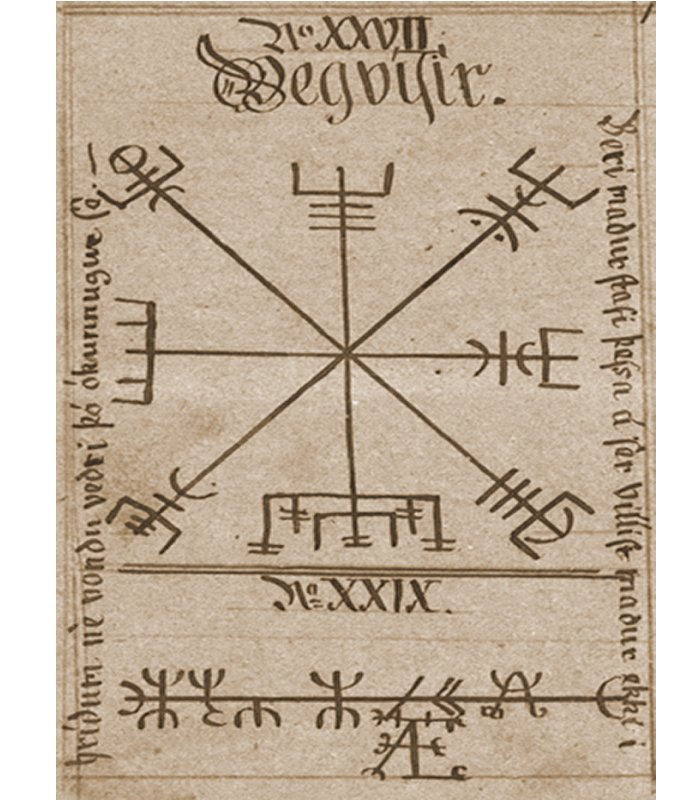
Vegvisir from Geir Vigfússon's work - Huld Manuscript. It was a kind of runic compass with rune script used by ancient Icelandic Vikings. (National and University Library of Iceland)
The symbol was frequently inscribed on seagoing vessels to ensure their safe return home.
The device was believed to show the way back home and protect seamen and their ships from storms. The Vegvisir was like a guide helping its bearer to find his way home. Norse people believed that the Vegvisir had special powers; therefore, it was treated as a talisman for luck, protection, and blessings. This powerful symbol could help a person to find the right way in storms or bad weather, whatever unfamiliar surroundings they may encounter.
As a spiritual compass, this magical device guides your heart and steps to make the right choices in life. It has also long played an essential role among people who believe in magic powers, such as Norse Shamans. If you have lost yourself and your faith, this sacred symbol helps you find confidence again.

A Völva in Norse mythology predicted the future. Read more
'Saga of Hrana hrings' (Hrana Saga Circle) is one of the Sagas of Icelanders, existing only in manuscripts dated back to 1887-1888. It mentions the Vegvisir: "…the weather was cloudy and stormy ….the king looked around and did not see the blue sky… then the king took the vegvisir in his hands and saw where [the sun] appeared on the stone…. "
The symbol appears in an Icelandic book of magic, or grimoire, known by Galdrabók, published around 1600 AD. Also, in 1860, in the 'Huld Manuscript,' Geir Vigfusson mentions the Vegvisir. Vigfusson collected and categorized various Icelandic folk symbols using some much older material.
A leaf of the manuscript provides an image of the vegvísir, gives its name, and, in prose, declares that "if this sign is carried, one will never lose one's way in storms or bad weather, even when the way is not known…"
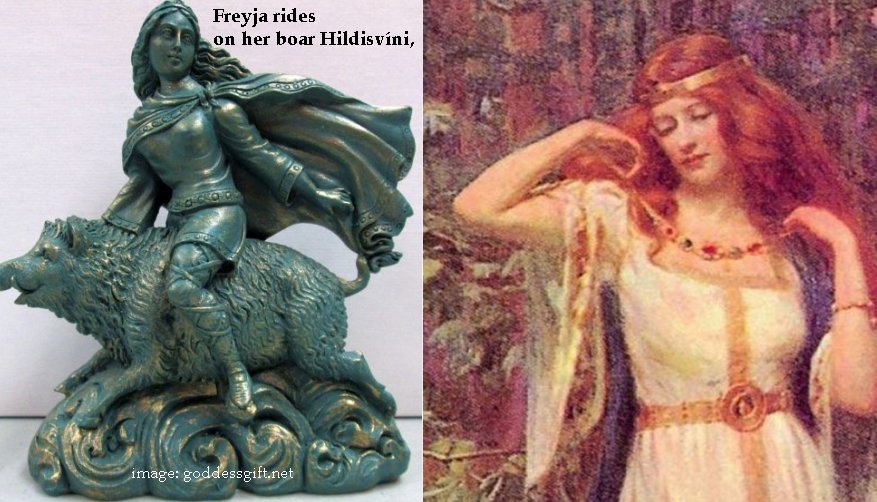
Did you know that the Norse Goddess Freya was the most prominent völva? Learn more
Viking and Norse symbols represented gods, beliefs, and myths. Some Viking symbols remain mysterious, and their meaning is still unknown, but there are also many ancient symbols that have clear messages.
Norse shamans such as the powerful, mighty Völva, whom even Norse gods feared, depended on her magical staff to foretell the future. The usage of symbols for communication or divination played an essential role among Norse Shamans.
Some suggest that the Vegvisir was created by the Ásatrú, who believe in ancient Germanic spirits and Gods, but this statement is false. Ásatrú is a New Age movement, and the Vegvisir is an ancient symbol used in ancient times.
The true power of the Vegvisir is hidden in each of its eight staves, offering different protection against many obstacles that might cause one to lose one's way.
The Vegvisir remains a unique, mysterious Norse symbol of unknown age. It's a powerful ancestral spiritual symbol that survives to this day. Tattoos and amulets made in the image of a Vegvisir are common today.
Written by A. Sutherland – AncientPages.com Staff Writer
Updated on November 27, 2022
Copyright © AncientPages.com All rights reserved. This material may not be published, broadcast, rewritten or redistributed in whole or part without the express written permission of AncientPages.com
Expand for referencesMore From Ancient Pages
-
 Medieval Mythbusting – New Research Rewrites History Of Glastonbury Abbey
-
 Secrets Of The Cathars – Mysterious Manuscript Of Jesus And His Pre-Flood Language
-
 Long-Lost Roman Bridge Re-Discovered In Chepstow River Wye Mud, UK
-
 First Book Of Breathing: Egyptian Papyrus Sheds Light On Funerary Text Helping The Deceased In Afterlife
-
 Underwater Jars Reveal Roman Period Winemaking Practices
-
 Fresco Reveals Renaissance Genius Raphael Used Egyptian Blue – World’s Oldest Artificial Pigment
-
 Gold Dated To Scythian-Saka Era Unearthed In Valley Of The Kings In East Kazakhstan
-
 Discovered 3,700-Year-Old Clay Tablet Shows Babylonians Used Geometry Long Before Pythagoras
-
 Huge 7,000-Year-Old Man-Made Structures Used For Religious Rituals Spotted In Poland
-
 Major Underwater Archaeological Find On The Western Coast Of Sicily – Artifacts From The Battle Of The Egadi Islands?
-
 Royal Tombs Of Alexander The Great’s Family At Vergina, Greece Finally Identified
-
 Migrants From Turkey And Greece Arrived In Britain Some 6,000 Years Ago
-
 On This Day In History: Battle Of Langside Was Fought – On May 13, 1568
-
 The Untold History Of The Horse In The American Plains Revealed
-
 On This Day In History: Charlemagne King Of The Franks And Emperor Of The Holy Roman Empire Born – On April 2, 742
-
 Unknown Rock Inscriptions And Earliest Monumental Hieroglyphs In Egypt Shed New Light On Ancient Writing
-
 Giant Thousand-Year-Old Urns Discovered In The Amazon City Of Fonte Boa
-
 First-Ever 3D Model Allows You To Explore The Iconic Easter Island Statues Up Close
-
 Has The Burial Place Of Mysterious Dark Age King Cerdic Of Wessex Been Located?
-
 Controversial Evidence – Ancient Chinese Visited America 2,500 Years Ago

