
Why Was Napoleon Bonaparte Defeated At Waterloo?
AncientPages.com - Napoleon Bonaparte (1769-1821) was undoubtedly one of the greatest military leaders of all time. He led several successful campaigns during the French Revolutionary and during his reign as an emperor he conquered most of Europe with an array of insightful tactics.
Being a military genius, Bonaparte was responsible for turning France into a superpower.
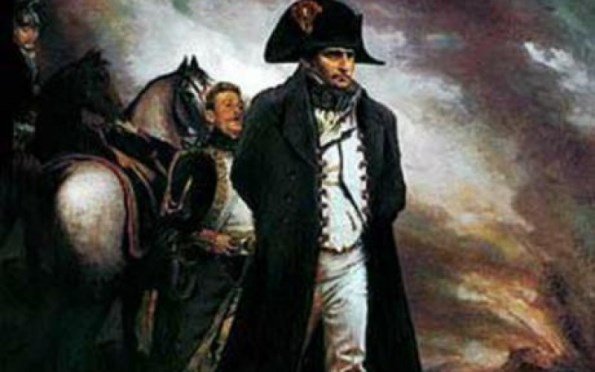
The Emperor Napoleon at Waterloo.
However, there were times when even the great Bonaparte was defeated. He sometimes had a tendency to underestimate his enemy. He was overconfident and this attitude led that he was occasionally defeated. For example, Napoleon’s invasion of Russia was a fiasco because he underestimated the cunning strategy of Tsar Alexander I. Napoleon also did not consider the cold Russian winters.
Bonaparte’s failure in Russia was the beginning of his downfall and the rise of Russia’s status as a leading power in post-Napoleonic Europe.
Battle At Waterloo
Napoleon’s Battle at Waterloo, Belgium is a famous military encounter, but it’s also a battle that went completely against him and his forces. The battle was between, France on side and Great Britain, Prussia and their allies on the other. The battle was a great victory for the British and the Prussians and it is widely seen as the end of the series of wars that had ravaged Europe since the French Revolution (1789).
See also:
Napoleon Bonaparte Dies In Exile On The Island Of Saint Helena – On May 5, 1821
Island Of St. Helena – Last Residence Of Napoleon Discovered – On May 21, 1502
Napoleon Bonaparte Dies In Exile On The Island Of Saint Helena – On May 5, 1821
The Battle at Waterloo was fought on June 18, 1815. It was the first and last encounter between two great military leaders – Napoleon Bonaparte and Duke of Wellington. The main reason why Bonaparte lost the battle against the Englishmen was because he had insufficient knowledge about his enemy.

Napoleon Bonaparte entered the Battle of Waterloo confident that his army would fully defeat Duke of Wellington.
The French Emperor had not received information about Wellington’s new, clever military strategy. Bonaparte completely underestimated Duke of Wellington and the allied forces.
Bonaparte Underestimated Duke of Wellington And the Allied Forces
Duke of Wellington had a cunning plan. He established a strong defensive position on a ridge and had fortified some farmhouses in the area, to protect his flanks.
Bonaparte followed an old-fashioned strategy and he was unprepared for Wellington’s deadly surprise.
On the afternoon, Bonaparte ordered his forces to attack the British and their allies before the Prussians arrived. He decided to attack the British the day after arriving at Waterloo.
When the French forces carried out the attack, they were taken by surprise by British soldiers who had been hiding behind a hill. The Battle at Waterloo turned into a bloodbath. More and more allied forces joined the battle and there was no way Bonaparte could win.
Waterloo cost the British army around 14,500 dead or wounded and the Prussians under Blücher suffered some 7,200 casualties. The French army had some 25,000 to 26,000 killed or wounded. Some 6000 to 7000 French soldiers were taken prisoner and another 15,000 men deserted. Waterloo was a decisive victory for the allies.
Napoleon’s army was no longer an organized fighting force and the British and Prussians were about to invade France, which was practically defenseless.
Waterloo ended the career of Napoleon one of the greatest generals in history. It also ended the last serious attempt by France to dominate Europe.
AncientPages
More From Ancient Pages
-
 Horus – One Of The Most Important Ancient Egyptian Gods And Symbol Of Rulership and Justice
-
 Agni: Hindu God Of Divine Illumination And One Of The Three Supreme Deities Of Vedic Lore
-
 Skull And Jaw Of Giant Bear Of The Late Pleistocene Found In Buenos Aires
-
 Kaillachuro’s Hunter-Gatherers Built Monumental Burial Mounds In The Titicaca Basin 1,500 Years Earlier Than Previously Thought
-
 Nabataean Culture Lived On Long After Their Kingdom Disappeared – New Evidence
-
 Beautiful Legend Of La Befana – Witch Who Delivers Gifts To Children In Italy On Epiphany – Twelve Days After Christmas
-
 Surprising Time Capsule In Antarctica – Evidence Of Toxic Heavy Metal Pollution 800 Years Ago
-
 Norse Legend Of Hero Sigmund And The Magical Sword In The Branstock Tree
-
 Ancient Secrets Of Sacred Lismore – Is There A ‘Second’ Iona In Scotland?
-
 Was Spruce Hill In Ohio Home To An Ancient Lost Civilization? Traces Of Strong Fire Puzzle Scientists
-
 How Gilgamesh Defeated Mighty King Agga Of Kish
-
 Tuonela – The Land Of The Dead In Beliefs Of Ancient Finnish People
-
 Tezcatlipoca: Enigmatic Aztec God Who Looked Inside People’s Hearts And Observed Their Deeds On Earth
-
 Olive Trees Were First Domesticated 7,000 Years Ago In The Jordan Valley
-
 The Untold Story Of The Inca – Mysterious Place Of The Raised Stones – Part 2
-
 Scientists Unravel The Mystery Of The Alexander Sawney Bean Legend & Cave-Dwelling Cannibals In Scotland
-
 Underwater Archaeologists Explore The Secrets Of Loch Achtily Crannog – Will They Find A Rare Medieval Settlement?
-
 Secrets Of A Lake That Could Re-Write Ancient History Of America – Myths And Gods Reveal A Complex Story – Part 1
-
 Rhetorica ad Herennium: Ancient Book That Improves Your Memory Using Method Of Loci – You Can Test It Easily
-
 Nearly 7,000 Years Ago, Dortmund Airport’s Area Was Inhabited By Early Farming Society For Centuries

