
New York Was Once Called New Amsterdam – History Behind The Change Of Name
AncientPages.com - Did you know that New York was once called New Amsterdam?
Today, it’s difficult to imagine that New York could ever have had another name, but it was not so long ago that the city was renamed. New York was once called New Amsterdam and it was the capital of New Netherland.
New York’s name history can be traced to a time during the 17th century when Britain, France and Netherlands all struggled to expand their territories and establish more colonies.
Though Britain and France were rivals, they could still co-operate and form an alliance against their common enemy - the Netherlands, a small country that for 80 years fought for independence and now started to conquer the world.
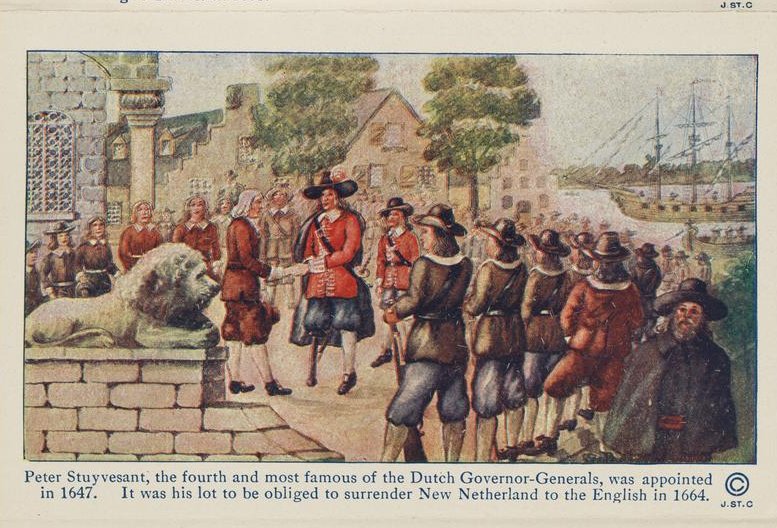
Image credit: Museum of the City of New York
The Netherlands became more and more powerful. One of the goals was to set up colonies in North America.
The first recorded exploration by the Dutch of the area around what is now called New York Bay was in 1609 with the voyage of the ship Halve Maen.
In 1626, Dutch governor Peter Minuit formally purchased Manhattan from the local Indian tribe. According to a legend, the Manhattans–Indians of Algonquian linguistic stock agreed to give up the island in exchange for trinkets valued at only $24.
See also:
The Name Of America Used For The First Time On World Map – On Apr 25, 1507
More Fascinating Ancient History Facts
At the southern tip of Manhattan Island, a Dutch settlement was established. It was considered a good strategic location. A fort was built and the city served as the seat of the colonial government in New Netherland.
It did not take long before a conflict broke out between the Dutch settlements and the Indians who were ignorant of European customs of property and contracts. The Dutch and Indian conflict resulted in the death of more than 1,000 Indians and settlers.
In 1664, New Amsterdam passed to English control, and English and Dutch settlers lived together peacefully.
On September 8, 1664, New Amsterdam was renamed to New York
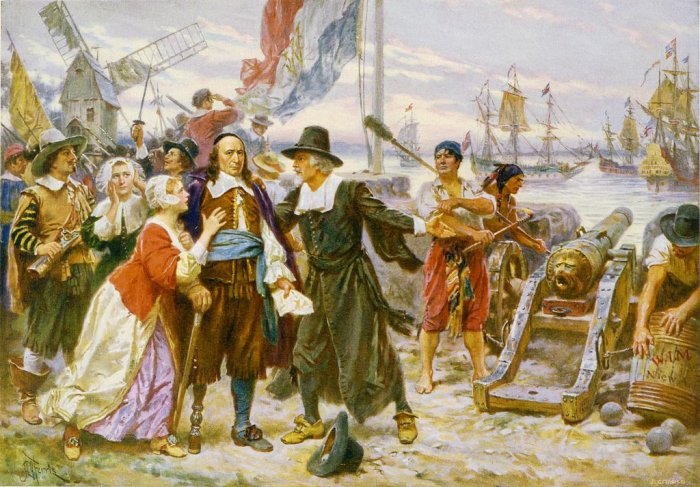
The Fall of New Amsterdam, by Jean Leon Gerome Ferris. Peter Stuyvesant (left of center, with wooden leg) stands on shore among residents of New Amsterdam who plead with him not to fire on the English warships. Image credit: United States Library of Congress
The English had renamed the Colony the Province of New York, after the king's brother James, Duke of York and on June 12, 1665 appointed Thomas Willett the first of the Mayors of New York Town. The city grew northward, and remained the largest and most important city in the Province of New York and became the third largest in the British Empire after London and Philadelphia.
Some years later, in 1673, the Dutch managed to regain control of their settlement, but not for long. The following year, they lost the city again and New York was returned to the Englishmen.
After the American Revolution, the Treaty Of Paris was ratified and New York became the first capital of the United States.
Copyright © AncientPages.com All rights reserved. This material may not be published, broadcast, rewritten or redistributed in whole or part without the express written permission of AncientPages.com
Expand for referencesMore From Ancient Pages
-
 Catherine Of Valois – Scandalous Queen Who Caused Drama Even After Her Death
-
 Shell Trumpets In Neolithic Catalonia Were Used For Effective Long-Distance Communication
-
 Archaeologists Begin Excavations Of A Sunken Zhiyuan Warship That Sank In 1894
-
 Female Demon-Like Spirits That Can Lure Men Into A Deadly Circle Dance
-
 Mysterious Manuscript 512 Reveals Lost Ancient City Hidden In The Amazon Jungle
-
 Sverd I Fjell – Swords In Rock: Battle Of Hafrsfjord Won By Harald Fairhair – First King Of Norway
-
 How Did Hunter-Gatherers Spread Knowledge Of Pottery Vast Distances Over A Short Period Of Time?
-
 Fragments Of 50-Mile-Long Roman Aqueduct And Road In Cádiz, Spain Revealed By Storm
-
 Parachute May Have Been Invented By Ancient Chinese – Not Leonardo Da Vinci
-
 Ostrich Egg Vessel And Thracian Horseman Fibula Found In Roman-Era Burial Mound In Bulgaria
-
 On This Day In History: Sunspot Observed By Chinese Astronomers During The Han Dynasty – On May 10, 28 BC
-
 Rare 500-Year-Old Wreck From Missing Ship Samson Discovered In Central Stockholm, Sweden
-
 Omphalos – Mysterious Ancient Sacred Object And Its Meaning
-
 Sun God Ra Was Venerated In Every Age Of Ancient Egypt’s Long Dynastic History
-
 Mystery Of The Cursed Ancient Temple With Treasures Guarded By Serpents
-
 Hypnos: God Of Sleep Who Owns Much Of Our Lives In Greek Mythology
-
 On This Day In History: Charter Of The Forest Was First Issued On London – On Nov 6, 1217
-
 Hades – ‘The Unseen’ God Of The Dead, Fertility, Wealth And Earth’s Minerals
-
 Roman Ship Cargo And Galley Equipment Discovered Underwater In The Caesarea Harbor
-
 On This Day In History: Stone Of Destiny Stolen From Westminster Abbey In London – On Dec 25, 1950

