
Murder Of Archbishop Thomas Becket: One Of Most Famous Crimes Of Middle Ages
A. Sutherland - AncientPages.com - "Can someone make sure I get rid of this troublesome priest?" These were the words the king of England, Henry II shouted out when he was very angry with Archbishop Thomas Becket, one day.
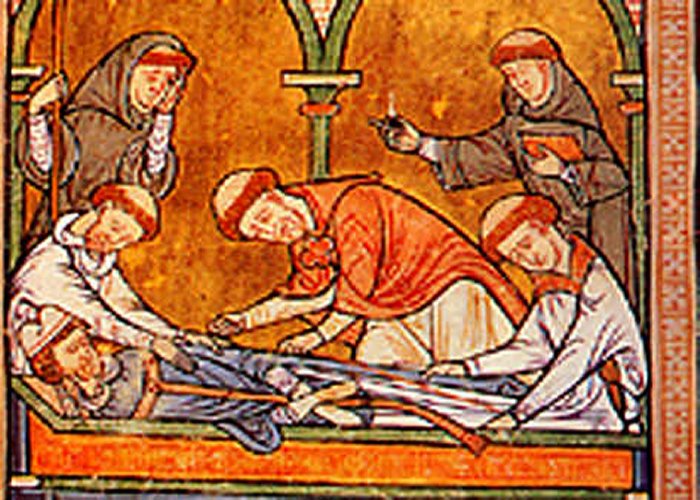
Four knights heard Henry’s words and decided to help him to get rid of this “troublesome” man. They understood the king wanted the man – dead. How could that happen?
Thomas Becket, a son of London merchant was a proud young, selfish and arrogant man. The status of Thomas was not the same as the status of Henry, but they were friends. They hunted and played chess and joking together, they simply spent much time together.
When at the age of 21 Henry became king, Becket became his Chancellor and they still worked hard to bring law and order to Henry’s realm.
In 1162, Henry II, king of England, appointed Thomas Becket, as Archbishop of Canterbury. This was the most important religious position in England but no one was particularly surprised because these two were friends.

Murder of Thomas Becket
Becket loved wine and was a good horse rider. Henry II loved to ride as well but his personality was troubled by his fearsome temper. He tried to keep his temper under control by working very hard as it distracted him from things that might spark off his temper.
But he always trusted Becket. Henry II also controlled a lot of France at this time. William the Conqueror had been his great-grandfather and he had inherited his French territories as a result of this. When Henry was in France sorting out problems there, he left Becket in charge of England.
The first sign of a split between Thomas and Henry came in 1164 when Henry II passed a law which stated that any person found guilty in a Church court would be punished by a royal court. Becket refused to agree to this. Knowing well Henry’s bad temper, Thomas Becket decided to leave England.
He went into exile in France but in early December 1170.

These were times when the Church had much to say, with its own laws and courts. Priests, bishops, and abbots could easily avoid common-law justice by claiming ‘benefit of clergy’. A king of England could not remove a pope from his post but popes claimed that they could remove a king by ex-communication.
Becket did not change his views and still and continued to oppose the king. On one occasion, he asked the pope to excommunicate the Archbishop of York who had taken sides with the king. This was a very serious request and a very serious punishment for someone who could claim that he was only being loyal to the king.
Henry was furious when he found out what Becket had done. "Can someone make sure I get rid of this troublesome priest?" were his words that decided about the Archbishop Thomas Becket's fate.
Four knights decided to take matters into their own hands.
Reginald Fitzurse, William de Tracy, Hugh Morville, and Richard le Bret went on 29 December 1170 to Canterbury.
 According to a monk who witnessed the incident, the Knights were hiding their weapons under a tree outside the cathedral and they went in to confront the archbishop. When they were refused an audience, they drew their weapons and broke through a tunnel into the cathedral.
Thomas Becket was on his way to evening prayer when the knights caught up and mercilessly stabbed him to death.
The news of the murder spread in Europe and soon began to see him as a martyr.
Just over two years after Becket's death, he was canonized in 1173 and his shrine in Canterbury Cathedral became a famous place of pilgrimage.
The knights' guilt was indisputable but they were not punished. Later they traveled to Rome for penance and they got an order to serve 14 years in the Holy Land.
For Henry II, which otherwise has been usually described as the most successful English king in the Middle Ages, this terrible event became a personal problem because he believed that it was his own words that had been the cause of Becket’s tragical death.
Moreover, the murder was carried out by his (the king’s) supporters, therefore, he bore the blame.
Written by – A. Sutherland AncientPages.com Staff Writer
Copyright © AncientPages.com All rights reserved. This material may not be published, broadcast, rewritten or redistributed in whole or part without the express written permission of AncientPages.com
Expand for referencesReferences:
More From Ancient Pages
-
 Pharaoh Psusennes I Buried In The Silver Coffin Inlaid With Gold
-
 Sobek: A 2,500-Year-Old Mummified Nile Crocodile – On Display At The British Museum
-
 Is Mysterious Herlaugshaugen The Ship Burial Of Viking King Herlaug?
-
 Rakshasas: Night Wandering Race Of Demons And Warriors Fuelled By Kundalini In Hindu Beliefs
-
 Unexplained Phenomenon Of The Dancing Mania That Occurred During The Middle Ages
-
 ‘Arcade’ Of Ancient Mancala Game Boards Carved On Rocks Found In Lewa Wildlife Conservancy, Kenya
-
 Skull Of Mysterious, Extinct Cousin Of Neanderthals Recreated From A Fossilized Finger
-
 The Kitchen God In Ancient Vietnamese Tradition Is Still Alive
-
 1,500-Year-Old “Church of the Glorious Martyr” With Beautiful Mosaic Unearthed Near Jerusalem
-
 31,000-Year-Old Skeleton Missing Foot May Show Oldest Amputation
-
 Legendary Mount Penglai Where The Eight Immortals Reside
-
 Is Biblical Mount Sinai Located In Har Karkom Where Mesopotamian Moon God Sin Was Worshipped?
-
 Surprising New Insights Into Use And Increased Production Of Pottery At The End Of The Last Ice Age
-
 Who Was King Menes? Mystery Of This Legendary Ruler May Go Back 20,000 Years
-
 ‘Giant’ Ant Fossil Raises Questions About Ancient Arctic Migrations
-
 The Aztec Sun Stone And Medusa Reveal An Intriguing Connection – Surprising Discovery – Part 1
-
 Legacy Of Queen Hatshepsut’s Temple In Luxor – New Valuable Finds Announced
-
 Study Traces DNA Of Inca Emperors To Their Modern-Day Descendants
-
 Ancient Egyptian Papyrus Tells A Different Story About Biblical Isaac’s Fate
-
 Central European Prehistory Was Highly Dynamic – New Study Shows

