
Lachit Bhorphukan: Hero From Assam Among Famous Warriors Who Stopped Mughals From Conquering Northeast India
A. Sutherland - AncientPages.com - Lachit Bhorphukan was a great warrior from Assam, where he was a commander of the army of the Ahom Kingdom. Lachit bravely defeated the powerful Mughal Army, using some of the riskiest strategies, ever.
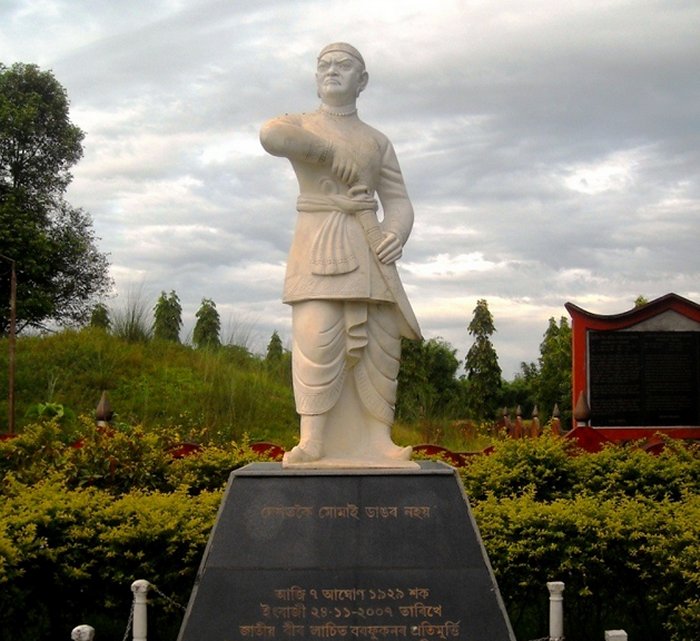
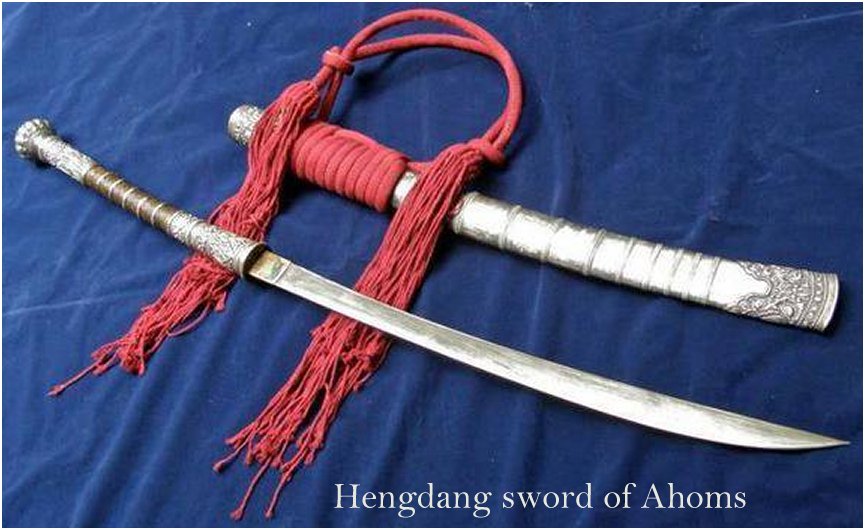
His name became particularly famous when Lachit Bhorphukan recovered Gauhati, the largest city of Assam and Northeastern India, from the Mughals in 1667 and was presented with the Hengdang, a single-edged gold (silver or wood) plated sword. Image source
In the mid-1600s, the Mughal Empire was at the peak of its glory and extended over large parts of the Indian subcontinent and Afghanistan; it was the second largest to have existed in the Indian subcontinent, covering an impressive area of 4 million square kilometers, after the Maurya Empire, which spanned 5 million square kilometers.
A great military leader of medieval India and son of commander-in-Chief of Ahom forces, Lachit was educated in Hindu, Indian scripture, military skills, and other disciplines necessary for him as a nobleman.
From his father, Lachit had inherited involvement, a sense of duty, and loyalty. He was now occupied with the preparations for the war.
The Mughals’ force and pacification dominated over a large part of India and in consequence, the country began to experience a series of revolutions and uprisings.
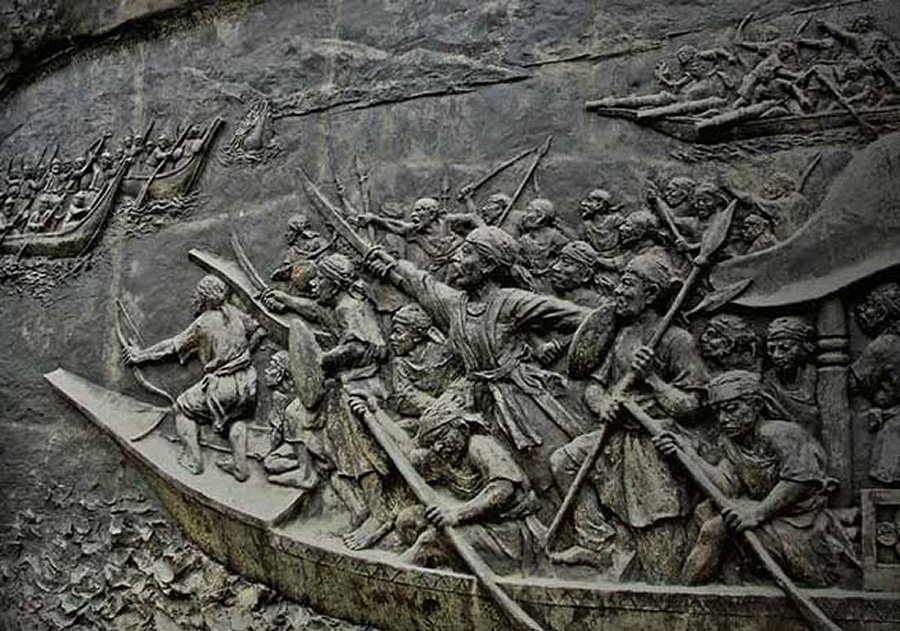
Lachit Borphukan leading the advance on the Brahmaputra River.
Now it was time to liberate Guwahati from Mughal-occupation. Lachit Bhorphukan was selected to lead the forces of the Kingdom of Ahom to liberate Guwahati from the Mughal occupation.
He raised the army and preparations were completed by the summer of 1667. He knew the enemy and he knew that his army had no chance to fight on the plains. He chose the forested and hilly terrain just outside Guwahati, as his battlefield, where his men had an advantage over the Mughals.
It was still time to made strategic preparations to the battle that took place on Brahmaputra River, near Saraighat, Guwahati. At the crucial moment in this decisive battle, the Mughals’ army was about to land at Andharubali, where Lachit had his headquarters.
He immediately sent orders to all the land and naval forces to attack. He also ordered his boats to be prepared for him and forced himself from the sickbed and on to the boats, (at that time he was very ill). He firmly stated that regardless of what happens, he will never desert his country. His war-boats immediately headed toward the naval battle and along with all Ahom warships smashed into the Mughal warships.
The Mughal admiral was killed and the Mughals suffered the loss of three top-ranking officers and about 4000 dead.
Guwahati, of which history and myths go back several thousands of years, was recovered by Lachit, who successfully defended it against the Mughal forces.
The day of the decisive battle - one of the worst defeats the Mughal Army would ever face - is not known for certain, only that it happened in the middle of March 1671.
The battle would be remembered for the victory of a much smaller Ahom army over the mighty Mughal Army, through a combination of tactical brilliance, guerilla warfare, and intelligence gathering.
Lachit Borphukan was among many other brave kings and generals who managed to keep the North East of India free. The victory in Saraighat Battle immortalized the brave warrior who was presented with the Hengdang, a single-edged gold plated sword.
However, Lachit Borphukan never recovered from his illness and died a year later in April 1672.
Written by – A. Sutherland AncientPages.com Staff Writer
Copyright © AncientPages.com All rights reserved. This material may not be published, broadcast, rewritten or redistributed in whole or part without the express written permission of AncientPages.com
Expand for referencesMore From Ancient Pages
-
 Amazing Thirteen Ming Tombs: Gigantic Stone Animals And Human Figures Were Symbols Of Royal Power
-
 Can You Help Identifying This Strange Bamboo Cart Found In A Melted Glacial Path In Switzerland?
-
 Unique Viking Age Runestone With A Cross And Animal Biting Its Own Tail Discovered By Farmer In Sweden
-
 Ensisheim Meteorite Is The Oldest Meteorite With A Precise Date Of Impact
-
 Mystery Of Biblical Noah’s Strange Connection With Red-Skinned Giants And The Watchers – Not-Of-This-World Emergence – Part 1
-
 Ördög – Shapeshifting Demon Who Controls The Evil And Dark Forces In The World
-
![Photo taken on Dec 20, 2015 shows hoof-shaped gold ware unearthed from the main coffin in the Haihunhou (Marquis of Haihun) cemetery, East China's Jiangxi province. [Photo/Xinhua]](https://www.ancientpages.com/wp-content/uploads/2015/12/MarquisofHaihuntomb1-307x150.jpg) Does A 2,000-Year-Old Tomb Belong To Marquis of Haihun? – Search For His Seal Continues
Does A 2,000-Year-Old Tomb Belong To Marquis of Haihun? – Search For His Seal Continues
-
 On This Day In History: Reginald Walter Bonham Was Born – On Jan 31, 1906
-
 Intriguing Connection Between Ancient Curse Tablets And The Book Of Revelation Discovered
-
 Neolithic Monuments, Prehistoric Pits And Anglo-Saxon Cemetery Unearthed In England
-
 Legend Of The Immortal Wandering Jew Cursed By Jesus
-
 Can Stonehenge Be Saved From Bulldozers Or Have Druids Been Defeated?
-
 Countless Artifacts, Structures And Roads Discovered In Ancient City Of Aigai, Turkey
-
 Mysterious Skull Cult At Göbekli Tepe – Ancestor Worship Or Trophies Of Dead Enemies?
-
 Tipón (Tipon): Who Taught The Inca How To Build Artificially Irrigated Garden?
-
 Humans May Be The Result Of An Evolution ‘Accident’- Scientists Say
-
 Brahma: First God In Hindu Trimurti, Creator Of The World And All Creatures
-
 Klerksdorp Spheres – Controversial And Out-Of-Place In Time Metallic Spheres From South Africa
-
 Gruesome Discovery Of Headless Bodies In Vráble, Slovakia – Remains Of Stone Age Cult Victims Unearthed
-
 Excavations Of Ancient Theater In 2,400-Year-Old City Of Smyrna, Turkey

