
Secret Ancient Powers Of Jade: Sacred Green Healing Stone That Can Conquer Time And Guarantee Immortality
A. Sutherland - AncientPages.com - Ever since the most ancient times, jade has been held sacred throughout the world. Jade has been discovered in ancient tombs. Ancient civilizations decorated figurines of gods with rare green stones. Why was the color green of primordial importance? What was the secret power of jade?
Jade Was Associated With Immortality
Taoist and Buddhist beliefs tell us that a deity called Yuhuang, or the Jade Emperor emerged as the supreme ruler of heaven.
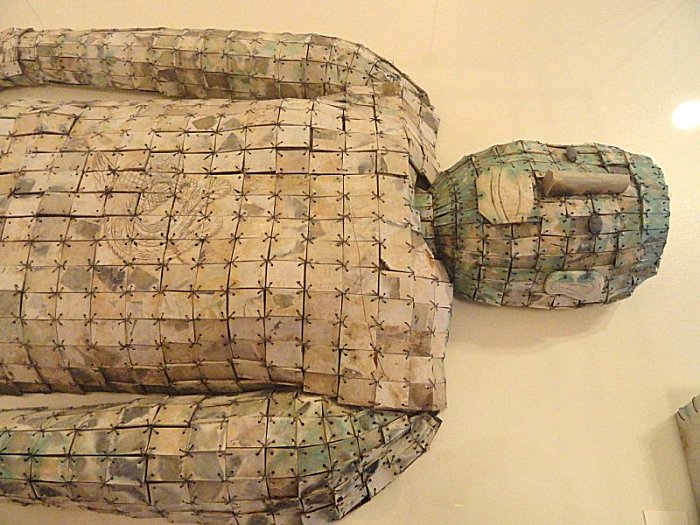
Detail of a jade burial suit with replaced copper wire in the George Walter Vincent Smith Art Museum in Springfield, Massachusetts. Image credit: Daderot - CC0
The Jade Emperor lived in a palace and was attended by a vast bureaucracy, just like his human counterpart. The only human with whom the Jade Emperor dealt directly was the Emperor of China. What had the supreme leader in common with jade?
The truth is that in China and India, jade was a substance reserved above all for the gods. Jade was also associated with immortality.
When the Chinese Princess Tou Wan died about 104 B.C., she was buried in a jade suit, through which it was thought she would achieve immortality. Her husband, who died nine years earlier, was dressed in a similar shroud. Both bodies were laid in two chambers cut into the side of a low hill about 150 kilometers from Peking.
It took almost 2,000 years before their tombs were discovered. Archaeologists were stunned when they saw 2,800 funeral offerings that surrounded the bodies. The offerings were intended to ease their passage in the next world. However, the most spectacular sight was the jade suits, each made up of more than 2,000 tiny plates of thin jade, sewn together with gold thread.
It was believed that gold and jade would conquer time and guarantee immortality.

Jade pendant in the shape of a dragon, Western Han Dynasty (202 BC – 9 AD) - Beijing,China. Image credit: snowyowls - CC BY-SA 2.5
That precious metal and stone survived, but the bodies of the princess and her husband had crumbled to dust.
Jade Was A Gift From The Heavens
In the Orient, jade still symbolizes the Yin and Yang. It represents purity, benevolence, justice and sincerity.
Of course, Asia was not the only continent where jade was held sacred. Among the ancient Indians, jade was regarded as a gift from the heavens.
Kukulcan and Quetzalcoatl, the supreme gods of the ancient Mexicans were traditionally depicted with jade set into their eyes and navel.
Ancient Mexicans were devoted to jade. It was more precious than diamonds and gold.

Jade lingling-o from Vietnam. Three node pendant (Jade), Artefacts of Phu Hoa site(Dong Nai province), Collections of the Museum of Vietnamese History Circa 3,000 years ago. Image credit: - CC BY-SA 3.0
In Mesoamerica, this most precious stone was identified with a maze, water, vegetation, and also the sky, life, and renewal and rebirth of life.
It was a custom to place small pieces of jade in the mouth of the Mayan ruler Bird Jaguar at his death. The stone was meant to act as the receptacle of the dead ruler’s spirit.
In Mesoamerica, jade was considered so precious that people of the “lower” classes were not even allowed to own the stone. If a member of the “lower” classes was caught possessing a piece of jade, he or she would be executed by stoning.

Jade olmec warriors mask. Olmec-style mask from Tabasco (Mexico). Musées Royaux d'Art et d'Histoire, Brussels (Belgium). Image credit: Michel wal - CC BY-SA 3.0
According to the Aztec law, “no man of low quality might possess jade.” The stone was reserved for the nobility and priests. It was also the most important of offerings found in the sacred Cenoté at Chichen Itzá.
“Finding jade was a special talent among the Aztecs, who said that they located it by standing on a hill on a misty morning and watching the vapors rise from the stones. When a certain vapor arose from a stone its nucleus was probably of jade,” writes Peterson Fredrick in his book Ancient Mexico: And introduction to the Pre-Hispanic Cultures
Jade And Its Healing Properties
Throughout the world, jade has been considered to possess certain healing properties.
The Aztecs used jade as a curing stone for internal ailments. With the help of jade, they treated spleen, live and kidney diseases,
Also, the Greeks and Spaniards regarded jade as a healing stone. The ancient Greeks called it the “kidney stone”, and the Spaniard referred to is as the “colic stone”.
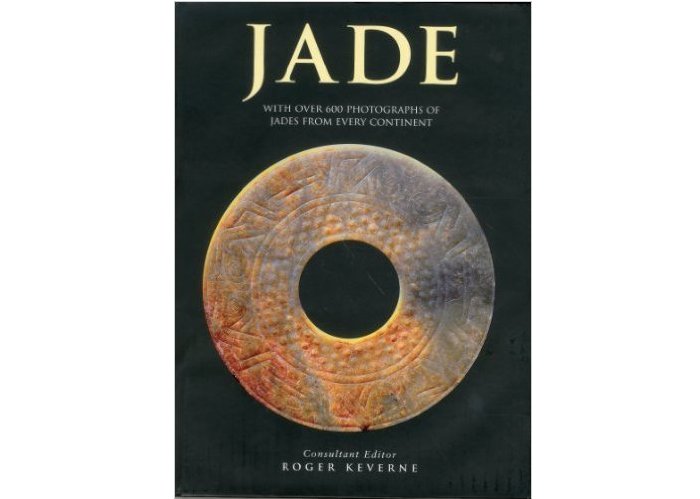
This book is a landmark in the study of jade, as well as the most comprehensive photographic collection yet published. Read more
Jade has played a significant role in folk medicine throughout history. Today, it is still, at least by some people considered a healing stone.
In America, it was common to wear jade to prevent illness and treat kidney problems. A piece of jade was also often tied around a baby’s neck to prevent colic. This belief was shared by other ancient cultures. Jade was placed in the tombs and mummies of Egyptian rulers as representatives of the heart.
People of the Southwest Pacific said that to give someone a piece of jade is to give a piece of one’s soul. In India, jade was used to treat snakebites. In Greece and Rome, the stone treats people with epilepsy. Ancient Chinese used to boil jade in a mixture with rice and dew water. It served as a cure for many different diseases.
Written by – A. Sutherland - AncientPages.com Senior Staff Writer
Updated on March 19, 2024
Copyright © AncientPages.com All rights reserved. This material may not be published, broadcast, rewritten or redistributed in whole or part without the express written permission of AncientPages.com
More From Ancient Pages
-
 Carvings Of Mythological Masks Unearthed In Ancient Theater Of Stratonikeia
-
 Fossils, Fires And Focus On Early Human Activity In Southeast Asia Jungles
-
 Early Māori Settlement On The Subantarctic Islands -Uncovering Some Of The Unknown
-
 Impressive Copper Age 5,000-Year-Old Fortification With Concentric Walls, Bastions, A Shallow Grave With A Man Face Down And A Dagger – Unearthed
-
 Ancient Temple Dedicated To Aztec God Xipe Totec Discovered In Mexico Reveals A Gruesome Story
-
 ‘Reforms of Shang Yang’ – Location Of Ancient Yueyang – Confirmed
-
 Viking House The Size Of Two Tennis Courts Discovered In Norway
-
 Vast Network Of Previously Unknown European Bronze Age Megastructures Discovered
-
 Ji Gong: Legendary Ancient Monk Who Defended People Against Injustice
-
 Mystery Of Pharaoh Shoshenq III’s Sarcophagus Deepens: Unknown Ancient Egyptian Inscriptions And 225 Royal Ushabti Figurines Discovered In Tanis
-
 Fossils Suggesting New Species Of Ancient Humans – New Discovery
-
 St. Elmo’s Fire – Ancient Plasma Phenomenon That Frightened Sailors
-
 Breakthrough: Oldest Egyptian DNA Extracted From Individual Who Lived During The Age Of The First Pyramids
-
 What Was The Danelaw?
-
 Tartarus – The Land Of The Dead – Mysterious Underground World
-
 Gigantic Horizontally Lying Stones Of Ancient City Of Baalbek
-
 Supernatural Beliefs Have Featured In Every Society Throughout History: New Research Helps Explain Why
-
 Waru Waru – Ancient Andean Irrigation System Brought Back To Life
-
 Aztec Skull Whistles: Unique, Terrifying Instruments With Scary And Scream-Like Nature That Paralized Human’s Mind
-
 Large Roman Public Latrine With 60 Wooden Seats Discovered In Bet Shean, Israel

