A. Sutherland - AncientPages.com - Once, it was the site of many temples, especially the temple of Seti I, and, first of all, this very ancient city is strongly associated with the "Lord of Abydos" - Osiris, god of the dead and his cult.
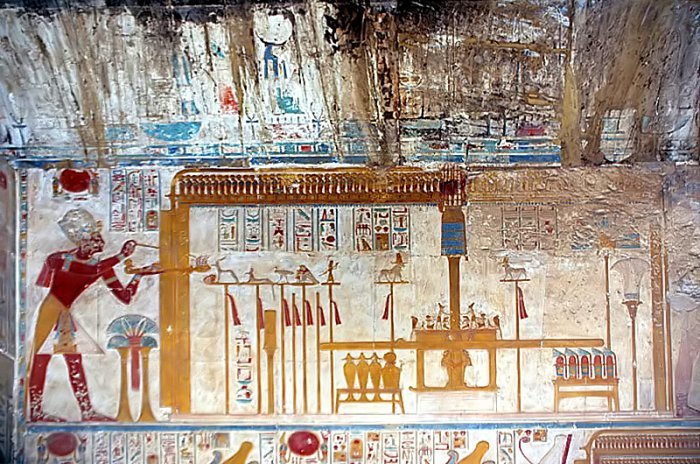
Chapel of Osiris, King censing before shrine containing Osiris emblem, Temple of Seti I, Abydos, Egypt. Credit: Roland Unger - CC BY 3.0:
Today, it's considered one of ancient Egypt's most important archaeological sites. It is a famous royal necropolis where early pharaohs were entombed, along with tombs and mortuary cult enclosures of the rulers of the First Dynasty.
According to some ancient mortuary texts, beyond a gap in the mountains to the west of Abydos lay the afterlife, a fantastic realm depicted as a long mountainous valley with a river running through it, the banks lined with wheat fields, fruit orchards, and gardens of flowers.
Many of these tombs are still buried under the desert sands. They keep millennia-old secrets of the sacred ground of Abydos, which flourished and was already surrounded by an aura of sanctity.

This is a preview of our premium article, available only to Ancient Pages members.
Become a member to read more - Click here
If you are already a member and have logged in to your account, you can access the article here
See also:
Deir el-Bahri – Sacred Resting Place For The Pharaohs
Mysterious Pyramid Of Menkaure Remains An Ancient Puzzle
Pi-Ramesse: Pharaoh Ramesses II’s Great Capital Surprisingly Identified In Two Locations