
‘Little Caesar’: Forgotten ‘King Of Kings’ Who Died Very Young
A. Sutherland - AncientPages.com - Caesarion was murdered on August 23, 30 B.C., only 17 years old. He was the last King of the Egyptian Ptolemies, most probably the son of Julius Caesar, and his mother was Cleopatra VII.
Caesarion was born in 47 B.C. in Egypt.
It is not certain, but commonly thought that the Roman leader was actually his father. If he really was a child of Caesar, it was also his only son.
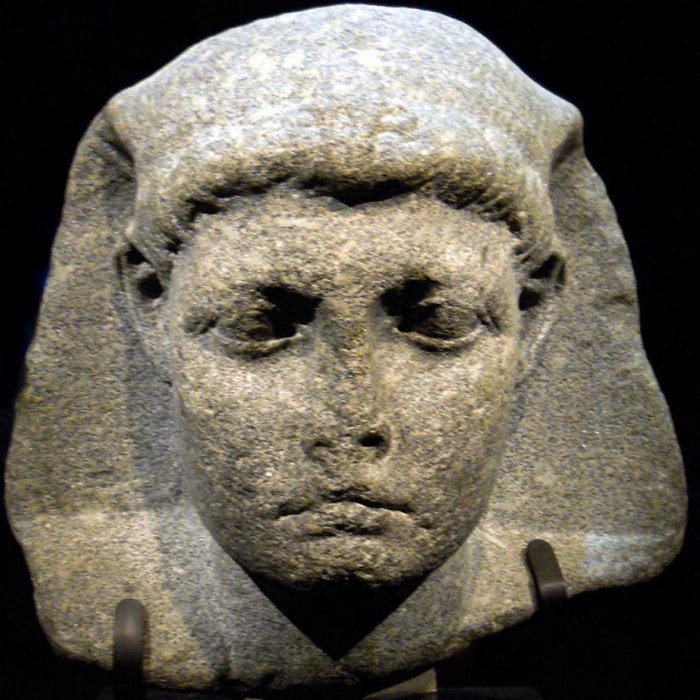
No documentation has been discovered about his death; because of his young age, it is believed that he died of strangulation. Credit: Sdwelch1031 - CC0
Caesarion was said to have inherited Caesar's appearance and manner, and he was even allowed to use his name, but Caesar never officially acknowledged the boy.
In 46 - 44 B.C., he stayed with his mother in Rome. After the murder of Caesar by conspirators in 44 BC, Cleopatra and Caesarion returned to Egypt.
The three-year boy Ptolemy XV was proclaimed "King of Kings" and reigned jointly with his mother from September 2, 44 B.C.
He wasn't aware of the power struggles around him and his mother. Some powerful men wanted even more power; among them was Mark Antony, his mother's lover, and a Roman General and Julius Caesar's second cousin. The next one was the aristocratic Marcus Lepidus, who was earlier Caesar's, a close ally.
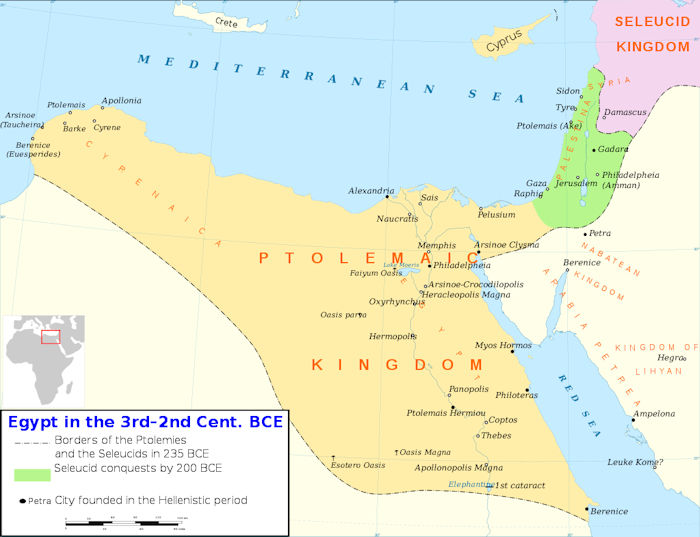
Ptolemaic Egypt was a culturally and intellectually lively place. Amphipolis - CC BY-SA 4.0
Then, there was Octavian; his claim to power proceeded from his status as Caesar's adoptive son. He did not like that Mark Antony gave Caesarion numerous titles (including 'King of kings') and possessions in the east when Antony officially announced that Caesarion was a true son of Caesar.
Octavian had a lot of support because Caesar's adopted son was considered his rightful heir. However, the whole situation began to worsen more and more because his political position was threatened.
The conflict between Octavian and Antony resulted in the Battle of Actium. On the morning of September 2, 31 B.C. the fleets of Roman Mark Antony and Cleopatra, queen of Egypt, met the fleet of Octavian leader just outside the Gulf of Actium in Greece.

A relief of Cleopatra VII and Caesarion at the temple of Dendera, Egypt. Credit: Rowan - Public Domain
Octavian won the battle.
Following Antony's disastrous defeat at Actium in 31 during the war against his fellow triumvir Octavian, Cleopatra sent Caesarion to Berenice, a seaport on the Red Sea coast of Upper Egypt.
Anthony escaped to Egypt, but as Octavian's legions closed in the following year, so Antony committed suicide by stabbing himself with a sword. He died in Cleopatra's arms. Soon after, Cleopatra's arms would be cold with death when she committed suicide by-asp on August 12, 30 B.C.
On Octavian's way to absolute power, one of the last obstacles is Caesarion.
Octavian lured the young King to Alexandria and ordered the death of his step-brother, Caesarion, and so it happened. Octavian chooses authoritarianism over democracy while Caesarion ('Little Caesar') is already dead, buried, and not particularly often mentioned in historical records – simply – forgotten.
Updated on August 27. 2023
Written by – A. Sutherland AncientPages.com Staff Writer
Copyright © AncientPages.com All rights reserved. This material may not be published, broadcast, rewritten or redistributed in whole or part without the express written permission of AncientPages.com
Expand for referencesMore From Ancient Pages
-
 Steel Was Already Being Used In Europe 2,900 Years Ago – New Study
-
 2,400-Year-Old Flush Toilet Discovered In China
-
 Genetic Mystery Solved: Ancient DNA Reveals Greeks Descended From The Minoans And The Mycenaeans
-
 On This Day In History: Vlad III Dracula Regained Throne Of Wallachia For The Third Time – On Nov 26, 1476
-
 On This Day In History: Canute – Cnut The Great – Danish King Of England Died – On Nov 12, 1035
-
 Final Journey Of Ötzi Iceman: More Clues Found In Frozen Moss
-
 Oil Lamps, Spearheads And Skulls: Was The Te’omim Cave Used By Practitioners Of Necromancy?
-
 Stone Homes Of Europe’s First Megalithic Builders Discovered
-
 Buddhist ‘Dillu Roy’ Resembles Mohenjo Daro And Harappa And Now Unveils Its Ancient Secrets
-
 Artifacts Discovered At Yirra Confirm Aboriginal People Lived In Pilbara During The Last Ice Age
-
 10 Mysterious Ancient Manuscripts With Hidden Secrets
-
 Unraveling The Secret History Of King Arthur And Robin Hood
-
 3,000-Year-Old Egyptian Artificial Wooden Toe In New Light
-
 Native Americans Helped Shape The Klamath’s Forests For A Millennia Before European Colonization
-
 Ancient Mystery Of The Before – Time People – Traces Of An Unknown Lost Race – Part 1
-
 Ancient Highways Unearthed In Arabia
-
 North America’s First People May Have Arrived By Sea Ice Highway 24,000 Years Ago
-
 Concept Of Fate In The Eyes Of Slavic People
-
 51,000-Year-Old Bone Carving Shows Neanderthals Were Artistic Long Before Humans Arrived
-
 Germany’s Stonehenge Pömmelte Reveals More Secrets – 140 Wooden Houses And 78 Silos Found

