
Dead City Of Serjilla – Byzantine Village In Syria Struggling To Survive The Middle Of A War Zone
Jan Bartek – AncientPages.com – In a country like Syria where ongoing conflicts have destroyed many significant ancient historical buildings and artifacts, it’s a relief to see these old ruins that are still standing more or less intact in the middle of a war zone.
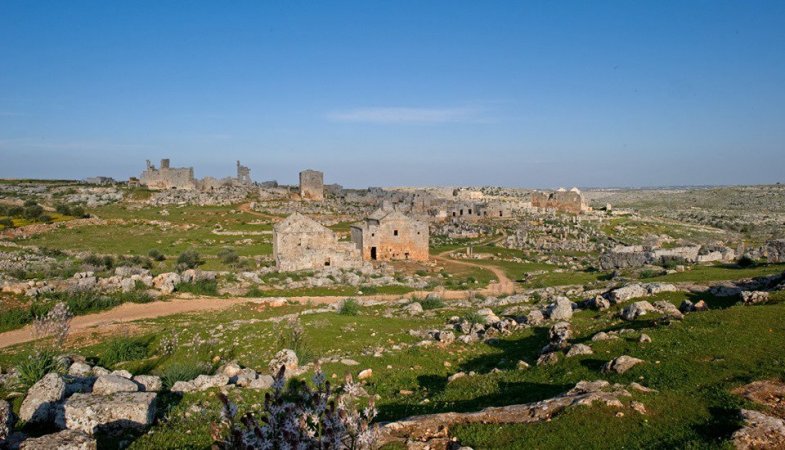
Serjilla is located not far from Aleppo in Syria. Credit: Manar al Athar, University Of Oxford
The Byzantine village of Serjilla is one of the best-preserved of the “Dead Cities” in Syria. Serjilla has survived earthquakes, foreign invasions and one wonders how much longer these Byzantine ruins will last without being smashed to pieces.
Will The Byzantine Village Serjilla Survive Syria's Modern Conflict?
The remains of this Byzantine settlement are located in the Jebel Riha, approximately 65 km north from Hama and 80 km southwest from Aleppo. It’s a sensitive region where intense battles between the Syrian army and rebels are fought regularly.
Several cultural sites have already been damaged or destroyed by war and no one knows whether Serjilla can endure this modern conflict.

A view of the Byzantine ruins. Credit: Heretiq, CC BY-SA 2.5
Syria was once home to a great and powerful ancient empire. It contained many beautiful “flourishing cities set in a densely populated countryside whose inhabitants built churches and houses of elegantly carved stone. In the sixth century, the country suffered an unparalleled series of disasters in the form of earthquakes, plague, and foreign invasion.
Early in the seventh century, it passed under the control of Persians, who had barely left when the victorious armies of Islam definitely removed it from the orbit of Constantinople and Christianity. This was not the end, but the beginning of another glorious epoch in which Syria became the center of a vast empire famed for its great cities and monuments.” 1
Syria is a country with a rich and interesting history, but its past glory is long gone. Now it no longer a matter of power and prestige but survival. Though few think about Serjilla this small Byzantine village still stands there awaiting its verdict.
See also:
Ashur – First Capital And Powerful Religious Center Of The Assyrian Empire
Tiglath Pileser III: Neo-Assyria’s Strong King Who Built A Mighty Empire
Remarkable Ancient Statues From The Eye Temple – Unique Legacy From Tell Brak, Syria
The ruined Byzantine settlements of Mujleya, Btirsa, Bshilla, Ba’uda, Dalloze, Serjilla, Rabi’ah and Shinshara (also called Khirbet Hass) are all part of the World Heritage Site called the Ancient Villages of Northern Syria, inscribed in 2011 and composed of eight archaeological parks.
Today, many remain in an exceptional state of preservation, particularly Serjilla; some buildings still have two stories, and much of the surrounding cultural landscape is also preserved, including some field boundaries, wine presses, and other such installations.
Satellite-based damage assessment to historical sites in Syria revealed that “Shinshara, Rabi’ah and Serjilla have apparently been resettled, potentially by civilians who are seeking refuge from conflict.

Ruins of the Church in Serjilla. Credit: Bernard Gagnon, CC BY-SA 3.0
The exceptional level of preservation of the Dead Cities provides shelter not only from the shelling, which often occurs in the area, but also from the harsh winters. In addition to building makeshift shelters, many refugees dig beneath the ruins for refuge.
These Dead Cities have become home to thousands of refugees who have fled from the civil war and now live in the caves beneath the ruins.
Some have even dug up the ancient stone graves and are using them as makeshift homes. There is little or no access to places like this while war rages, so the true nature of the devastation will not be known for some time.
In some cases, particularly where a Dead City has been resettled, there is the potential for looting to occur. “People are not only using these ghost towns as a place to live, but also as a way to make a living. Minor looting has been reported at AlBara, but the extent of the damage done to the reviewed sites cannot be confirmed beyond the presence of civilian activity.” 2
Remains Of Beautiful Roman Baths In Serjilla
Serjilla was built around 473 A.D. The Byzantine village arose in a natural basin and prospered from cultivating grapes and olives. Archaeological discoveries support the theory that Serjilla’s ancient inhabitants were wealthy.
Scientists have found beautiful remains of Roman baths, extensive remains of houses, and impressive terraces that show how prosperous this region once was. The church at Serjilla dates back to 372 A.D. and is considered one of the oldest in the region.
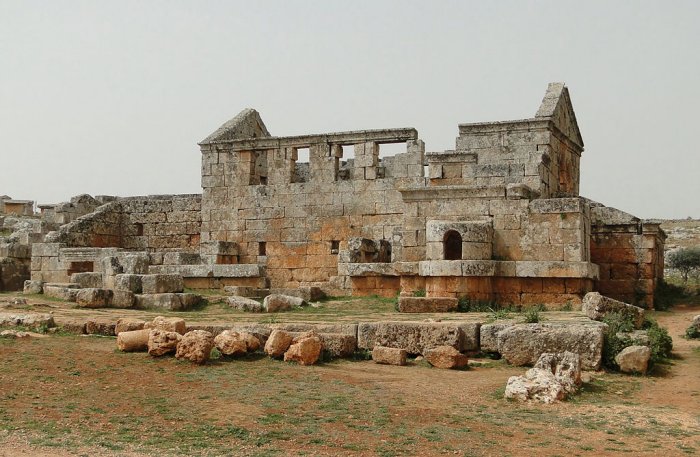
Public baths in Serjilla. Credit: Bernard Gagnon, CC BY-SA 3.0
A large mosaic was also unearthed in the main meeting hall of the baths, but it has now been destroyed. When the Arabs conquered the region, Serjilla and the other Dead Cities were abandoned.
All that is left are the ancient ruins of the two-story villa, public baths, the Church, and the press- house. Only time can tell whether the Byzantine village Serjilla will survive Syria’s modern conflict.
Written by Jan Bartek - AncientPages.com Staff Writer
Copyright © AncientPages.com All rights reserved. This material may not be published, broadcast, rewritten or redistributed in whole or part without the express written permission of AncientPages.com
Expand for references- Foss, Clive. "Syria in Transition, A. D. 550-750: An Archaeological Approach." Dumbarton Oaks Papers51 (1997): 189-269. Accessed January 25, 2020. doi:10.2307/1291765.
- UNESCO - Satellite-based Damage Assessment to Cultural Heritage Sites in Syria
More From Ancient Pages
-
 Obatala ‘King Of The White Cloth’ And Creation Story Of Yoruba People
-
 Megaliths In Central France: 30 Prehistoric Monolith Stones And One Human Skeleton – Unearthed
-
 Asenath And The Golden Tablet That Changed Her Destiny
-
 Barabar Caves: The Oldest Surviving Rock-Cut Caves With Acoustic Effects In India
-
 Fossil Of Prehistoric Saber-Toothed Cat Found In Texas
-
 Scotland’s First Farmers Didn’t Need Manure To Fertilize Their Fields – The Land Was Still Very Productive
-
 Golden Secrets Of Lake Guatavita And The Muisca People Gave Rise To The El Dorado Myth
-
 DNA Study Of Ancient Humans Sheds Light On Human Evolution On The Tibetan Plateau
-
 On This Day In History: Ueshiba Morihei, The ‘Founder of Aikido’ Was Born – On Dec 14, 1883
-
 Oldest Golden Jewel In The Caucasus Unearthed In Azerbaijan
-
 Neanderthals Painted Andalusia’s Cueva de Ardales – New Study Confirms Their Cave Art
-
 Nearly 7,000 Years Ago, Dortmund Airport’s Area Was Inhabited By Early Farming Society For Centuries
-
 Well-Preserved Fragments Of Epetion’s Wall Discovered At The Hellenistic Site Of Stobreč, Near Split, Croatia
-
 Iron Age Site Tell Deir ‘Alla (“Mound Of The High Monastery”) Flourished 400 Years In Central Jordan Valley
-
 Mystery Of The Hidden Shoes Discovered In Ancient European Houses – What Is Behind This Bizarre Tradition?
-
 Extraordinary Etruscan And Roman Treasure Trove Unearthed In San Casciano dei Bagni, Italy
-
 Dispute Between Russia And Poland Over Discovery Of Czarist Officer’s Corpse In Turkey
-
 Byzantine Greek Inscription Of Psalms 86 Found In Hyrcania
-
 Utukku Lemnutu: Incantations Used As Therapy In Mesopotamia
-
 A 2,500-Year-Old Marble Disc, Designed To Protect Ancient Ships And Ward Off The Evil Eye – Discovered

