
Mysterious Killke Culture Of Peru: Did They Construct Sacsayhuaman?
A. Sutherland - AncientPages.com - Officially, the Killke culture (900 to 1200 AD) is credited for building Sacsayhuamán. However, Sacsayhuaman may still be hundreds or even thousands of years older than the Killke culture.
These people occupied the South American region around Cusco, Peru before the arrival of the Incas in the 13th century.
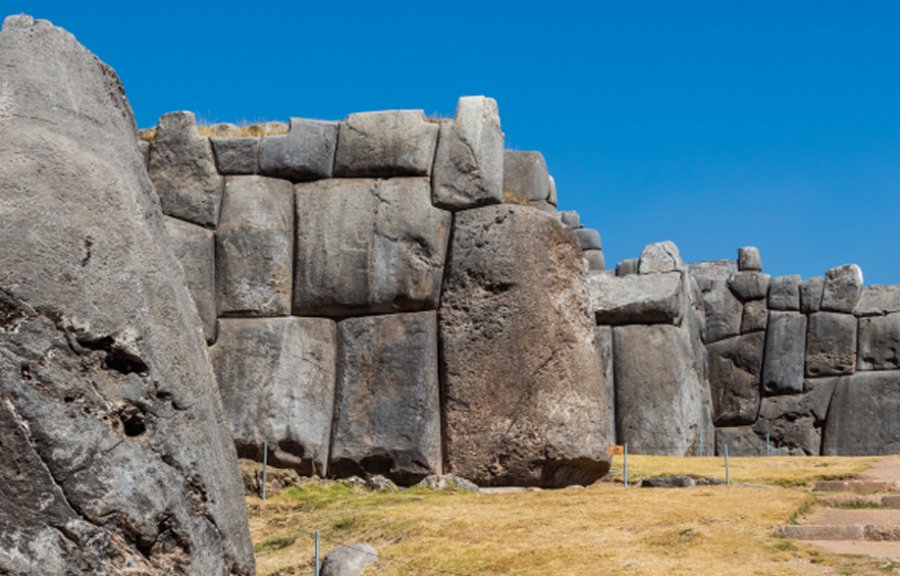
View of a row of corners of the walls of Saksaywaman, a citadel on the northern outskirts of the city of Cusco, the historic capital of the Inca Empire, today Peru. The first sections of the citadel were first built by the Killke culture about 1100 and expanded by the Inca from the 13th century. The dry stone walls are composed of huge stones, which boulders are carefully cut by workers to fit them together extremely tightly without mortar. Image Diego Delso - CC BY-SA 4.0
The Killke culture flourished during the Late Intermediate Period (approximately 1000 to 1470 AD) in what is now Cuzco, Peru.
It was Peru’s historical period characterized by crafts production, in which the Killke used semiprecious stones like turquoise and emeralds as well as wood, textiles, seashells. Their pottery also attested to their skills.
The pottery of the Killke people was often spherical with vertical strap handles and linear geometric decorations of black or black-on-red over a white or buff slip.
The Killke Culture And The Early Inca
The Killke people were skilled craftsmen. They built much of Cuzco that later became the capital of the powerful Inca empire. They are considered to be the so-called ‘early Inca’.
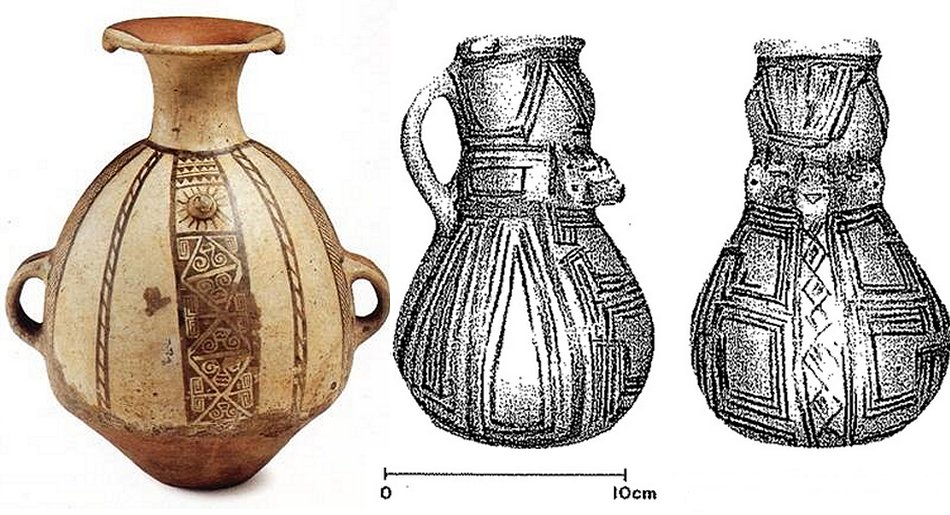
Left: Killke pottery style, found in Cuzco. Source; Right: Killke pottery examples (Bauer and Stanish 1990). Image source
Unfortunately very little is known about this period of time because neither the Killke people nor the Inca left any writings behind (they only had their famous ‘quipu’ records).
It is known, however, that many Killke settlements were later reused and further rebuilt by the Inca who arrived in the region.
Was Sacsayhuaman Constructed By Killke People?
They built the massive fortress, Sacsayhuamán, during the 12th century. Later, the fortress was used by the Inca, following their occupation of the region.
Could the Killke builders' skills be high enough to construct something such extraordinary as the massive fortress, Sacsayhuaman, which is officially dated to the 12th century?
Sacsayhuaman, located just outside of Cuzco, was a fortress of massive carved blocks of rock that fit flawlessly together. Researchers suggest that the original structure was built in the 1100s, which means three centuries earlier than Machu Picchu, by the Killke culture. They also believe that the Incas later made additions and suitable improvements to the original structures.
What remains today are mysterious long lines of rock, still at an unimaginable size for building. The stones are so huge that each one weighs about 107 metric tons.
Three gigantic, 1,500 feet long and 54 feet wide walls were erected near the city of Cuzco, Peru, at an altitude of over 3600 m (12,000 feet). The walls surround a paved area containing a circular stone structure that could be a solar calendar and other structures both on the surface and underground.
The structure was later used by the Inca, following their occupation of the region. It had both military and religious significance.
The 2007 – 2008 excavations uncovered a temple on the edge of the fortress, indicating religious as well as military use of the facility, and the ruins of two temples within the area of Sacsayhuamán, irrigation systems, and a roadway.
Sacsayhuaman Puzzle Is Far From Solved
“One problem we have with the archaeological record is that they seem to have a preconceived notion that the earliest culture in the Cuzco area, prior to the Inca, was the Killke. 2
The Killke occupied the region from 900 to 1200, prior to the arrival of the Inca. Carbon 14 dating of Sacsayhuamán, had demonstrated that the Killke culture constructed the fortress about 1100 AD. The Inca later expanded and occupied the complex in the 13th century and after.
Killke ceramics first were studied and described by John H. Rowe, (1918 - 2004), an American archaeologist and anthropologist, known for his extensive research on Peru, which focused especially on the Inca civilization. Rowe named the Killke culture while he studied Andean antiquity. However, he "incorrectly identified them as "early Inca". These vessels often are globular with vertical strap handles and have simple linear geometric decorations of black or black-on-red over a white or buff slip. 1
However, if the excavations were to proceed much deeper, evidence of earlier cultures could be present, says Brien Foerster in his book “Lost Ancient Technology Of Peru And Bolivia”.
Also, we have to remember what D. H. Childress wrote in his book “Ancient Technology in Peru and Bolivia”
“Sacsayhuaman may still be hundreds or even thousands of years older than the Killke culture. There seems to be no reason why building in the Cuzco and Sacsayhuaman area would have only begun in 1100 AD when the megalithic building had begun much earlier in other areas…” 3
Written by – A. Sutherland - AncientPages.com Senior Staff Writer
Copyright © AncientPages.com All rights reserved. This material may not be published, broadcast, rewritten or redistributed in whole or part without the express written permission of AncientPages.com
Expand for referencesReferences:
Project Gutenberg
D. H. Childress wrote in his book “Ancient Technology in Peru and Bolivia”
Brien Foerster, Lost Ancient Technology Of Peru And Bolivia
More From Ancient Pages
-
 Viking Cork Settlement Re-Writes Ancient History Of Ireland
-
 Why We Celebrate Saint Lucy’s Day – The Bringer Of Light And Patron Of The Blind
-
 5 Traces Of Ancient Ancestors That Still Exist In All Human Bodies Today
-
 Ominous Black Layer – A Geological Anomaly Or Scientific Evidence Of A Great Ancient Cosmic Catastrophe?
-
 Depictions Of Two Biblical Heroines Unearthed In Ancient Synagogue, Huqoq In Galilee, Israel
-
 Why Was The Dmanisis Gora Fortress Community So Resilient In The Transition From The Bronze To Iron Age
-
 Ancient Medical Machine Ahead Of Its Time Hidden In Emperor’s Temple – Secret Science Knowledge Examined
-
 Mystery Of The Coal On The Pirate Shipwreck Queen Anne’s Revenge Solved
-
 15,000-Year-Old Petroglyphs Discovered In The Gobi Desert May Be Evidence Ancient Turks Visited Mongolia – Expert Says
-
 Armenians’ Origin Theory By Herodotus Debunked By New DNA Study
-
 Peace Of Callias – A Treaty That Ended The Greco-Persian Wars
-
 Huge Gallo-Roman Amphitheater Of Saintes Will Be Saved For Future Generations – New Project Started
-
 Ancient Byblos: Powerful Phoenician City With Own Kings
-
 Ancient Maya Lessons On Surviving Drought – Examined By Scientists
-
 On This Day In History: Battle Of Cibalae Was Fought Between Two Roman Emperors – On Oct 8, 314
-
 Unique Statue Of Roman Emperor Trajan Unearthed In Ancient City Of Laodicea,Turkey
-
 Prehistoric Evidence Of Sophisticated Prosthetics In Ancient Egypt – Artificial Toes Helped Egyptians Walk
-
 Sirens: The Secret Of The Power In Their Captivating Song That Heralded Death
-
 Madagascar Hippos Were Forest Dwellers – New Study
-
 Over 2,000 Clay Figurines Discovered In The Ancient City Of Kythnos

