
Enigmatic Figure Dated Back To 40,000 From Prehistoric Stadel Cave, Germany
A. Sutherland - AncientPages.com - On August 25, 1939, archaeologists working at a Paleolithic site called Stadelhole ("stable cave") at Hohlenstein ("hollow rock") in the Lone valley, southern Germany, uncovered hundreds of mammoth ivory fragments.
About 40,000 years ago, at the beginning of the upper paleolithic period, the Swabian Jura was part of the living area of the early, anatomically modern, humans (homo sapiens).
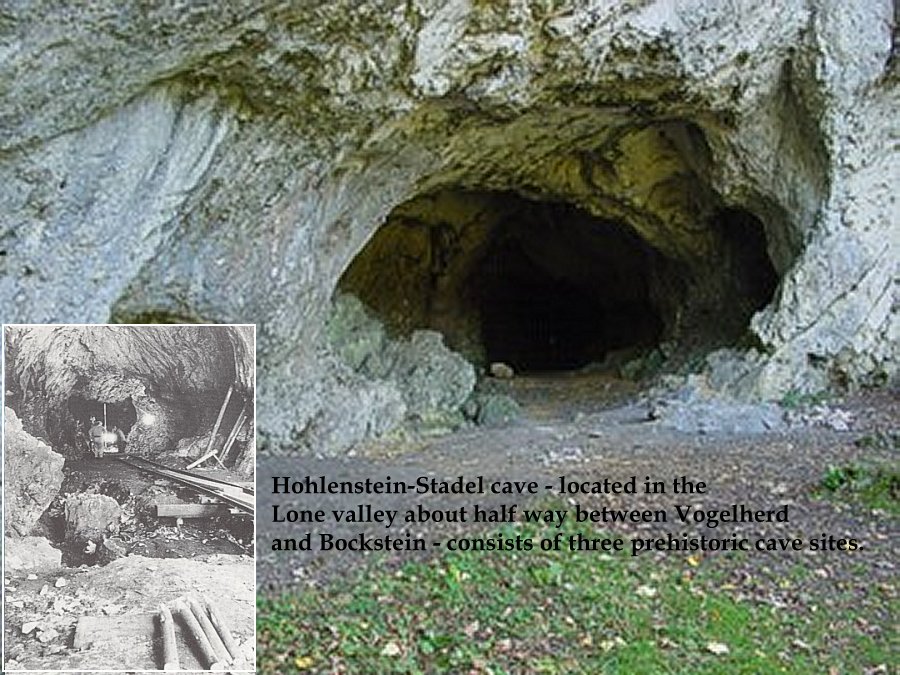
Archaeologists found evidence that these prehistoric people, lived in several caves: they used campfires, tools, weapons and jewelry made out of stone, bone, antlers and ivory.
Moreover, they also sculptured small figurines depicting dangerous animals such as cave-bears and cave-lions, using stone tools out of mammoth ivory.
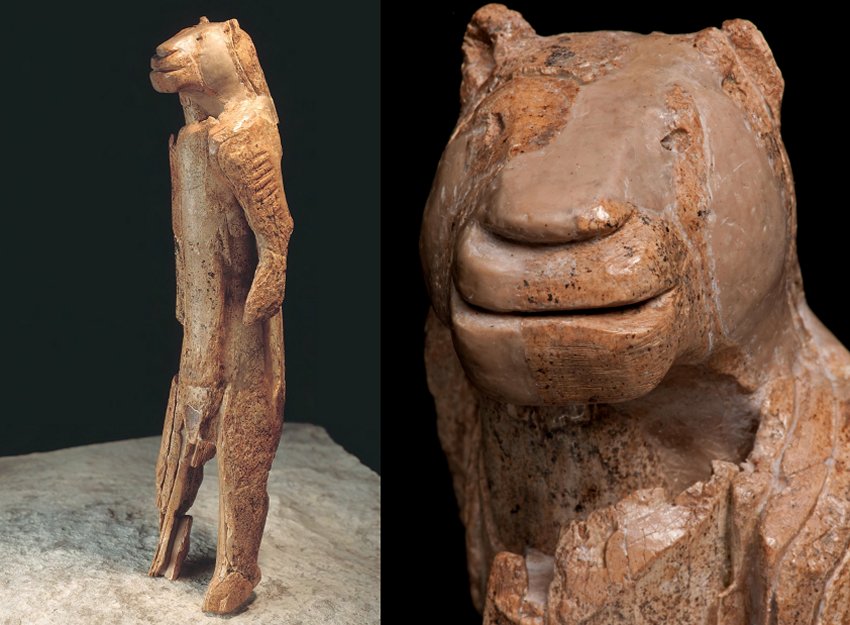
The tallest and most spectacular of the ivory figurines is the Lion Man, a fabulous therianthropic creature.
For more than 70 years, archaeologists have been piecing together the 'Lion man' out of mammoth ivory fragments.
Unfortunately, just one week later, before archaeologists could complete their fieldwork and analyze the finds, World War II began. The team was forced to quickly fill the excavation trenches using the same soil in which they found the ivory pieces.
Among the fragments, there were several pieces of the so-called 'Lion man' - one of the oldest and certainly one of the most remarkable statuettes in human history.
For more than 70 years, archaeologists have been piecing together the fragmented sculpture of 'Lion man' out of mammoth ivory fragments.
Their work took time because important parts of the figurine were still missing.
Surprisingly, in 2009, new excavations inside the Stadel Cave rediscovered of the original finding place of the ‘Lion Man’ fragments unearthed in 1939.

Could the old statue actually represent a female shaman?
They were able to retrieve numerous additional fragments of the figure. It's the tallest and most spectacular of the ivory figurines discovered in four caves. The figurine that combines animal and human attributes, is 29.6 cm (11.7 inches) in height, 5.6 cm wide, and 5.9 cm thick.
The animal part is represented by the lion-head, the long shaped body and the arms formed as forelegs and paws of a big cat, the human part by the legs and feet, as well as the upright position.
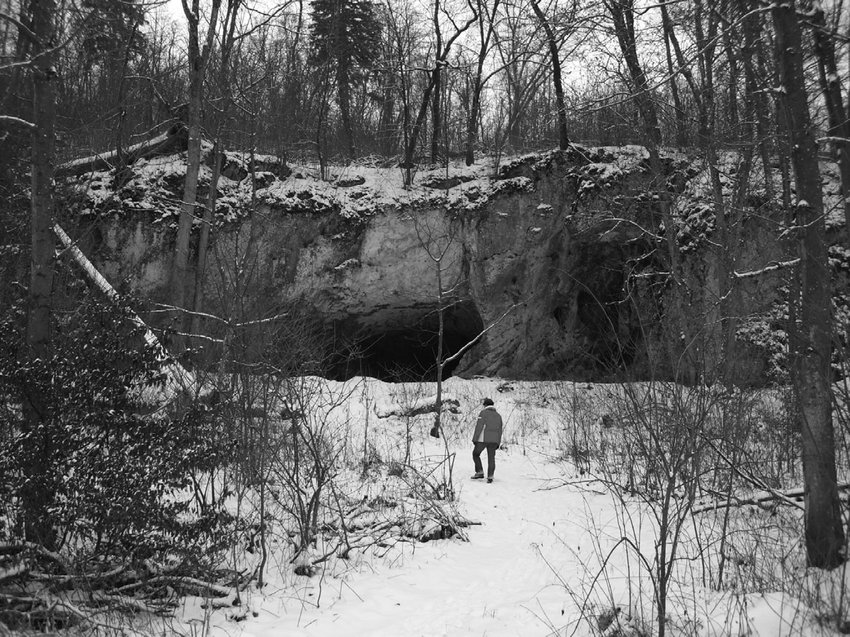 Hohlenstein-Stadel Cave: The entry to the Stadel Cave is located only a few meters above the valley floor and is not visible from the Vogelherd. The Löwenmensch statuette was found in a deep section inside this cave and was intentionally deposited. Photo by Martin Porr
It's unclear whether the figurine represents a man or a woman. From time immemorial, the lion has been viewed as a symbol of the masculine virtues of courage and strength. Shamans still exist today in the Amazon region and Australia. Most of them are men.
On the other hand, the figure has some perplexing features. The navel, for example, a symbol of childbirth, is especially pronounced. A horizontal crease runs across the lower abdomen, a feature that is typically female.
The ‘Lion Man’ - currently on display in the City Museum of Ulm, in Germany - represents a unique relic, carved out of woolly mammoth ivory using a flint stone knife.
It is also very early prehistoric sculpture dated back to the Upper Paleolithic of about 40,000 BC.
Written by – A. Sutherland AncientPages.com Staff Writer
Copyright © AncientPages.com All rights reserved. This material may not be published, broadcast, rewritten or redistributed in whole or part without the express written permission of AncientPages.com
Expand for referencesMore From Ancient Pages
-
 Ancient Sound Of Stones – Acoustics At Stonehenge Tested By Scientists
-
 On This Day In History: Edgar Allan Poe Known For Tales Of Mystery And Macabre Was Born – On Jan 19, 1809
-
 Galileo Galilei’ Long-Lost Letter Reveals His Attempt To Fool The Inquisition And Make Science Independent From Religion
-
 Mysterious Massive 3,800-Year-Old Structure And Passageway Found In The Jezreel Valley, Israel
-
 House Of Plantagenet – How Hatred, Revenge And Jealousy Transformed History
-
 Incredible Cave With Secret ‘Door’ Discovered In The American West – Fascinating Underground Mystery
-
 Nazi Photo Album Made Of Human Skin Found At Polish Antiques Market
-
 Enigma Of The Chime Hours And People Who Can See Beyond The Visible Realm
-
 Rare Ancient Dacian Stonemason’s Toolkit Discovered In Romanian Forest
-
 Egypt Opens Two Ancient Pyramids And Unveils Newly Found Sarcophagi And Mummies
-
 Vercingetorix: Greatest Of All Gallic Leaders And Hero Of The French People
-
 On This Day In History: Francis Baily First Observed ‘Baily’s Beads’ – On May 15, 1836
-
 Melusine: Charming Water Fairy In European Legend About Taboo And Broken Promise
-
 7,000-Year-Old Inscription With Undeciphered Vinca Script – One Of The World’s Earliest Writing Systems Discovered
-
 Origin Of The Genetic Code – Study
-
 Solving The Bark Painting Mystery In Australia
-
 Unseen 3,000-Year-Old Inscription On Biblical-Era Piece Of Pottery Deciphered By Researchers
-
 Jason And The Argonauts – Hate, Sorcery, Love And Jealousy Reign In This Famous Greek Story
-
 Fossilized Remains Of Homo Erectus Found On Submerged Sundaland, Java Reveal More Secrets
-
 On This Day In History: Anders Celsius, Swedish Astronomer And Mathematician Was Born – On Nov 27, 1701

