
Calçoene – Amazon Stonehenge And The Mysterious Amapán Megalithic Culture
Ellen Lloyd - AncientPages.com - In the distant past, people in Brazil raised fascinating megalithic structures still shrouded in mystery. One intriguing monument is Calçoene, also called the Amazon Stonehenge.
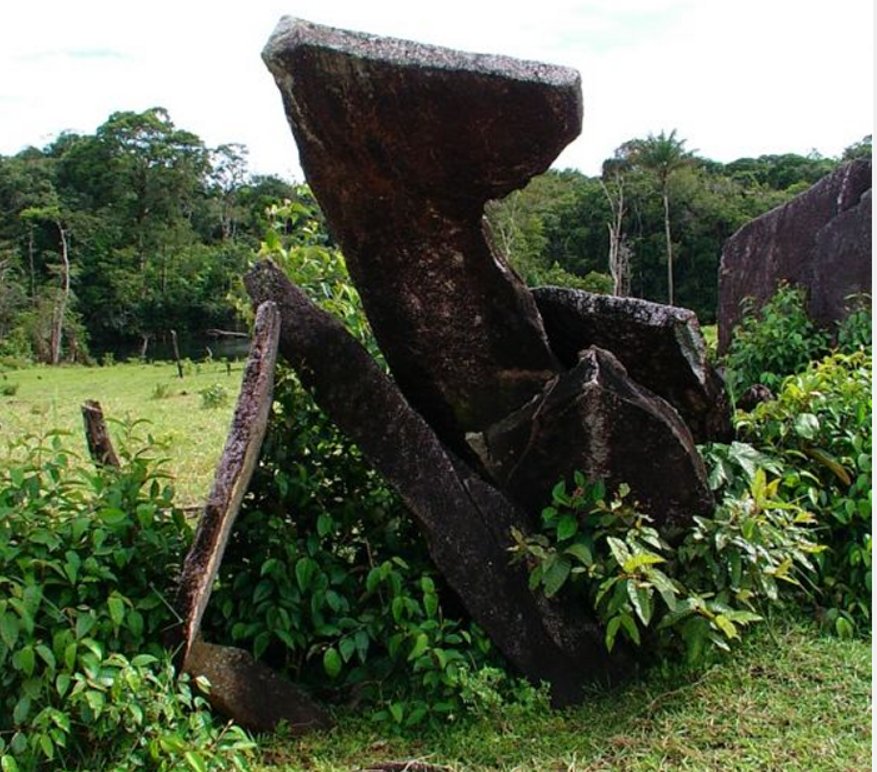
The Calzoene's 'Stonehenge' - Image credit: Leandroisola - CC BY-SA 4.0 DEED
The true purpose of this structure remains to be discovered. It could have been used as an ancient astronomical observatory or for burial purposes, or perhaps both.
Discovery Of The Amazon Stonehenge
Megalithic structures in Amapá state, Brazil, near the city of Calçoene, were first reported by naturalist Emilio Goeldi. While exploring the region, he noticed settings of upright stones in the late 19th century.
At this site, archaeologists have uncovered several fascinating artifacts that could shed more light on the mysterious Amapán people.
The Amazon Stonehenge, sometimes called the "Tropical Stonehenge," raises many baffling questions. 2005 Archaeologists began excavating the site in 2005, but a thorough study of the megalithic structures has yet to be conducted.
So far, 20 megalithic structures, eight burial caves, a mound, and some ancient villages have been discovered.
Calçoene Megalithic Structures Reveal Evidence Of Ancient Astronomical Knowledge
For the most part, Amapán megaliths are easily visible and located on the tops of hills. The stones vary much in size. The megaliths consist of upright or slanted granite blocks in circular arrangements. Some circles are small, less than 10 m in diameter.

A megalithic stone circle in Calçoene, Brazil. The site also called the Amazon Stonehenge.The largest stone structure has a diameter of more than 30 m. The granite stones are rough and straightforward. Image source: Wikipedia commons.
The stones have yet to be submitted to dating techniques, but the carbon-dating of unearthed pottery suggests the site is between 500-2,000 years old.
Studies of the Amazon Stonehenge reveal a connection between the stone structures and the Amapá culture's interest in astronomy. The Stonehenge comparison with the Amazon discovery is due to the astronomical significance of both sites.
On the winter solstice of December 21, the shortest day of the year in the northern hemisphere, the shadow of one of the blocks disappears when the sun is directly above it. The rock has been placed at an angle so that the shadow is possibly tiny throughout the day. This particular block's alignment with the December solstice leads archaeologists to consider the possibility that the site was once an astronomical observatory. During the winter solstice, the sun shines directly through this hole onto another rock for an extended time.
If the stone structure served as a megalithic observatory, then it must have been constructed by sophisticated indigenous culture.
Many of the world's indigenous peoples are thought to use the symbolism of the sky on Earth to harness the power of the celestial world. It would seem that the Amapá megalithic culture was also fascinated with the night sky and heavenly bodies.
The Amazon Stonehenge could re-write the ancient history of ancient societies in South America. Therefore, the stone circles must be studied in more detail. Scientific examinations of the archaeological sites can provide us with more clues and hopefully answers as to the age of the Amapán megalithic culture and its mysterious disappearance.
Written by Ellen Lloyd – AncientPages.com
Updated on January 16, 2024
Copyright © AncientPages.com & Ellen Lloyd All rights reserved. This material may not be published, broadcast, rewritten or redistributed in whole or part without the express written permission of AncientPages.com and Ellen Lloyd
More From Ancient Pages
-
 Mysterious Golden Lords Of Panama
-
 Stone Artifacts Reveal Humans Lived In Philippines 700,000 Years Ago – Much Earlier Than Previously Thought
-
 Examined Ancient Bone Suggests Santa Claus Was Real
-
 Secrets Of The Jungle And Hidden Ancient Treasures Of The Serpent People
-
 Mysterious Giant Rock Face Discovered On B.C’s Central Coast – Natural Or Man-Made Structure?
-
 Excavations At Oylum Höyük In Southeast Anatolia Near Syrian Border – Resumed
-
 Buddhist ‘Dillu Roy’ Resembles Mohenjo Daro And Harappa And Now Unveils Its Ancient Secrets
-
 Forbidden Ancient Manuscripts Almost Erased From History – Secret Teachings Of Mysterious Founder – Part 1
-
 Pharaoh Ramses II Comes One Step Closer To The Gods In The Company Of Hathor, Sekhmet and Ptah – Statues Discovered
-
 Remarkably Well-Preserved 2,500-Year-Old Canoe Discovered In Swiss Lake
-
 Underwater Jars Reveal Roman Period Winemaking Practices
-
 Once-In-A-Lifetime Find – Ancient Roman and Saxon Cemetery Unearthed In Leeds
-
 On This Day In History: The Lumière Brothers Presented Their First Film In Paris – On Dec 28, 1895
-
 Strange Case Of The ‘Impossible’ Glove Remains Unexplained – The Discovery – Part 1
-
 Native Americans’ Visions Of Distant Explorers May Unravel Some Ancient Mysteries Of North America – The Arrival – Part 1
-
 Tuchulcha: Wicked, Hideously Grotesque Etruscan Demon Identified With Both Male And Female Genders
-
 Giant Mimir And The Well Of Wisdom In Norse Beliefs
-
 Archaeologists Uncover More Hidden Ancient Secrets In Saqqara, Egypt
-
 Who Or What Made These Mysterious Holes At The Bottom Of The Atlantic Ocean?
-
 The Lost Prophecy Reveals Chilling Future Events – The Last Words To Mankind?

