
Beer Was Used As Medicine And Payment In Ancient Egypt
AncientPages.com - Ancient Egyptians valued beer and used it not only to get drunk but as medicine and payment. Beer was of great importance in ancient Egyptian society and its existence gave women an opportunity to earn extra money.
Both adults and children enjoyed beer, and the drink brought many benefits to Egyptian society. There is also evidence beer played a decisive role during the construction of the pyramids.
Legends tell that god Osiris himself taught humanity the art of brewing. So, naturally, beer was considered the drink of the gods.
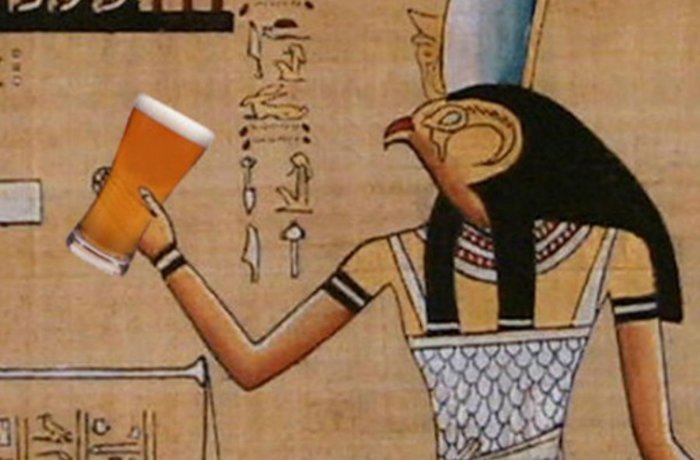
Image credit: Cairo Scene
The first known beer was called kui, brewed by the ancient Chinese around 7,000 BC. Kui was made from rice, honey, and fruit, but the first barley beer was most likely born in the Middle East.
However, the oldest evidence of beer is believed to be a 6,000-year-old Sumerian tablet depicting people drinking a beverage through reed straws from a communal bowl. When ancient Egyptians learned about beer, they too wanted to make it part of their society and they quickly noticed all the benefits beer had to offer. The common name for beer in ancient Egypt was heqet (also given as hecht and henket) or tenemu (giving the goddess Tenenet her name), but there were also names for specific types of beer.
Women became the first brewers in ancient Egypt. Wine was the drink of the wealthy. Beer was the staple drink of poor Egyptians but was also central to the diet of wealthy Egyptians.
Ancient Egyptian considered beer to be a powerful medicine that strengthened the body. About 5,000 years ago, doctors in Egypt believed that beer holds the soul (ka). Ancient Egyptians believed the soul had three parts, the ka, the ba, and the akh. Beer was considered a source of nutrition and not just an intoxicant.
Almost 100 Egyptian drugs contained beer, and preserved sources from around 1,500 B.C. show that approximately several patients received medication containing beer.
 Image credit: Cairo Scene
Wages were often paid in beer and workers living in the workers' village at Giza received beer three times a day as part of their rations. Archaeologists excavating in Egypt have discovered that payment through beer was very common in various parts of the country. This also provides evidence that the great monuments were not built by slaves, but by paid Egyptian labor.
Beer was naturally also used to get drunk. It was classified according to alcoholic strength and flavor, with the average beer having an alcohol content of 3-4% while beer used in religious festivals or ceremonies had a higher alcohol content and was considered of better quality.
During the festivals of Bast, Sekhmet, and Hathor people would get very drunk. Drinking beer was part of their worship of these Egyptian goddesses. Offering beer to gods was also common in ancient Egypt.
Copyright © AncientPages.com All rights reserved. This material may not be published, broadcast, rewritten or redistributed in whole or part without the express written permission of AncientPages.com
Expand for referencesMore From Ancient Pages
-
 Major Discovery Of Ancient Roman Temple – Largest Evidence Ever Of The Imperial Cult
-
 Circular Stepped Pyramids Of Guachimontones And Teuchitlan Tradition – A Lost Ancient World In Mexico
-
 Beautiful Zeugma-Like Mosaics Unearthed In Sinop Province, Northern Turkey
-
 Ancient Coffin Of Priest Psamtik, Son Of Osiris And Five Replicas Of Goddess Maat Sent On Upcoming Expo
-
 Ancient Mystery Of The Menorah – Enigmatic Sacred Object With Complex History
-
 How King Arthur Became One Of The Most Pervasive Legends Of All Time
-
 2,000-Year-Old Huge Terracotta Jar Discovered In Turkey
-
 Cave Art In ‘Painting Room’ – At Ojo Guareña (Burgos) Is Over 12,000 Years Old
-
 On This Day In History: Vespasian Was Elected The Roman Emperor – On July 1, 69 A.D.
-
 Unexplained Accounts Of Mysterious Fires – No Traces But It Happened – Part 2
-
 3,000-Year-Old Bakery With Large Amounts Of Flour Discovered In Armenia
-
 What Are The Huge Ancient Structures Beneath The Zerzevan Castle Discovered By Radar?
-
 Copper Artifacts Reveal New Cultural Connections In Southern Africa
-
 Shu: Egyptian God Of Air, Symbol Of Life-Giving Breath And The One Who Separates Heaven From Earth
-
 Harappan Civilization Built Massive Protection Walls Against Tsunami 5,000 Years Ago
-
 Unexplained Historical Sighting And Archaeological Discovery Reported In Alberta By Police Officer
-
 Grandfather Frost And Snow Maiden Bring Gifts On New Year’s Eve
-
 Medieval Irish Book Fitting Among Historical Finds Unearthed In Old Cemetery In Norway
-
 Unique Finds Uncovered In The Necropolis Of Harbor City Of Dromolaxia-Vyzakia, Cyprus
-
 10 Incredible And Bizarre Ancient Cases Of Mass Hysteria

