
Mysterious Chultuns – Ancient Underground Chambers Built By The Maya – But For What Purpose?
Ellen Lloyd - AncientPages.com - The ancient Maya of the Yucatán Peninsula constructed several underground chambers known as Chultuns.
The purpose of the chultuns is still an enigma. It’s not entirely clear for what purpose the pre-Columbian Maya took the time and effort to build these underground chambers.
Suggestions which have been proposed include their use as water cisterns, burial chambers, sweat baths, food cellars, underground religious shrines, and even some form of outdoor plumbing.
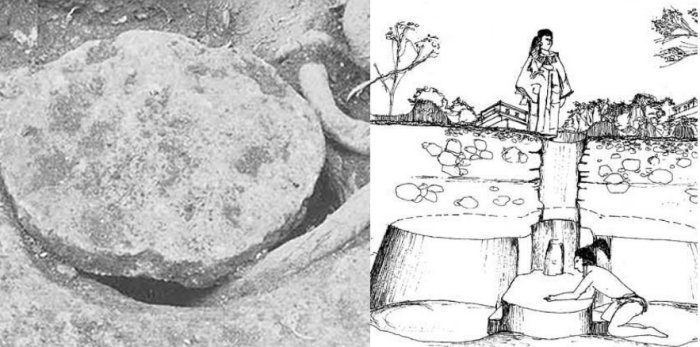
Chultuns Were Not Only Used For Water Storage
Most chultuns were bottle-shaped underground storage chambers, carved out of the relatively soft limestone bedrock. They were often plastered with a thick coating of lime stucco.
Archaeologists have discovered that most chultuns were constructed in places where canotes were absent.
Canotes are sinkholes resulting from the collapse of limestone bedrock that exposes groundwater underneath. Especially associated with the Yucatán Peninsula of Mexico, cenotes were sometimes used by the ancient Maya for sacrificial offerings.
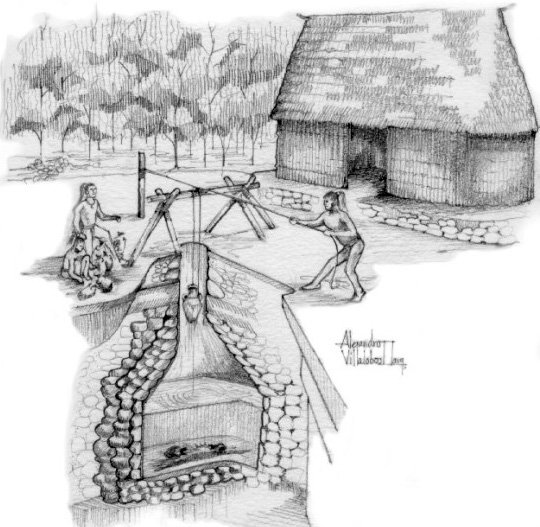
Chultuns were often bottle-shaped.
Chultuns were rather common in southern Mesoamerica and they were most likely used to store rainwater. Many chultuns have been looted by thieves looking for valuable artifacts. The fact that the Maya still use these chambers for disposing waste makes archaeological examinations of the chultuns very difficult.
In addition, nor has any series of artifacts been found in chultuns that might provide clear-cut evidence for a simple answer.
Puleston’s Investigations Of Chultuns Reveal A Surprise
The presence of the stone covering lids points to the probability that whatever went on inside the chultuns required that they be kept closed. If the function of chultuns was the storage of food, the primary use of these lids would have been to keep out rain and possibly vermin. What sort of foods might have been stored in chultuns by the Maya?
In the 1960s, Dennis E. Puleston 1940-1978), American archaeologist and ecologist whose work ranged from experiments in reconstruction and usefulness testing of chultuns.
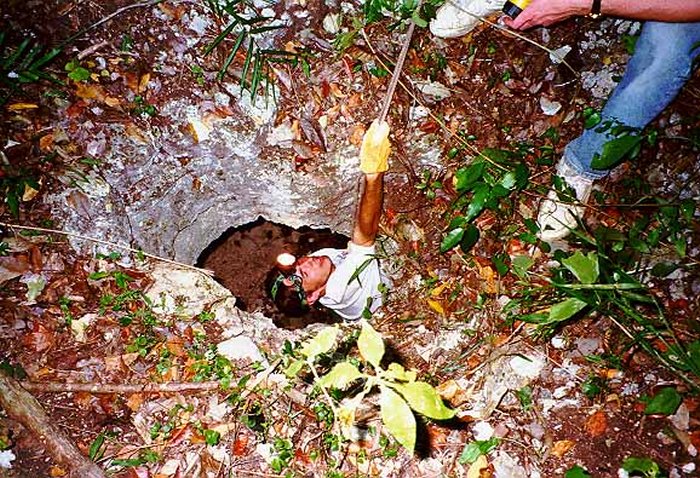
Archaeologists exploring a Chultun (underground cistern) of the Ancient Maya. Image credit: David R. Hixson
Puleston’s studies of chultuns revealed that despite their common name, there were different types of these man-made underground holes. In time, Puleston became convinced that chultuns were used for a variety of purposes. Some of the chultuns which were single chambers with plastered walls were constructed for water storage. However, Puleston noticed that the chultuns in the Tikal region were different in shape, not plastered, and did not hold water.
When Puleston filled a chultun with water and watched it drain away quickly. This lent credibility to his assertion that chultuns of this region were not for water storage.
After many weeks of study, Puleston noticed that the chultun offered valuable protection from vermin. Nevertheless, the underground chambers could not be used for the storage of maize, beans, or squash because these food items were consumed by insects and rodents.
There was no reason to suspect the chultuns were burial chambers. So, why did the Maya construct these enigmatic subterranean holes?
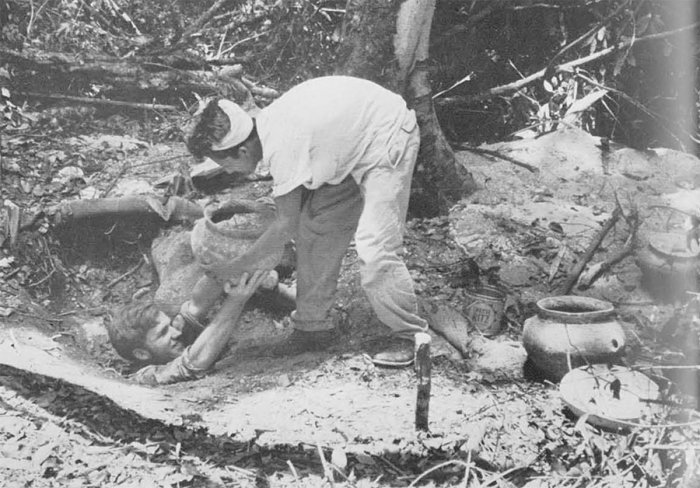
It's very unusual that artifacts are found inside a chultun. In Chultun 3F-6, ancient vessels were discovered. These turned out to be the only examples of this type yet found in Tikal. Image credit: Penn Museum
Puleston had no intentions of giving up. Determined to unravel the mystery of the chultuns, he took some nuts from a local tree and placed them in the storage chamber. Then, he waited. When he returned to the chultun 13 weeks later, he discovered the ramon nuts, not only had survived, but they were still in excellent condition and completely edible.
There are many advantages of using an underground storage system. Puleston’s discovery revealed that the ancient Maya realized some of the underground chambers were particularly effective for long-term storage of ramon nuts.
Written by - Ellen Lloyd – AncientPages.com
Copyright © AncientPages.com All rights reserved. This material may not be published, broadcast, rewritten or redistributed in whole or part without the express written permission of AncientPages.com
More From Ancient Pages
-
 Petronella Oortman And Her Giant Dolls’ House
-
 Mystery Of 2000-Year-Old Basel Papyrus Likely Written By Physician Galen – Is Solved
-
 Edøy Discovery: Traces Of 1,000-Year-Old Ship Burial Detected In Norway
-
 Phoenicians: Powerful Traders And Their Remarkable Seafaring Achievements
-
 Oldest Giant Dinosaur Species Discovered In Argentina
-
 Pasargadae: Capital Of Achaemenid Empire Destroyed By Alexander The Great
-
 Easter Island’s Moai Statues Did ‘Walk,’ Researchers Demonstrate Using Physics And 3D Modeling
-
 Giant Balor Of The Evil Eye – Terrifying Fomorian King And Grandfather Of Celtic God Lugh
-
 Judahite Shrine Of Biblical Arad Reveals Ancient Use Of Cannabis And Frankincense
-
 How Did Norman Conquest Of 1066 Affect Everyday People’s Eating Habits?
-
 How Gilgamesh Defeated Mighty King Agga Of Kish
-
 On This Day In History: Zhao Kuangyin Became Emperor Taizu Of Powerful Song Dynasty – On Feb 4, 960
-
 Ancient Colorful Nile-Scene Mosaics, Plastered Walls, Water Cistern Unearthed On The Shore Of The Sea Of Galilee
-
 Unexplained Encounters: Beings With Inhuman Eyes – A Darker Side Of Humanity Or Groundless Worries?
-
 Why Were The Jews Exiled To Babylon?
-
 Archaeologists Uncover Secrets Of ‘Vallø Borgring’ Viking Age Circular Fortress
-
 Missing Piece Of A Linguistic Puzzle: Ancient DNA Identifies The Originators Of Indo-European Languages Spoken By 40% Of The World
-
 Unique Ornamented Golden Bronze Age Belt Discovered Near Opava, Czech Republic
-
 New DNA Study Of The Red Lady Of El Mirón Who Lived 19,000 Years Ago
-
 DNA Study Of 5,000 Years Of The South Caucasus’ Population: Genetic Ancestry, Mobility And Intentionally Deformed Skulls

