
Fomorians In Irish Myths And Legends: Race Of Demonic Giants Who Inhabited Ireland And Scotland
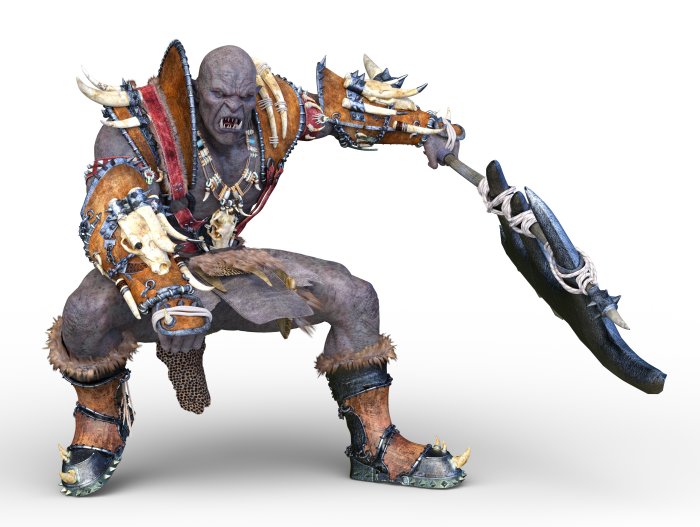
A. Sutherland - AncientPages.com - Celtic tradition describes the Fomorians as terrifying giant creatures, horribly deformed and often mistaken for demons.
It is said that this race of ugly beings descended from Noah's son Ham, whom Noah had cursed, and on account of this terrible curse, the Fomorians became one-legged and one-armed monstrous beings.
The Fomorians were superstitious and tyrannical; the people they conquered were either enslaved or forced, a crippling tribute of two-thirds of all children and cattle born.
Credit: Adobe Stock - tsuneomp
One Fomorian with stubby legs and long arms did not resemble another with a dwarfish right arm and a standard left arm or another with two or even three heads and only one eye or three on his head.
According to Fomorian beliefs, a child without any mutation is born without a noticeable personality. They were only accustomed to seeing their own mutated bodies, and a child born "normal" with all fingers and toes was doomed to be killed as a monster.
The Fomorians (Old Irish: 'Fomoire') is a supernatural race in Irish myths. These giants were associated with the powers of nature, such as fog, storms, winter, and disease.
They were said to have come from the sea or under its surface and were some of the earliest inhabitants of the British Isles, occupying both Scotland and Ireland.
Ireland had never seen anything more terrifying than the army of prehistoric Fomorians, who mercilessly raided and plundered Ireland from the sea.
The term 'Fomorian' was analogous to - disease, plague, and disaster.
The king of the Fomorians was Balor, a giant with an eye in the middle of his forehead.
According to tradition, they conquered the first invaders of Ireland - the Partholón (or "Parthalán") people who invaded Ireland and settled there, introducing cattle, building houses, and making all four plains cleared and habitable. After some years, they all died of the plague in a week.
Thirty years later came the Nemeds, who, like those who settled Ireland before him, had a genealogy going back to the biblical Noah. The Nemeds managed to win four battles with the Fomorians, but after nine years, thousands of the Nemeds died of the plague.
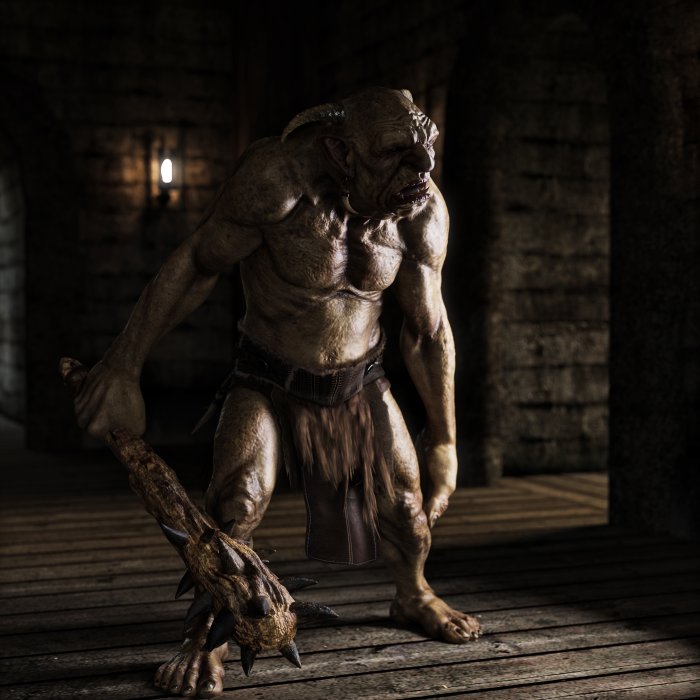
The mysterious Fomorians were again victorious until the Firbolgs, the third group of invaders, arrived and subdued the Fomorians. Firbolgs were the earliest historic race in Ireland. They were pastoral people of Greek or Eastern origin. Researchers believe they originated from a branch of the great Celtic race, which passed through Europe, rounded the continent's shores, and finally, made Ireland their resting place.
Credit: Adobe Stock - Digital Storm
The Firbolgs (from "Fir Bholg" – the "Men of Bags or Sacks") had a name given to them during their Greek exile. They lived peacefully with the Fomorians and most probably focused their lives on agriculture. They were forced to make arable land by covering rocks with earth, which they carried in bags.
They also preferred to avoid contact with other sentient races. They were both the most intelligent and powerful of the giant race.
The Tuatha De Danann defeated the Irish giants and attempted to forge a ceasefire with the Fomorians.
This attempt failed due to treachery from one side that resulted in a terrible war between the two races that ended in the Fomorians' downfall.
Written by – A. Sutherland AncientPages.com Senior Staff Writer
Updated on May 24, 2023
Copyright © AncientPages.com All rights reserved. This material may not be published, broadcast, rewritten or redistributed in whole or part without the express written permission of AncientPages.com
Expand for referencesMore From Ancient Pages
-
 Excavations Of 7th Century Shipwreck In Israel Reveal Christian And Muslim Symbols
-
 Graves Of Celtic Princes Reveal How Powerful Women Were In Pre-Roman Germany
-
 On This Day In History: ‘Principia Mathematica’ Monumental Work Published By Isaac Newton – On July 5, 1687
-
 Palace Located Inside Ancient Temple Of Ramses II Discovered In Abydos, Egypt
-
 Huge 1,400-Year-Old Hall Of The First Kings Of East Anglia Discovered In Rendlesham
-
 Impressive Inca Agricultural Terraces Discovered In Cusco, Peru
-
 U.S. Bible Museum Says Five Dead Sea Scrolls Fragments In Their Collection Are Fake
-
 Shu: Egyptian God Of Air, Symbol Of Life-Giving Breath And The One Who Separates Heaven From Earth
-
 Rare 3,000-Year-Old Weavings Discovered In Alaska
-
 Sacred Number One: Very Powerful Symbol Equated With The Mystic Center
-
 Has The Mystery Of The Lost Trading Ship Zuytdorp Been Solved?
-
 3,000-Year-Old City Of Sillyon That Alexander The Great Failed To Conquer
-
 Climate Change Likely Drove Early Human Species To Extinction – Scientists Say
-
 Humans Lived In The Qal-e Kord Caves 400,000 Years Ago – Oldest Settlement In Iran Found?
-
 48,000-Year-Old Tooth That Belonged To Neanderthal Child Found In Northern Italy
-
 Neanderthals Invented Or Developed Birch Tar Making Technique Independently From Homo sapiens
-
 World’s Oldest Bread Found In Neolithic Oven In Çatalhöyük, Turkey
-
 Orichalcum: Mysterious Metal Linked To Legendary Atlantis Discovered In Shipwreck
-
 Underwater Artifacts Shed New Light On Battle Of The Egadi Islands Between Romans And Carthage
-
 Ancient DNA Reveals The Earliest Evidence Of The Last Massive Human Migration To Western Europe

